0

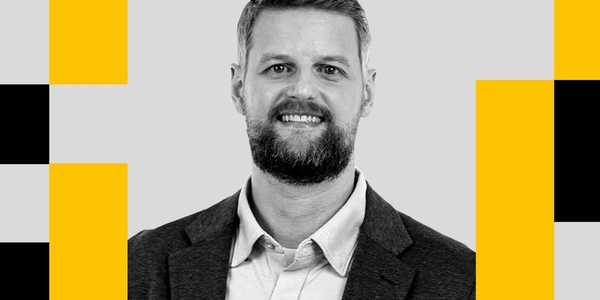
This week’s conversation is with Matt Dunne, founder of the nonprofit Center for Rural Innovation, which focuses on technology, social responsibility, and empowering small, economically depressed communities.
Dunne was born and raised in Vermont, where he still lives today. He was a state legislator in the Green Mountain State for many years. I first became familiar with his name when I was in college at the state’s public university, reporting on his candidacy for the Democratic gubernatorial nomination in 2016. Dunne ultimately lost a tight race to Sue Minter, who then lost to current governor Phil Scott, a Republican.
I can still remember how back in 2016, Dunne’s politics then presaged the kind of rural empathy and economic populism now en vogue and rising within the Democratic Party. Dunne endorsed Vermont Senator Bernie Sanders’ 2016 presidential bid and was backed by the state’s AFL-CIO; Minter, a more establishment Democrat, stayed out of the 2016 primary and underperformed in the general election. It doesn’t surprise me now to see Dunne emerging with novel, nuanced perspectives on how advanced technological infrastructure can succeed in rural America. So I decided to chat with him about the state of data center development today.
The following chat has been lightly edited for clarity.
So first of all, can you tell our readers about your organization in case they’re unfamiliar?
We founded this social enterprise back in 2017 because the economic gap between urban and rural turned into a chasm. We traced the core reasons and it was the winners and losers of the tech economy. There were millions and millions of jobs created from the great recession, but the problem was that it was almost exclusively in urban areas, in the services sectors like consulting, finance, and tech. At the end of the day, we believe in the age of the internet there should be no limit to where high-quality technology jobs should thrive.
We work with communities across the country that are rural and looking to add technology as a component to their economy. We help them with strategies – tech accelerators, tech accountability programs, co-working spaces, all the other stuff you need to create a vibrant place where those kinds of companies can emerge so people can come back, come home. We work with 43 regions across 25 states that are all on this journey together and help them secure the resources to execute on that journey.
One of the reasons I wanted to speak with you is your history in Vermont. I went to the University of Vermont, and I loved living there, but there aren’t jobs to keep kids there which is still a huge disappointment to young folks who love living in the state.
At the same time the state reflects many of the same signals we see in Heatmap Pro data around advanced industrial development. Large land owners bristle at new projects regardless of their political party, and Democratic voters are more inclined to side more with locavorism than a YIMBY growth-minded approach.
How do your Vermonter roots inform your work, and do they affect the ways you see the conflicts over new advanced tech infrastructure?
What we’ve seen in Vermont after the Great Recession is that there’s lots of available space and a population that’s aged significantly.
This all impacted my outlook as a community development person, and now as a leader of a social enterprise. We need to be thinking proactively about what an economically healthy community looks like and how we ensure we have places importing cash and exporting value in a way that doesn’t destroy what’s amazing about these rural places. You pretty quickly land on tech, as well as maybe some design-related manufacturing where the ideas are local.
To make it clear, we’re building infrastructure for technology communities which is different from building technology infrastructure itself. That’s an important distinction. It’s about giving them the tools to stand up a tech accelerator and have a co-working space that creates community. A good co-working space has good programming, allows for remote workers to go to a place, and you can have those virtuous collisions that lead to something else. A collaboration. A volunteer project. Whatever it is. Having hack-a-thons, lectures or demonstrations on the latest AI technology that can be used. Youth programming around robotics. If you can create a space where that happens, you create a lot of synergy, which is important in smaller markets – you have to be intentional with all of this.
Okay, so considering those practices, what do you think of the way data center development is going?
For the record, I spent six and a half years at Google and was hired at first because of data centers. At the time, I saw Google try to build a big data center in a community of less than 10,000 people in secret, and it didn’t go well because it just doesn’t work, and that’s how I got my job there.
There is a right way to come into a community with a data center or frankly any kind of global company infrastructure project, and there’s a wrong way to do it. The right way is being as transparent as possible, knowing full well that when a brand name is mentioned, the price goes through the roof for the land. There does have to be some level of confidentiality when you’re ready to go, but once you can, you have to be proactive with it.
You have to be a really good steward on the impacts, whether they’re electrical demand or water demand. It’s about being clear, it’s about figuring out how to mitigate it, and it’s about maintaining your commitment to 100% renewable energy even as you’re bringing online data centers. Oh, and it’s about having a real financial commitment to make sure the community can economically diversify away from being overly dependent on the data center, on that one industry. The data center developers know full well that they’ll create a lot of construction jobs but that’s not going to be a good, sustainable employer. Frankly, the history of rural places is littered with communities that are too dependent on one industry, one company, and that hasn’t
What does that look like from a policy perspective and a community relations perspective?
I think there are models emerging, including from Microsoft, Google, and others, about what good entry and strong commitments look like. It would be great if someone put a line in the sand about 2% of capex going to a community to diversify the economy. It would be great if companies put a reasonable time horizon out there to replace potable water through technology or other kinds of supports. It would be great to see commitments to ratepayers that say people won’t have to foot the bill for increased demand.
Here’s the part we focus on more because we’re not as focused on site selection: Rural America is likely to shoulder the burden of data center infrastructure just like they shouldered the burden of energy production infrastructure. The question at the end of the day is, how do we make sure those communities see the upside? How do we make sure they can leverage tech capacity inside these data centers to be able to have more agency and chart their own economic futures? That’s what we’re really focused on because if you do that, it doesn’t have to be a repeat of the extractive processes of the past, where rural places were used for cheap land and low-wage workers. They can instead be places with lots of land available and incredible innovation, new enterprises and solving the world’s problems.