GLOBALVARS
0
Today’s top-of-the-line electric vehicles are self-driving computers on wheels built to feel as futuristic and digital as possible. They come with artificial intelligence-powered assistants, enormous touchscreen interfaces, and huge batteries.
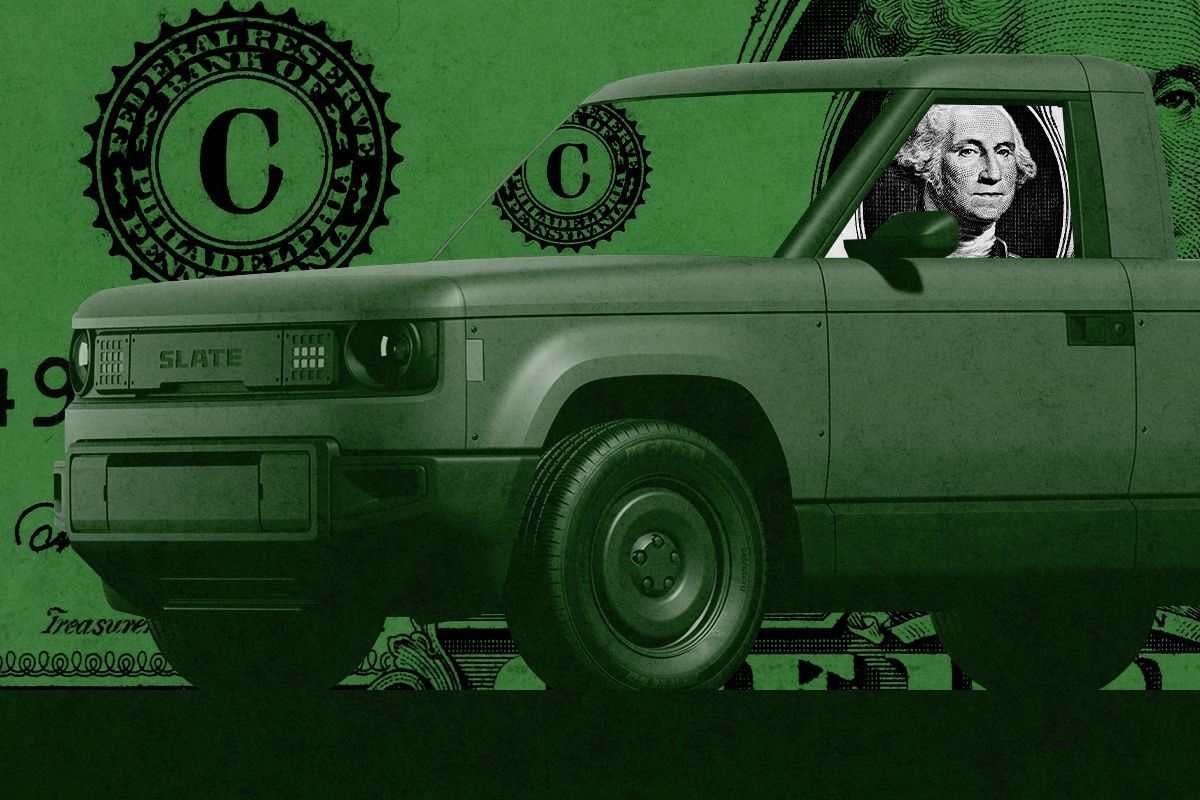
The Slate pickup truck’s signature feature? Hand-crank windows.
As Slate Auto has developed its attempt at the bare-bones EV over the past couple of years, its 1990s-nostalgic manual windows became a symbolic choice, one meant to signal just how far it was willing to go in pursuit of affordability. On Wednesday, Slate gave us a fuller picture, revealing the details about its vehicle and providing a glimpse at how the Jeff Bezos-backed startup plans to sell an EV truck at an entry-level price. But while the pickup’s lack of power windows or a built-in stereo system are attention-grabbers, a lot of the savings lie under the skin.
Just how cheap is it? The “Blank Slate,” a version of the truck with zero bells and whistles, starts a hair under $25,000. This is a compact truck in the spirit of decades past, with two seats up front and nothing more. For a Slate that seats more than a couple, choose the SUV or fastback configuration that bumps up the price to about $30,000 or $32,000, respectively.
From there, Slate’s à la carte model takes over. Choosing a wrap to make your whole truck a color other than gray costs $499, though blessedly, Slate provides dozens of color choices as opposed to the handful of neutrals and muted colors offered on a typical new car. The portal to design one’s Slate becomes a rabbit hole of possible choices — custom taillight designs, roof racks, and wheels — all of which add a little or a lot to the price of the truck. These add-ons can quickly propel a Slate deep into the mid- or even high-$30,000s range if you’re not careful. The point, though, is that the $25,000 EV is front and center.
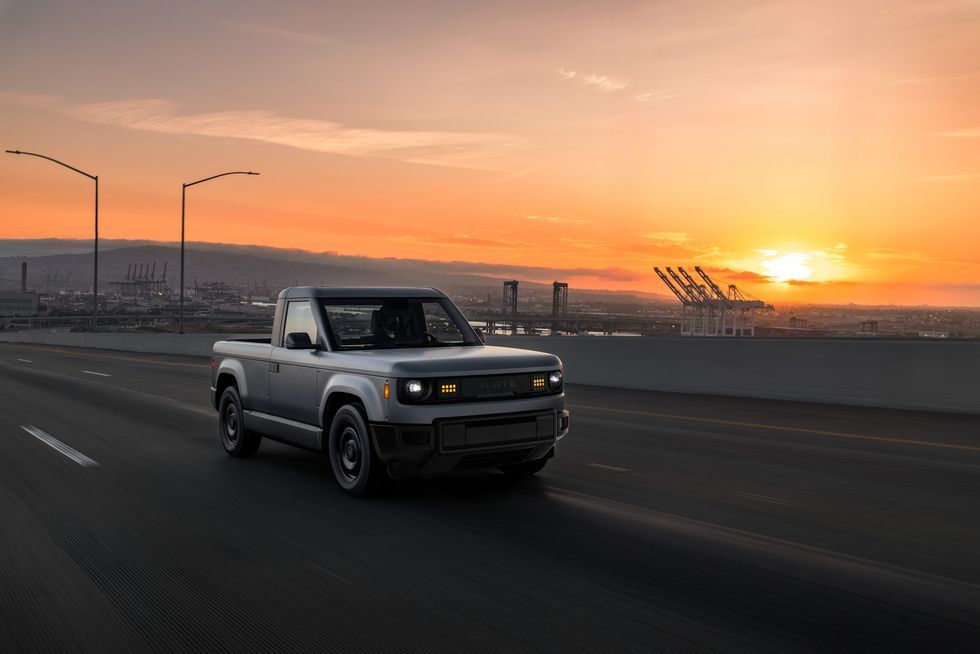
To achieve this starting price required a heavy dose of vintage or simplified tech. Roll-down windows and no built-in stereo speak to drivers who aren’t automotive engineering experts. But as reviewers and online commenters have noted, crank windows aren’t a make-or-break money-saver — they might knock off $20 or $40 per vehicle — and so few companies use them now that Slate had to go out of its way to source them from Brazil.
A bigger cost-cutter was Slate’s embrace of old-school manufacturing and its willingness to consider “yestertech” that’s still perfectly serviceable, but has fallen out of use because better systems have come along. The chassis, for example, is made of ordinary steel — 250 pieces welded together as opposed to the more efficient stamping methods that have taken over automotive manufacturing. While Slate has a familiar, inexpensive MacPherson suspension up front, its rear uses a design called the De Dion that dates back to the late 1800s. (The Autopian has a nice technical write-up about why this choice makes sense.)
We often default to calling EVs smartphones on wheels because of the Tesla approach to making them — the so-called software-defined vehicle that routes its main functions through touchscreen interfaces and gets new features via over-the-air updates. So perhaps a comparison to the phone industry is apt. In the same way budget-conscious buyers were waiting for Apple to make the “affordable iPhone,” drivers have been waiting for the automakers to roll out the entry-level EV. But instead of the cheap Tesla, what we got is the Slate, which is something more like a flip phone on wheels.
That’s not to say it won’t succeed. Flip phones are enjoying a resurgence, after all, powered by their low price and by growing dissatisfaction with life in this age of touchscreens. But Slate’s unusual position in the car industry makes it difficult to predict how American drivers will respond. For those shopping solely on price, Slate may not measure up. The cheapest gas-powered cars in America include the likes of the Toyota Corolla, Hyundai Elantra, and Volkswagen Jetta, and their starting price in the mid-$20,000s includes the basic creature comforts you’d expect from a modern car, not to mention seating for at least four. In a world that still had the $7,500 federal tax credit for buying an EV, the Slate would undercut these gas-burners. In this world, it can’t (though you could add a slew of options to the Slate before it would cost the same as the $35,000 electric truck under development at Ford’s skunkworks operation).
What Slate has going for it, though, is its ability to become the exact car you’d like. Normal cars come with three or four “trim levels,” each of which adds a thousand dollars or two in exchange for more features. In practice, many people are stuck with whatever version they can actually track down at a dealership. Slate follows the Tesla-Rivian model of direct-to-consumer sales, and its trademark customizability means buyers are limited to picking from two or three versions of a car, but can design every single piece of their truck.
To be sure, lots of people don’t want this. Many are presumably happier buying a car off the familiar lot without the mental overload of choosing every single thing about their vehicle. The question is whether a quorum of drivers are ready for a new way to buy a car — or at least, so fed up with fluctuating gas prices and the out-of-control prices of new vehicles that they’re ready to take a chance on rolling their windows again.