GLOBALVARS
0
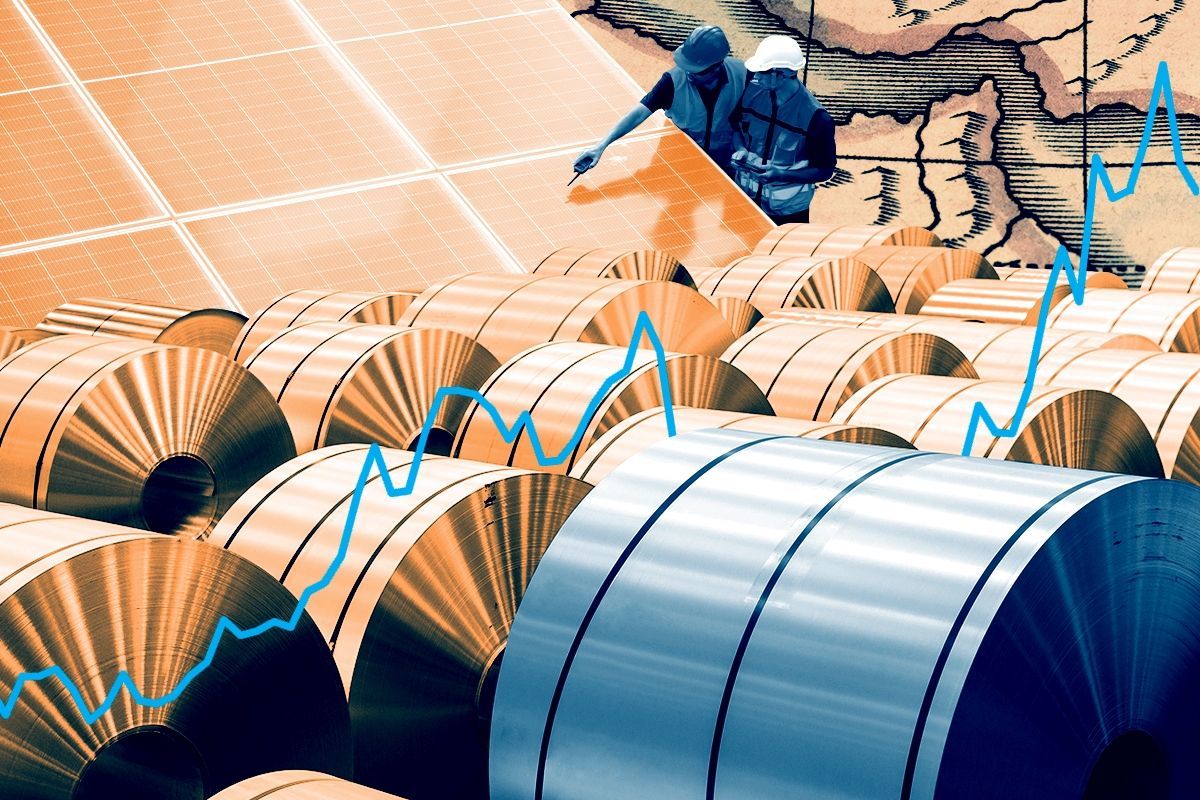
The strangulation of the Strait of Hormuz and consequent overnight squeezing of the world’s oil supplies by around 10% (not to mention the effects on liquified natural gas and petroleum products like naphtha) should be a boon to solar power. Already, according to analysis by Lauri Myllyvirta of the Centre for Research on Energy and Clean Air, countries like Pakistan that embraced solar power to reduce their reliance on fossil fuel imports can expect to save $7 billion on their import bills this year.
But it’s not just hydrocarbons that come out of the Strait of Hormuz. It’s also metals, and specifically metals found in solar modules, like aluminum, making the energy consequences of the war considerably less straightforward.
Unlike with oil, there has been no extensive effort to set up alternative transit routes for aluminum on the high seas. Also unlike other fossil fuels, there are few other transport methods available for aluminum (it’s tough to get metal through a 48-inch pipeline).
Furthermore, aluminum is not simply pumped out of the ground. The process starts with bauxite, a reddish ore found in tropical and subtropical regions, which is ground and processed to extract alumina, a white powder. From there, the alumina is dissolved in a molten cryolite bath, through which an electric current is passed, producing molten aluminum that is then cooled into the product we find in cars, laptops, and solar panels, a process known as smelting.
The smelting process is extremely electricity intensive, with power accounting for between 30% and 40% of production costs, according to Morgan Stanley. This is why aluminum smelting tends to be concentrated not in areas with abundant bauxite, but rather in places with cheap electricity, meaning that bauxite or alumina often has to be imported to where the smelters are.
The Persian Gulf region produces just 3% of alumina and only around 1% of the world’s bauxite, Morgan Stanley estimates, compared to 9% of the world’s aluminum.
As a total picture, it isn’t pretty.
“In the event of a more prolonged shipping disruption through the [Strait of Hormuz], concerns about the region’s raw material availability are likely to grow,” Morgan Stanley analysts wrote in a note to clients on Monday.
Aluminum producers have already begun to halt production of the metal. Aluminum Bahrain, for instance, has started the process of shutting down three production lines, “which together represent 19% of Alba’s total production capacity of 1,623,000 metric tonnes per annum,” the company said on Sunday. Qatalum, based in Qatar, began shutting down two weeks ago due to its inability to obtain natural gas due to Iranian strikes on the country’s gas infrastructure, which could take up to 648,000 metric tons of capacity off the market.
All of this disruption has had exactly the market effect you would expect, with aluminum prices hitting four-year highs just after the airstrikes began before tracking back slightly. On February 27, aluminum was $3,157 per ton; today, it’s $3,395.50. Jefferies analyst Shuhang Jiang estimated earlier this month that if the Strait of Hormuz stayed closed into April, “the market will fall into deficit.”
So what does this have to do with solar panels?
Aluminum is used in the frames, mounts, and racks of solar panels, making the metal one of the major physical cost components of solar systems. While other elements have inflated on solar costs in the past year — especially silver, which is used as a conductive paste on a solar panel’s silicon wafers, the price of which has skyrocketed since last year — aluminum is one of the “key cost centers” of solar panels, according to Intertek CEA, a solar advisory firm.
In the United States, an installed utility-scale system costs on average $1.10 per watt, while a residential rooftop system costs $2.90. Every $500 per ton change in the price of aluminum results in about a $0.02 per watt change in the cost of the module, according to Joseph Johnson, associate director of market intelligence at Intertek CEA. That happens to be just about the change in the price of aluminum since the end of last year.
“In the U.S., [$0.02] is considered a rounding error and is generally ignored as it is not nearly enough of a price movement to matter in overall project viability,” Johnson told me. “In European or other international markets, it’s very much a death by 1,000 cuts scenario, where $0.02 per watt from aluminum is already a noticeable increase.”
Aluminum prices were already rising before February 28 due to factors like tax code changes in China that hurt exporters and the effects of trade restrictions such as Europe’s carbon tax on imports and Trump’s tariffs. All of that combined put a “tremendous amount of pressure on PV projects that depend on Chinese modules,” especially outside the United States. Those material costs have all continued to rise since the U.S. strike on Iran, as other more energy intensive materials such photovoltaic glass have also seen price hikes.
While a renewables-based energy system may be able to depend on its own sunshine, at least for now, it still depends on the same energy system it’s trying to transcend.