
GLOBALVARS
0
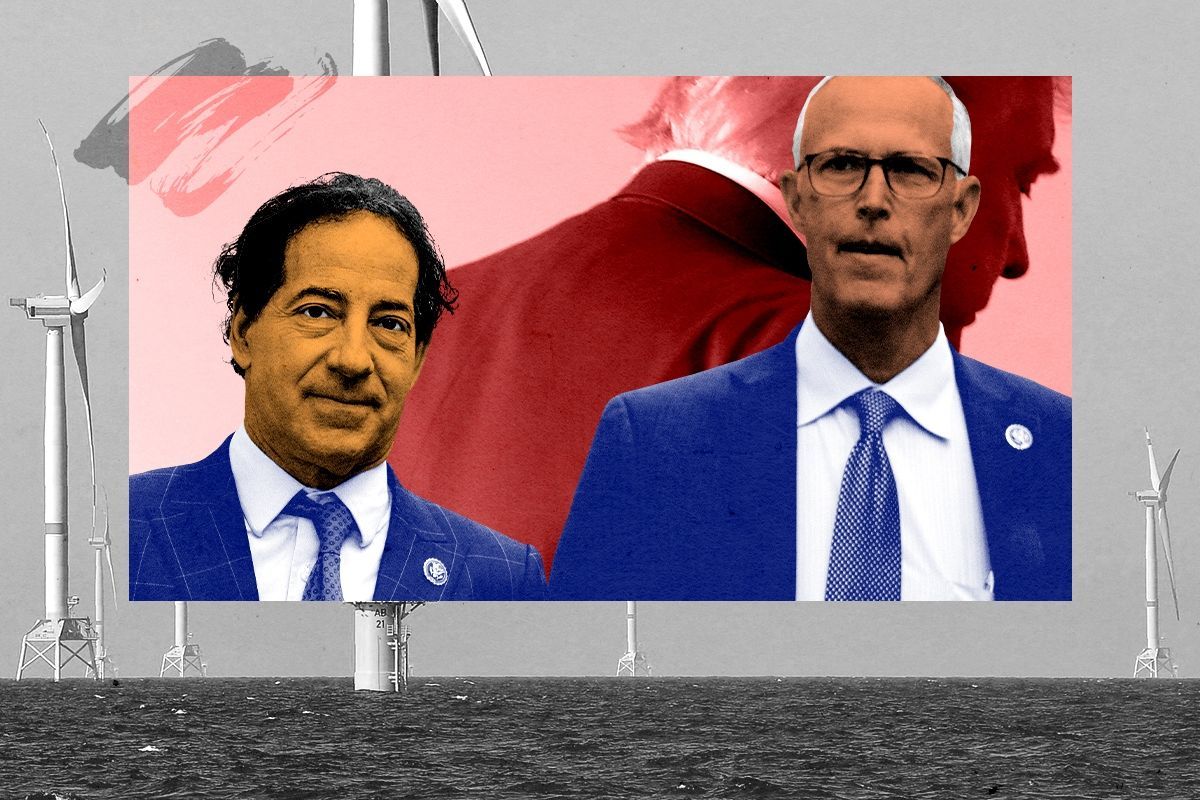
Two House Democrats are going after TotalEnergies after the company ignored an earlier request to defend its $1 billion settlement with the Trump administration to walk away from offshore wind.
Jared Huffman, the ranking member of the House Natural Resources Committee from California, and Jamie Raskin, the ranking member of the House Judiciary Committee from Maryland, sent a letter on Wednesday informing Total’s CEO Patrick Pouyanné that they have opened a formal investigation into the company.
“We’re going to get every document, every email, every last receipt on this deal, and every person who had a hand in this is going to answer for it,” Huffman said in a press release. “What I have to say to TotalEnergies is this: Consider yourself on notice, we’re coming for you.”
The move comes just a day after the Trump administration announced two additional identical settlements resulting in the cancellation of two more offshore wind leases.
The letter states that Total’s March 23 settlement with the Interior Department was unlawful in “at least four separate ways.” It demands that Total preserve all records related to the deal and requests that it put the $928 million it was granted by the settlement into escrow until the investigation concludes.
Huffman and Raskin first reached out to the Interior Department and Total on April 6 requesting documents and communications between the two parties related to the deal by April 20. Neither party obliged. Shortly before the deadline, however, the Interior Department published the settlement agreements it signed with Total. The settlements “confirm and surpass our worst fears of what has taken place,” the two representatives wrote on Wednesday.
The settlements state that the agency would have ordered Total to suspend operations on the leases due to national security issues. This “appears to have been a fabricated justification for canceling the leases,” the letter says, citing a discrepancy between when the settlements suggest that the company had reached an agreement with the Trump administration — November 18 — and when the earliest reports of anyone reviewing the national security concerns occurred — November 26.
“That timeline raises the troubling possibility that the national security assessment was not merely pretextual, but also that TotalEnergies may have negotiated the final settlement agreement with full knowledge that the rationale for canceling the leases was false,” Huffman and Raskin write. The fact that Pouyanné has stated publicly multiple times that the company came to the Interior Department with the idea for the settlement supports that conclusion, they add.
Putting the timeline of national security concerns aside, the settlement disregards the law governing offshore wind leases, Huffman and Raskin argue. The Outer Continental Shelf Lands Act says that when the government cancels a lease that does not yet have an operating project on it, the company is entitled to the “fair value” of the lease at the date of cancellation. The nearly $1 billion figure — which is the amount the company paid for the two leases in 2022 — is “almost certainly a significant overpayment even under the most favorable reading of the statute,” the lawmakers write.
The letter also questions the use of the Department of Justice’s Judgment Fund, a reserve of public money set aside to pay for agency settlements. On one hand, Interior Secretary Doug Burgum recently characterized the payment as a “refund” in testimony before Congress — a type of payment that the Judgment Fund is not authorized to make. On the other hand, even if it was technically a settlement, it doesn’t meet the Judgement Fund’s standard of “a genuine contested dispute over liability or amount,” Huffman and Raskin write. The Interior Department never issued a stop work order to Total. Neither of the company’s projects had even started construction yet.
If the settlement is allowed to go through, the lawmakers warn, any future U.S. administration could repeat the formula to enact their own agenda. “The only requirements would be a hypothetical threat, a side agreement, and a check drawn from a permanent, uncapped federal account that Congress never authorized for this purpose,” they write.
Lastly, Huffman and Raskin accuse the Trump administration and Total of sticking an unlawful clause in the settlements that declare the agreements “not judicially reviewable.” They assert that only Congress has the power to restrict judicial review. Their letter declares that the provision “accomplishes nothing legally,” and characterizes it as evidence that the parties knew the deal would not survive scrutiny.
In addition to preserving records and putting the funds in escrow, the letter to Total again demands a list of documents related to the deal, providing a new deadline of May 13. We’ll see if the company feels compelled to comply. Huffman and Raskin would need the support of the full House to find Total in contempt of Congress, and it’s not clear they would have the numbers.