
GLOBALVARS
0
Current conditions: Severe thunderstorms are drenching the American South from New Orleans to Virginia Beach • Mount Mayon has forced thousands to evacuate within the Philippines’ Bicol peninsula • Temperatures in Denver are poised to plunge from about 75 degrees Fahrenheit yesterday to 39 degrees today with a chance of snow.
THE TOP FIVE
1. The U.S. grid reliability watchdog just issued a rare, very serious warning
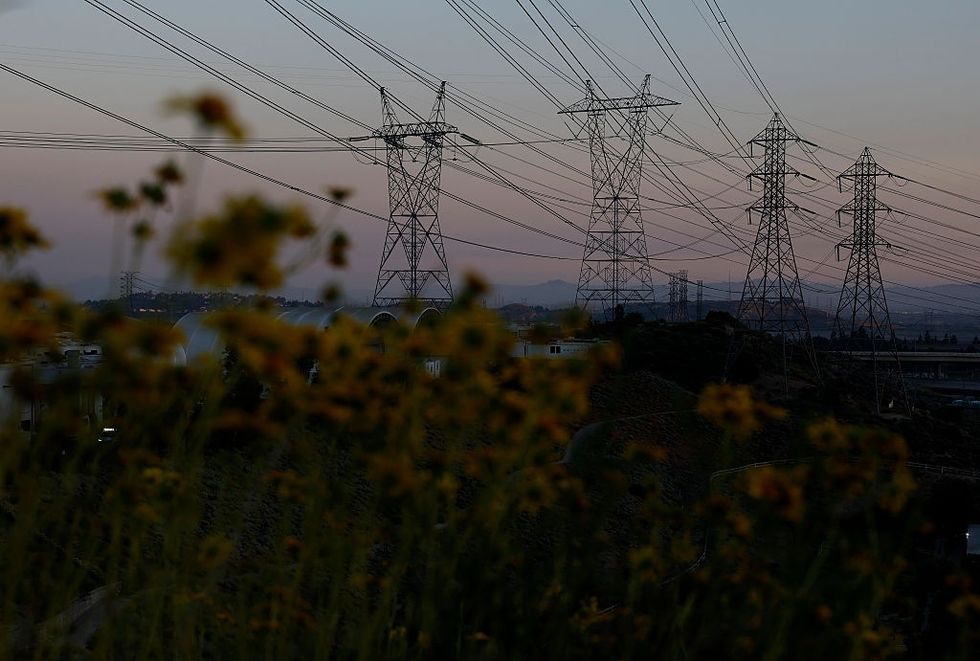
The North American Electric Reliability Corporation, the quasi-governmental watchdog that monitors the health of the power grids that span the United States and Canada, has issued a rare Level 3 warning. The alert, announced Monday, marks only the third time NERC has put out a notice with that degree of severity in its 58-year history. The warning comes on the heels of reports that data centers abruptly went offline in Virginia and Texas, prompting concerns of potential blackouts. “Computational loads, such as data centers, could increase exponentially in the next four years,” NERC said in a draft of the alert, adding that “significant risks” to the power network “need to be addressed through immediate industry action.” Lee Shaver, a senior energy analyst at the Union of Concerned Scientists, told E&E News that NERC’s action was a “big deal.”
2. California probes offshore wind developer that took Trump’s exit deal
The California Energy Commission has issued an administrative investigative subpoena to Golden State Wind seeking documents and information related to the company’s recent deal with the U.S. Department of the Interior to take a payout in exchange for abandoning its offshore wind lease. Last week, the developer announced a deal to scrap its lease in the Morro Bay Wind Energy off the central California coast for $120 million as part of the Trump administration’s efforts to kill off an industry he failed to destroy through regulatory fiat alone. The facility was supposed to be California’s first offshore wind farm, and planned to use floating turbines to account for the steep continental shelf dropoff on the nation’s Pacific Coast. Now the administration’s latest “shady deal” is drawing scrutiny from state regulators. “The Trump Administration is recklessly spending billions of taxpayer dollars on backroom deals that would turn back the clock on innovation,” David Hochschild, the chairman of the California Energy Commission, said in a statement. “Californians deserve immediate answers about the nature of this payout. Taxpayer dollars should be used to build a sustainable energy future, not to pay to make projects disappear.”
Meanwhile, California’s grid operator has switched on a new regional electricity market as part of what E&E News called “a major milestone in the yearslong push to expand energy trading” across the American West. The California Independent System Operator launched its new Extended Day-Ahead Market early Friday morning, allowing California’s investor-owned utilities and the Northwestern giant PacifiCorp, whose coverage area spans two million customers across six states, to trade electricity on the regional market for the first time. “The West is rich with a diverse mix of renewable resources, and this market will capture their potential,” Michael Colvin, director of the California energy program at the Environmental Defense Fund, said in a statement. “Through better sharing of cheap, clean energy beyond state borders, the market will cut household bills, reduce reliance on expensive, polluting fossil plants and build a grid that's bigger than any single extreme weather event.”
3. Exclusive: America’s most advanced thorium bet just hit a major milestone
For nearly as long as there have been nuclear power plants, there have been thorium bulls insisting the metal is a better fuel than uranium. In most places, the thorium dream faded long ago as ample new sources of uranium were discovered. But China revived the thorium race in 2023, when its experimental molten salt reactor powered by the metal split atoms for the first time. Now the only serious contender in the entire West looking to commercialize thorium is a Chicago-based company taking an unusual approach. Rather than creating a whole new kind of reactor to run on thorium, Clean Core Thorium Energy has designed fuel assemblies that blend thorium with a special kind of uranium fuel and work in existing reactors without any modifications. Clean Core’s technology only works, at least for now, in pressurized heavy water reactors, which make up the bulk of the fleets in Canada and India, though the U.S. has none in operation. But the key verb there is that: It works. On Tuesday, I can exclusively report for this newsletter, Clean Core plans to announce that its patented fuel completed a high burnup irradiation test at Idaho National Laboratory’s Advanced Test Reactor. The fuel burnup represented “more than eight times the typical” output from the traditional uranium fuel used in pressurized heavy water reactors. The latest test “provides meaningful performance data” and demonstrates that Clean Core’s fuel “achieve burnup levels comparable to those seen in PWR fuels while offering improved fuel utilization, enhanced safety characteristics, inherent proliferation resistance, and meaningful reductions in long-lived nuclear spent fuel radioisotopes,” Mehul Shah, Clean Core’s chief executive, told me in a statement. “Our objective has been to introduce thorium into the nuclear fuel cycle in a practical way using existing reactors, and this milestone represents a significant step toward that goal.”
It’s the latest good news for Clean Core. Last month, as I reported for Heatmap, the company inked a deal with the Canadian National Laboratories to manufacture its first commercial fuel assemblies.
Sign up to receive Heatmap AM in your inbox every morning:
* indicates required
Email Address *Our Privacy Policy & Terms Apply.
4. New joint venture forms to complete South Carolina’s aborted nuclear megaproject
In July 2017, South Carolina abandoned its $9 billion expansion of the V.C. Summer Nuclear Station, leaving ratepayers holding the bag and utility executives facing prison time for lying about the project’s viability. Now the pair of Westinghouse AP1000s planned at the site are making a comeback. On Monday, Westinghouse-owner Brookfield Asset Management formed a new joint venture with The Nuclear Company, a reactor construction manager, to work together on building more Westinghouse reactors such as the AP1000 or the smaller version, the AP300. V.C. Summer is the likely first project. “Our team was built on the field of Vogtle and on some of the most complex energy projects in the world,” Joe Klecha, The Nuclear Company’s chief nuclear officer, said in a statement. “We know what it takes to deliver nuclear. What’s been missing is a model that brings together the people, the capabilities, and the capital to do it at speed and scale. That’s what this partnership creates.” The announcement comes as the Trump administration meets with utility executives to discuss funding deals to build the 10 new large-scale reactors President Donald Trump ordered the Department of Energy to facilitate construction on by 2029, as Heatmap’s Robinson Meyer reported. Completing 10 AP1000s would give the U.S. economy a trillion-dollar boost, per a PricewaterhouseCoopers report Westinghouse released in March.
That’s not the only nuclear developer making deals. On Tuesday morning, Blue Energy, another startup focused on serving as a project developer for existing reactor designs, announced a partnership with GE Vernova to work on building the world’s first gas-plus-nuclear plant in Texas. The 2.5-gigawatt project would include GE Vernova’s gas turbines and its BWRX-300 small modular reactors through its joint venture with Hitachi. “Innovative projects like this one will help advance the future of nuclear power and meet the surging demand for electricity,” Scott Strazik, GE Vernova’s chief executive, said in a statement.
5. Green steel investments are going to all the wrong places
Steel, if you’re unfamiliar, is made in two big steps. Traditionally, iron ore is melted down in a coal-fired blast furnace, then forged into steel in a basic oxygen furnace. New plants typically run on something called direct reduced iron, which uses natural gas to turn the ore into iron, then made into steel in an electric arc furnace. The latter process is far cleaner. It can even be green, if the natural gas is swapped for green hydrogen and the electric arc furnace is powered by renewables or nuclear reactors. Nearly 40% of all global clean steel investments to date are hydrogen-powered DRI facilities. That’s according to new data from the Rhodium Group, which released its latest estimates Tuesday. Another 57% of investments are gas-powered DRI plants. While Europe has so far dominated investment into hydrogen DRI, “the region will likely see relatively little demand growth for iron over the coming decades,” the report found. In the fastest growing regions, such as India, Africa, and South America, “most new demand is being met with traditional, fossil-based ironmaking technologies, which risks locking in emissions for decades.” The consultancy’s modeling shows that clean steel supply capacity is on track to exceed demand by between 1.8 and 4.3 times by 2030, “risking a collapse of the nascent industry, where existing projects cannot find buyers and scale production to drive down costs.”
THE KICKER
It may be time for a new New Orleans. The city has reached a “point of no return” that will see it surrounded by ocean within decades as climate change worsens. That’s the conclusion of a new paper in the journal Nature Sustainability. “In paleo-climate terms, New Orleans is gone; the question is how long it has,” Jesse Keenan, an expert in climate adaptation at Tulane University and one of the paper’s five co-authors, told The Guardian.