GLOBALVARS
0
“Full fathom five, your father lies,” the invisible spirit Ariel sings early in The Tempest, as a handsome and grieving prince listens, rapt. The song tells of a shipwrecked skeleton transforming into something else — its eyes have become pearls, and its bones pink coral — as it undergoes, yes, a “sea change.” It is the first time that phrase appears in the English language.
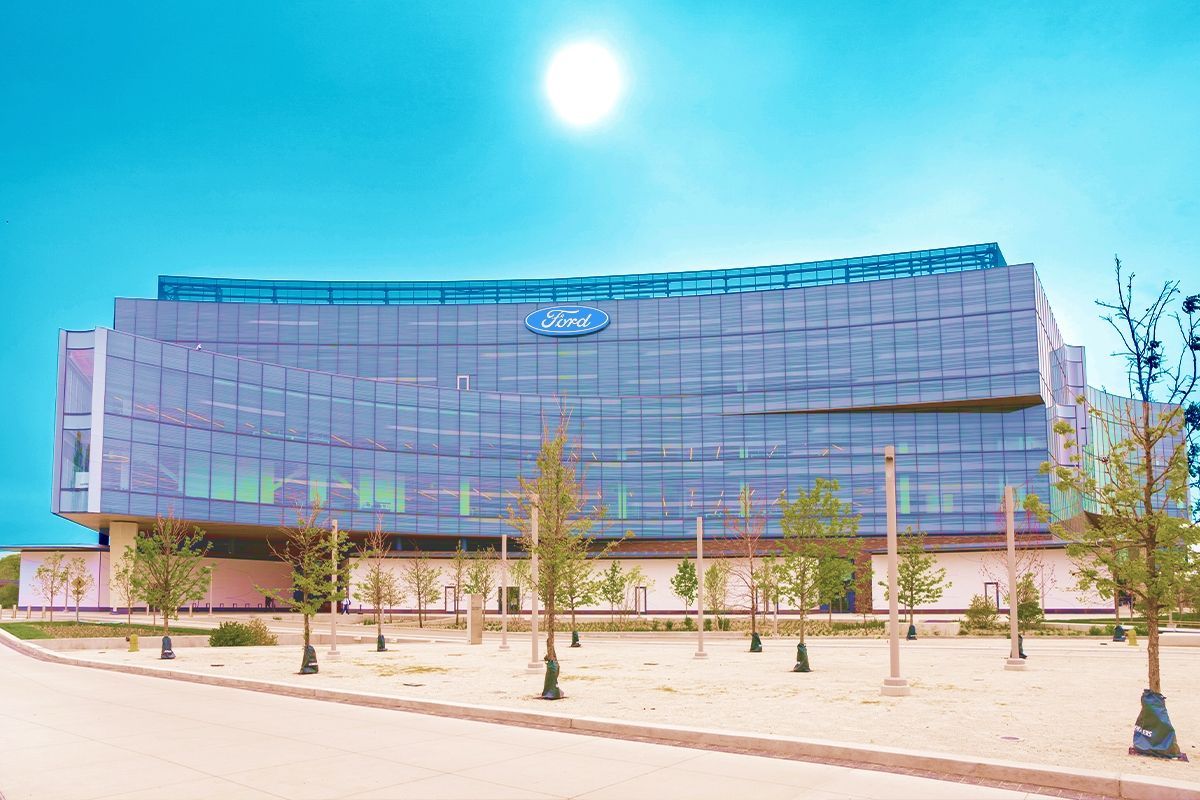
Ford is now facing its own kind of sea change. Over the past decade, the automaker has doubled down on its most profitable and exciting vehicles — pickups, SUVs, and the Mustang muscle car — and dropped from its line-up the cheap, boring cars that once made it famous. It embraced, then backed off, the transition to electric vehicles, in part because it failed to make money from them; and it began to reckon with the surge of cheaper, cleaner, and “far superior” EVs from Chinese producers that are transforming global auto markets around the world.
Locked into its aging but reliable line-up, yet unable to innovate at the low end, Ford might seem like the epitome of a company facing disruptive innovation. No wonder its stock has traded flat from where it was five years ago — even as the broader market has surged by more than 70%.
Its solution is an EV skunkworks, run by Tesla alumni, where it can develop a new “universal EV platform” to undergird future vehicles. Today, we got a peek at the first car to emerge from that secret shop: an all-electric compact pickup that will hit the roads by the end of next year. Its name? The Ford Fathom.
We know very little about the Fathom, as our correspondent Andrew Moseman wrote today. It will retail for just over $28,000, and even with mandatory delivery costs and other add-ons will stick to this side of $30,000. That makes it only a smidge more expensive than the gas-burning Ford Maverick, a sporty, compact, and popular pickup that starts around $27,000.
Ford promises that the Fathom will have as much seating capacity as Toyota’s RAV4, America’s best-selling car that isn’t a truck. (Ford’s own F-150, of course, holds the true No. 1 spot.) Those dimensions suggest the Fathom will sport a four-door crew cab, like the Maverick, making it more acceptable to families with kids — or young professionals who want to give their friends rides on the weekend. It will also have a frunk.
Beyond that, though, we don’t know much. We don’t know its range, for instance, and its price point shouldn’t inspire too much confidence on that front. Nor do we know, frankly, whether Ford can pull it off: When the automaker announced its first electric truck, the F-150 Lightning, in 2021, it claimed a price point of less than $40,000. Eighteen months of inflation later, it actually sold them for closer to $55,000 — and it still lost money on every EV that it made. Fixing the latter problem is part of why the skunkworks exists in the first place, and Ford now has an additional half-decade of experience making EVs. But consumers hoping for a miraculously priced electric pickup from the Blue Oval have been burned before.
If the Fathom disappoints, though, then consumers will soon have other options. The American car market is about to be deluged with sporty, compact pickup trucks — a welcome change from just a few years ago, when the segment was almost entirely dominated by mid-size and half-ton models. The Jeff Bezos-backed startup Slate will start delivering two-door, all-electric pickups starting at $25,000 at the end of this year. The automaker Stellantis, which owns the Dodge and Jeep brands, says it wants to bring another compact pickup — it’s almost more of a ute — called the Rampage to North America soon.
That’s welcome news for me — I love these little trucks — but I’m a little worried I’ll be outside my pickup-buying years by the time they actually make it to market. In the meantime, I’ll keep you posted on other updates about the Fathom. Will “sea nymphs hourly ring its knell”? No, but it will have Apple CarPlay and Android Auto.