GLOBALVARS
0
This is an edition of Heatmap Daily, an evening review of the day’s news written by our executive editor. Sign up for it here.
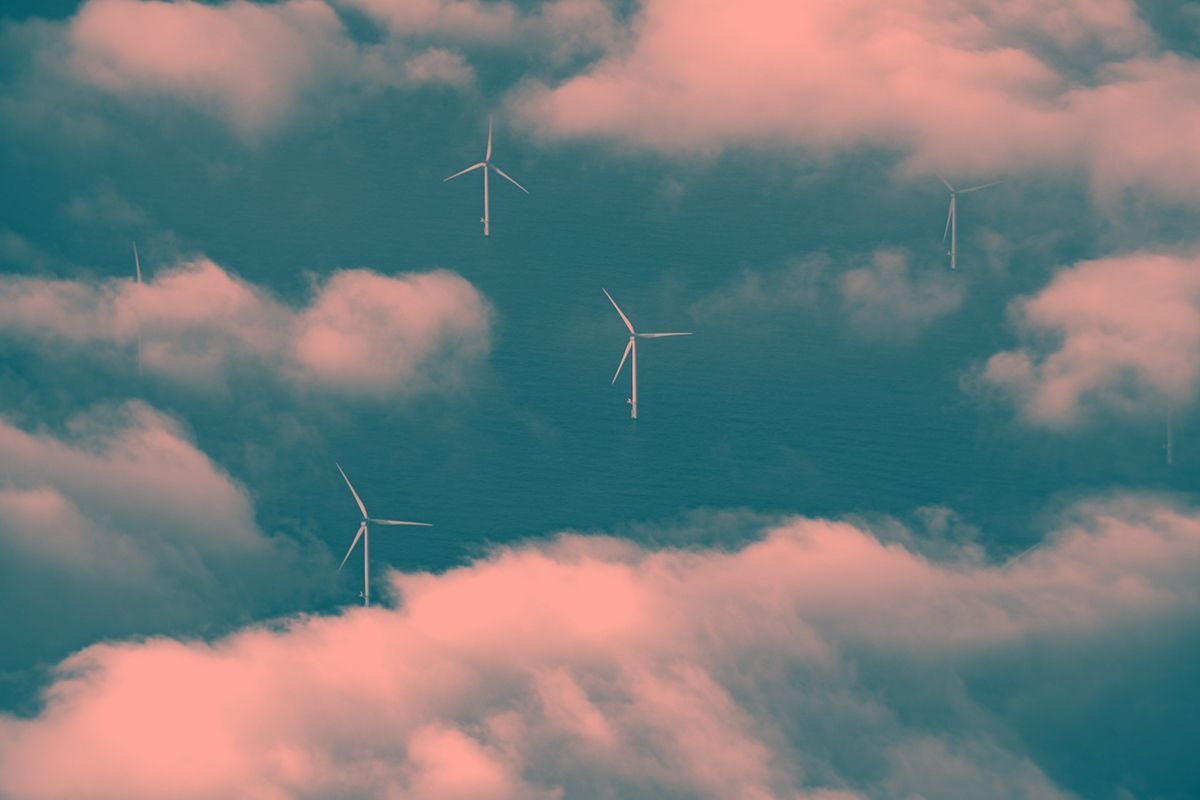
There goes another one. The German energy developer RWE has signed a $1.2 billion deal with the Trump administration to give up its claims to develop offshore wind farms in New York, California, and Louisiana. The Trump administration has now bought out 12 offshore wind leases, paying energy developers $3.93 billion for the privilege of not developing renewable energy along the American coastline.
Today’s is the largest payout yet — and fittingly so, I suppose, because it is among the most damaging. As part of the deal, RWE abandoned its plans to build a more than 3-gigawatt offshore wind farm in the New York Bight. When RWE first leased that site in 2022, it paid $1.1 billion for it — the biggest offshore wind lease auction ever held in the United States.
RWE promised that the resulting facility, dubbed Community Offshore Wind, would generate 700 jobs and $3 billion in local economic activity. It would have been close enough to New Jersey and New York that its power could have flowed to either state, although no final power contract was ever signed. Now all of that is kaput.
In the eyes of some critics, RWE had overpaid for that lease — and in that context, the Trump administration has I suppose done the German developer a favor, bailing them out from a bad investment in a legally dubious manner. (New York’s attorney general is suing to block a similar payout to Total Energies.)
But even beyond that context, there remains one big problem with these deals — an issue even more glaring now than when Trump started targeting wind projects last year. It is that the United States — and especially the Northeast, and especially New York — needs as much electricity as it can get right now. The Trump administration is striving to bring new power demand online in the form of data centers, but cutting off new sources of generation if they fail to meet its aesthetic standards.
Anticipating this sensitivity, RWE’s press statement announcing the deal goes on to list major energy projects that it’s committed to in the United States. These projects are, coincidentally (or not), fossil fuel projects: They include a $900 million stake in a Louisiana liquified natural gas export terminal and a $300 million reservation for new natural gas turbines. (It implies, but doesn’t say outright, that it will build 15 natural gas peaker plants with these turbines.) When we asked for more details about these projects, and whether we should anticipate anything new, RWE immediately got back to us: “We are unable to discuss further details on the investments.”
Yet as RWE well knows, these projects won’t help solve a coming energy shortage in New York or New England. For one, the Louisiana LNG export terminal is, well, an export terminal: It will help move energy out of the country, not generate more of it at home. Those exports might boost Americans’ fortunes in a vague, long-term, balance-of-payments way, but they won’t keep a lid on anyone’s power bills (which, by the way, just hit an all-time high). More importantly, the 15 peaker plants that RWE cites are largely going to be built … in other regions of the country. If the lights go out on Houston Street, a new gas plant in Houston can’t help.