GLOBALVARS
0
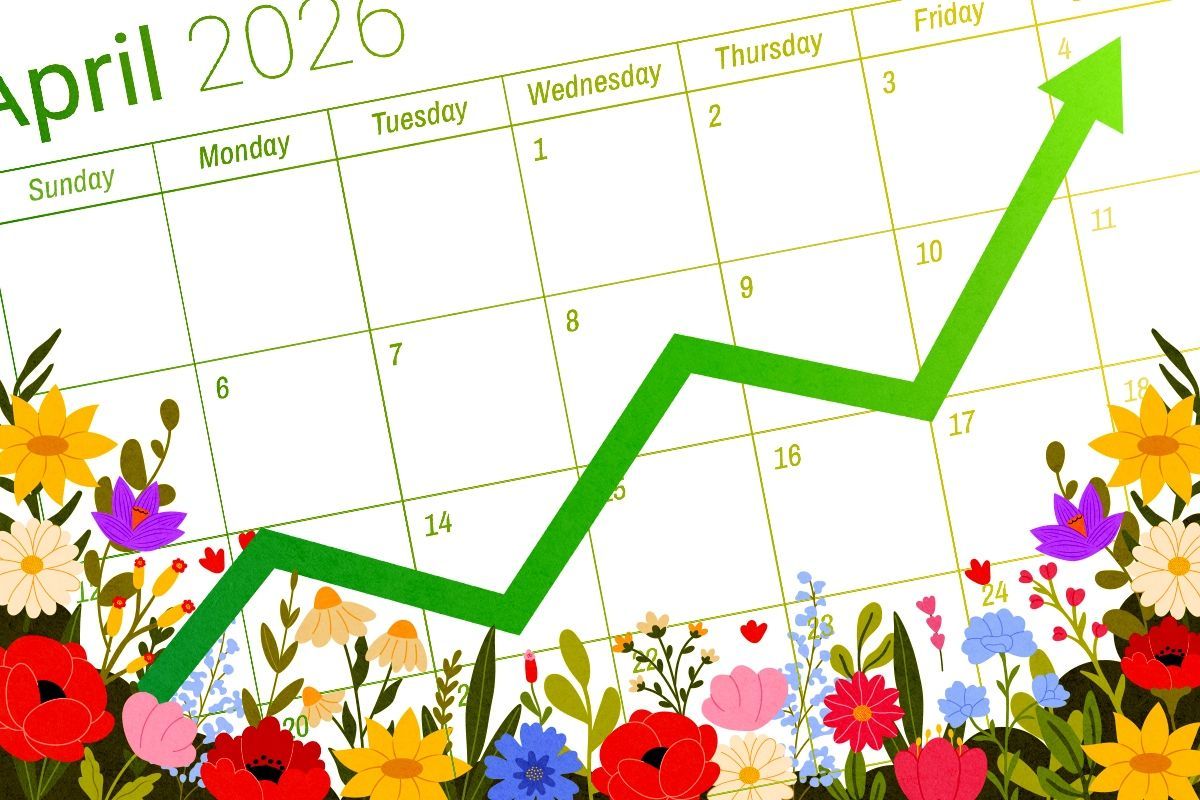
Electricity prices continued to climb higher in April, according to Heatmap and MIT’s Electricity Price Hub. Prices in April 2026 were 6.7% higher, on average, than the same month the previous year. The 12-month trailing average, a measure that smooths out seasonal fluctuations in rates, was up 6.5% from a year ago.
While both of these stats represent new peaks — as is almost always the case with electricity prices over time — the overall growth in prices in April was not unusual. National average electricity prices have been increasing at a similar rate this year as they have during the past five years, with the exception of 2022, when there was a significant spike in the cost of natural gas. Natural gas plants generate the largest proportion of U.S. power, and the cost of the fuel has an outsized influence on our electricity prices.

Although Trump’s war with Iran has inflated gasoline prices and the cost of other crude oil-based products, perhaps counterintuitively, it has not had any effect on U.S. power prices. Unlike in Europe and Asia, where the Iran war has led to natural gas shortages and price spikes, the U.S. is mostly self-sufficient when it comes to natural gas. The only way the war would affect our power prices is if it led to an increase in exports, tightening our domestic supply. That’s not possible any time soon — our export facilities are already at max capacity. “We couldn't export more gas, even if we wanted to,” Ryan Kellogg, an energy economist at the University of Chicago, told me.
The picture of what’s happening with U.S. electricity prices changes again, however, when we zoom in to the state level. Even though the national average growth rate is comparable to the past several years, there are a handful of individual states that are seeing much more rapid increases.
New Jersey and Washington, D.C., for instance, saw 21% and 25% increases, respectively, in their 12-month trailing averages between May 2025 and April 2026, compared to a national average increase of 6%. These areas are seeing more rapid growth due to the strained dynamics in PJM, the electricity market they are a part of, where electricity demand is outpacing supply.
The new April data also shows how sometimes electricity prices undergo big fluctuations for more arbitrary, and ultimately temporary reasons. In California, for example, rates were about the same over the first three months of this year as the same months in 2025, but in April they were more than 50% higher. That’s because last year, Californians received a big bill credit in the month of April — a sort of dividend from the state’s carbon tax. For this year, regulators voted to shift that payment to August, when residents’ electricity bills are typically higher due to air conditioning.
Similarly, one of the largest month-to-month price spikes in the data set was in Massachusetts, where the utility Eversource’s electric rates jumped 36% between March and April. The utility had agreed to artificially lower its rates in February and March after the governor asked for rate relief during the winter months. In April, rates sprang back up.
That’s why the 12-month trailing average is a helpful metric — it can be deceiving to look at how much rates and bills change on a monthly basis.