GLOBALVARS
TEST TEST TEST
0
Products

Current conditions: Late-week downpours and cooler temperatures are sweeping into the American Northeast • Record floods swelled the river in McCaysville, Georgia, near the border with Tennessee, to the point that residents needed aerial rescue • The hottest place on Earth today is Tete, Mozambique, a northwestern city where temperatures are nearing 110 degrees Fahrenheit.
THE TOP FIVE
1. Anxious about Democrats, Wall Street sells off AI stocks
Democrats’ electoral rout of the GOP is giving way to a Wall Street rout on artificial intelligence stocks. The stock market wiped out $2.5 trillion from Asian chipmakers, Texas power producers, New Jersey compute providers, Silicon Valley software giants, and data center developers amid an “AI reality check” that The Wall Street Journal called an “historic rout of tech stocks.” CNBC, meanwhile, called the selloff the great “tech wreck.”
As I wrote yesterday, nearly half of proposed data centers in the country are in states set to be ruled by governors who vowed to crack down on the industry. Texas, where data centers are booming, just elected its first Democratic governor in a generation. Governor-elect Gina Hinojosa, as my colleague Matthew Zeitlin wrote yesterday, campaigned on putting a moratorium on new projects until the legislature could pass new restrictions through law.
2. Shell’s next big offshore drilling bet? Canada.
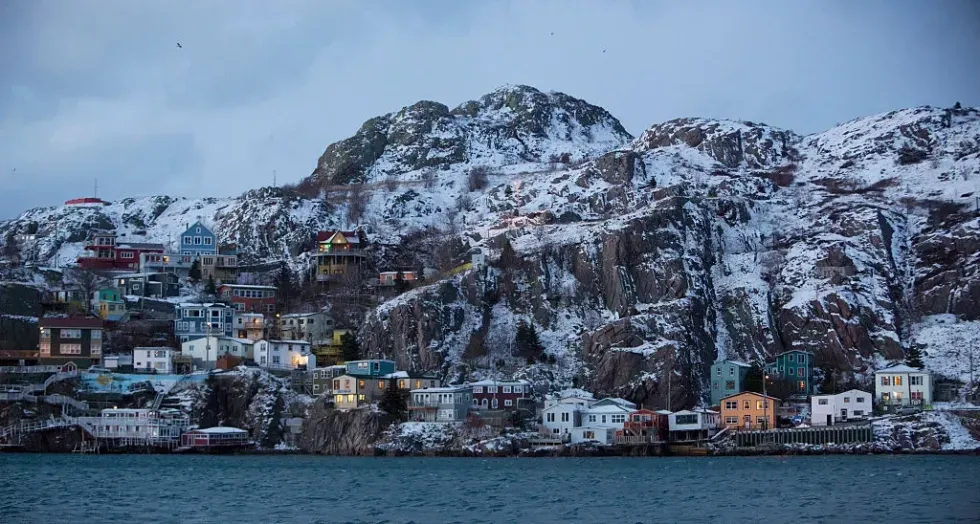
Exxon Mobil’s offshore oil bet in Guyana is booming, and Chevron’s gamble on Venezuela reopening is paying off. Both American oil giants are eyeing new patches in South America and Africa, as I previously reported. Shell, on the other hand, is looking further north in the Western Hemisphere. The Anglo-Dutch major has bid $150 million for licenses off the coast of Canada’s Newfoundland and Labrador. Upstream described the offer as “big exploration dollars.”
The move comes as Canadian Prime Minister Mark Carney looks to transform the country into an energy superpower in hopes of gaining leverage over the U.S. following President Donald Trump’s repeated threats to absorb Canada as the 51st state.
3. Exclusive: New polling suggests U.S. voters back permitting reform even when they hear the downsides
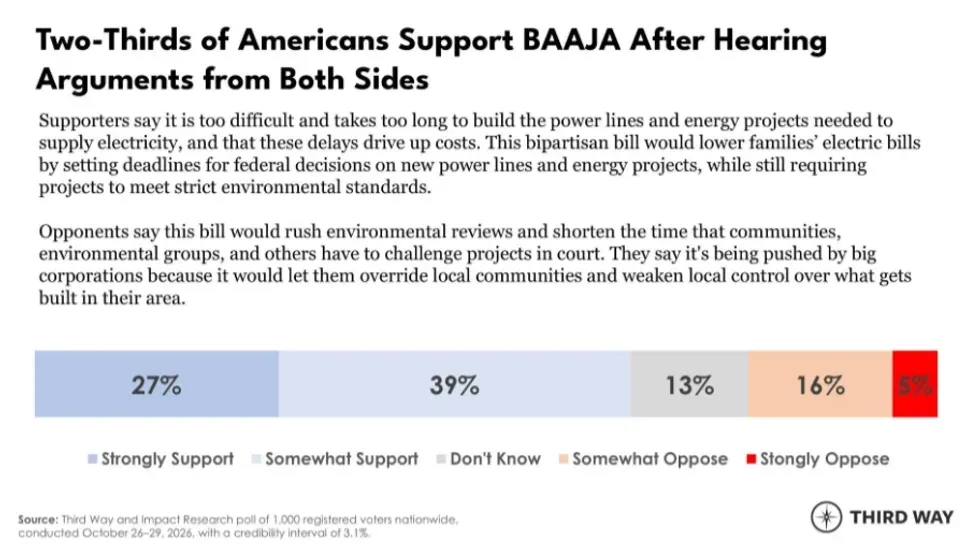
Hopes of passing the Senate’s permitting reform deal have dimmed since Democrats pulled off the party’s biggest legislative victory in half a century this week. The win emboldened progressive critics of the Bipartisan American Affordability and JobsAct who want to put off voting to hold out for a bill with fewer benefits to fossil fuels. But the legislation’s supporters are still pushing for a vote before the next Congress arrives in January. New polling suggests the bill has purchase among voters. In a nationwide survey of 1,000 registered voters taken in the last week of October, 79% of respondents expressed support for the bill after an initial description. After hearing arguments against the legislation, including that it would “rush environmental reviews” and help “big corporations” to “override local communities,” support dropped to 66%.
The poll, commissioned by the centrist think tank Third Way and shared exclusively with me for this newsletter, shows that “Americans want more affordable, reliable energy, and they see the value in legislation that could help deliver it,” analysts Mary Sagatelova and Ryan Fitzpatrick wrote in a memo. Yet the findings come as opposition to the bill mounts. On Thursday night, a spokesperson for the likely next Speaker of the House, Hakeem Jeffries of New York, told Politico reporter Nico Portuondo that the bill “falls short in several areas,” and that the Democrat would not “rubber stamp” the Senate’s deal.
Sign up to receive Heatmap AM in your inbox every morning:
Email Address *Our Privacy Policy & Terms Apply.
4. Google is backing a carbon capture project in Wyoming
Google is building its first data center in Wyoming, powered by a 702-megawatt fuel cell and linear generator that uses natural gas fuel paired with carbon capture technology. On Thursday, the Alphabet-owned tech giant confirmed its plans to back the facility as part of a $17 billion investment in the Cowboy State. American Electric Power, the utility it’s partnering with on the project, announced the plans last month. If successful, the project would be Google’s second foray into carbon capture and sequestration technology. As my colleague Matthew Zeitlin reported last year, the company got into the CCS game with plans to build a project at a site in Illinois.
5. Poland picks a supplier for its first AP1000s
Poland’s plan to build its first nuclear power plant with three Westinghouse AP1000s reached a key milestone Thursday as the state-owned developer behind the project inked a deal for the reactor components. Japanese engineering giant IHI Corporation confirmed to World Nuclear News that it had received a long lead-time order from Westinghouse for the first reactor at the plant. The move comes a month after Polskie Elektrownie Jądrowe, the state-backed company building the nuclear station on its Baltic coast, gave Westinghouse the go-ahead to start ordering parts, which I told you about at the time. A week later, PEJ formally started the bidding process for a second nuclear plant.
Poland’s nascent push into geothermal energy largely stalled last year. But Warsaw granted the city of Kutno in central Łódź Voivodeship about $15 million from the National Fund for Environmental Protection and Water Management to support construction of a geothermal heating plant. The facility would have a maximum output of about 6.4 megawatts-thermal. Once complete, the plant would provide nearly half of Kutno’s heat, according to ThinkGeoEnergy. Cash-strapped France, meanwhile, has suspended applications for a government program meant to support clean methods for producing heat.
THE KICKER
Cybertruck, we hardly new ye. Tesla CEO Elon Musk announced during the wee hours of Friday morning that the company would wind down production of the controversial electric truck by the middle of next year. Though Musk predicted before its release that sales could reach 250,000 per year or more, customers failed to embrace the hulking, angular vehicles — Electrek estimates that Tesla sold fewer than 8,000 Cybertrucks in the third quarter of 2026. The company plans to refocus production at its Texas Gigafactory on the self-driving Cybercab, which began offering rides in Austin, Texas, at the beginning of September.