GLOBALVARS
TEST TEST TEST
0
Products

Current conditions: Thai authorities placed 14 of the country’s 15 southern provinces on high alert from flooding due to monsoon rains • The Australian town of Weipa, in Far North Queensland, broke a record with 41 consecutive days of temperatures above 96.8 degrees Fahrenheit • A series of storms is set to hammer California over the next week with heavy rain and snow in the Sierra Nevada mountains.
THE TOP FIVE
1. Anthropic makes history as the first AI lab to go public
Anthropic is set to begin trading on the Nasdaq under the ticker ANT later today, becoming the first frontier artificial intelligence lab to become a publicly traded entity. The Claude maker is expected to price its shares somewhere north of $80 — CNBC reported $83, while Bloomberg pegged the number at $85. The initial public offering marks a turning point in the maturation of AI as an industry and offers a clear metric by which the rest of the world will be able to assess the technology’s lofty claims of progress. As a primer, I recommend reading some of my colleagues’ past coverage of the company:
- Matthew Zeitlin wrote about the concerns Anthropic raised over data center power, California wildfires, and a business ethics backlash in its initial filings with the Securities and Exchange Commission.
- Robinson Meyer wrote about the parallels between the existential risk Anthropic believes its product could pose to humanity and what Exxon Mobil knew and covered up about climate change decades ago.
- Emily Pontecorvo wrote about the company’s plans to fund carbon removal but not clean power. (Rob also interviewed the head of a carbon removal buyers club and discussed Anthropic’s role in it on an episode of Shift Key from June.)
2. Trump looks to lock in gas infrastructure
President Donald Trump is scheduled for an historic trilateral summit Thursday with Chinese President Xi Jinping and Russian President Vladimir Putin on the sidelines of the Asia-Pacific Economic Cooperation summit in Shenzhen. Each superpower seems to want something different out of the meeting. Trump wants to talk about curbing the growth of China’s nuclear weapons arsenal and discuss dealing with Iran. Xi wants the prestige of convening the world’s three most powerful leaders. Putin wants relief from war sanctions. Whether anything comes out of the gathering remains to be seen. But going into it, it’s worth reviewing each country’s current energy concerns. Putin is eager to reopen global markets to Russian gas and oil. Xi is keen to see China’s hydrocarbon imports flow like before the Iran War and expand its grip over green supply chains. Trump, meanwhile, is looking to secure America’s grasp over the global market for natural gas.
In an interview with Politico, Rich Goldberg, who served on Trump’s White House Energy Dominance Council, said the administration was racing to solidify the country’s global gas-trading network, which has grown rapidly as the wars in Ukraine and Iran cut off other majors suppliers. “A lot of that infrastructure will be well underway and not reversible by the end of the Trump administration,” Goldberg said. “The import terminals are up and running. Gas is coming in.”
3. Trump promises something ‘very big’ on nuclear power in the Philippines
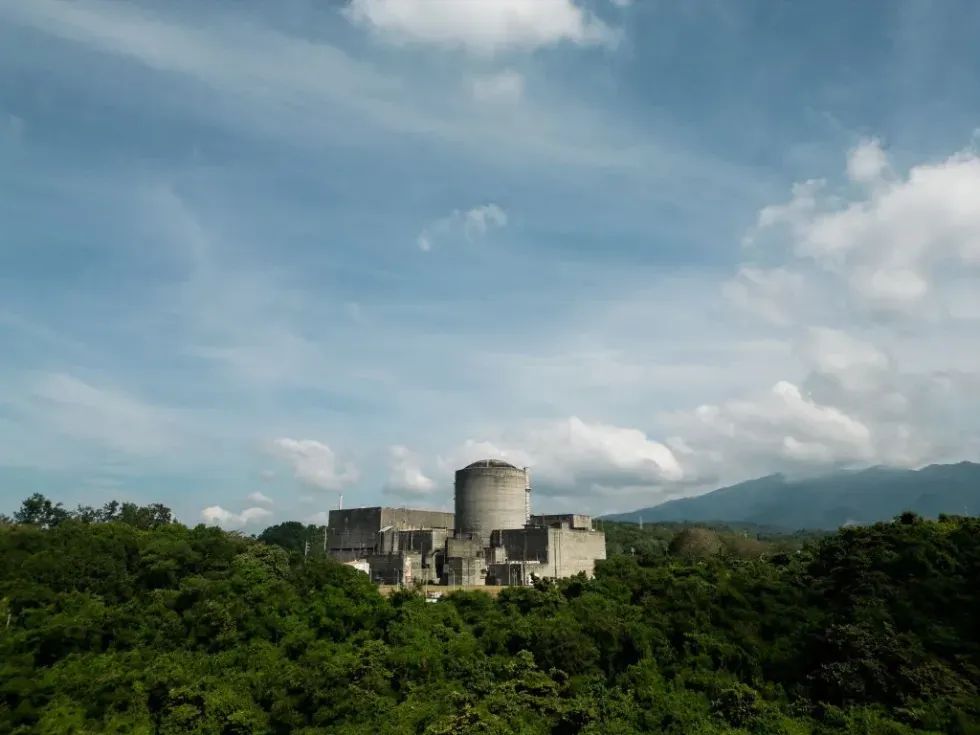
En route to China for the APEC summit, Trump stopped in the Philippines for a day of meetings, where he promised something “very big” on nuclear power. The fast-growing Southeast Asian nation built an American-designed nuclear station in the 1980s, but abandoned the facility right before turning it on in the wake of both the Chernobyl disaster and the collapse of strongman Ferdinand Marcos’ regime. With electricity prices soaring and Chinese coal plants lining its shores, President Ferdinand Marcos, Jr., the former dictator’s democratically elected son, has been pushing to revive his country’s civilian nuclear program. When I visited the deserted nuclear plant on the Bataan peninsula back in 2024, the facility was in decent shape, prompting a prominent Filipino lawmaker to urge the U.S. to complete the old reactor and build new Westinghouse units at the site. A handful of small modular reactor developers have made deals in the Philippines. But nothing yet is underway. “America’s civilian nuclear industry is also the best and most advanced in the world. And we’re dealing with you on that,” Trump said Wednesday at a press conference in Manila. “For the Philippines to embrace American technology in its first modern nuclear project would underscore the strength of the important relationship. We’re going to probably do something very big, having to do with nuclear.” Philippine concerns over China, particularly as Chinese Coast Guard vessels repeatedly engage Philippine ships in waters Manila claims, make Beijing an unlikely option for buying nuclear technology.
Meanwhile, in New York, Governor Kathy Hochul announced the completion of the state’s master plan for nuclear power and said Albany was eyeing funding from the federal government to support its construction of at least 5 gigawatts of new reactors. “We’re going to continue appealing to Washington for support,” she said in a speech Wednesday. “We have some opportunities right now, which hopefully we’ll find out we were selected for a very ambitious low-interest loan. That’ll just open the doors, but we’re not waiting. I want you to know this: We are not waiting.”
Sign up to receive Heatmap AM in your inbox every morning:
Email Address *Our Privacy Policy & Terms Apply.
4. EPA appeals court orders to unfreeze Solar for All funding
The Environmental Protection Agency illegally froze funding for the Biden-era Solar for All program, according to two recent court rulings. But the Trump administration is doubling down. On Tuesday, the agency filed an appeal to the U.S. District Court for the District of Rhode Island, challenging a ruling from September that found in favor of the Rhode Island AFL-CIO, the labor union federation that sued after the funding cuts canceled union jobs. Solar for All would have directed $7 billion toward deploying solar panels in some of the poorest communities in the U.S.
“Whether you care about grid resilience or energy security, climate change or job creation, Solar for All is for you,” Adam Kent, the senior director for green finance at the Natural Resources Defense Council, said in a statement. “That, apparently, is not reason enough for this administration to let off its attacks. Everyone should be for more energy, more jobs and lower bills, but the Trump administration is continuing unrelenting in its endless attacks on the new energy sources we need now more than ever.”
5. Ford opens its new battery plant
Ford has officially begun producing lithium-ion cells at its new $3 billion battery plant in Michigan. On Wednesday, the automaker said it had shipped the first cells from its BlueOval Battery Park in Michigan to its Louisville Assembly Plant to power the prototype of the new Ford Fathom electric pickup truck. “With this milestone, Ford is now in the battery business and will be the first to deliver LFP batteries in the U.S. for mainstream consumer automotive use,” the company said in a statement, referring to lithium iron phosphate batteries that promise to be lighter and hold more energy than the nickel-maganese-cobalt and nickel-cobalt-aluminum chemistries that dominate the EV industry.
The battery startup Sila, meanwhile, announced a long-term offtake agreement with electronics giant Panasonic. Under the $1 billion deal, Sila will supply its proprietary silicon-carbon anode material from its Moses Lake, Washington-based plant to Panasonic for its battery cells.
THE KICKER
Trump once promised to kill congestion pricing in New York City. Now his administration is promising to help other cities set up similar tolling programs for drivers. On Wednesday, the Federal Highway Administration announced $100 million in grants to help cities implement their own programs to battle traffic congestion. The agency removed references to “congestion” and “cordon,” a technical term for the toll imposed on drivers entering a designated zone, after Gothamist reported on the program, according to the local news outlet. Still, the Metropolitan Transportation Authority Chair Janno Lieber called the federal Department of Transportation’s apparent change of heart “a pretty remarkable about-face.”