GLOBALVARS
0
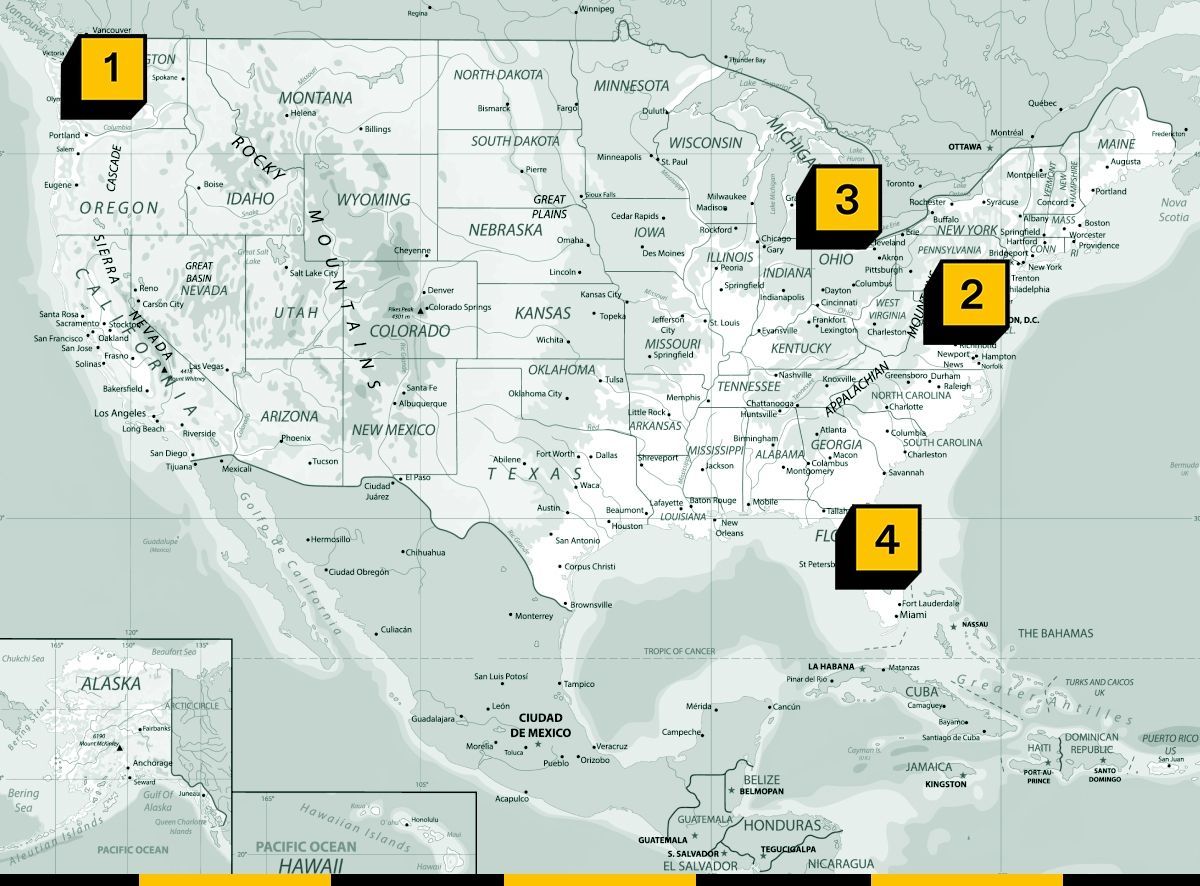
1. King County, Washington – The Moss Landing battery backlash is alive and well more than a year after the fiery disaster, fomenting an opposition stampede that threatens to delay a massive energy storage project two dozen miles east of Seattle.
- Moss Landing looms large in Snoqualmie, a city in the Cascade Mountains where Jupiter Power is trying to build Cascade Ridge Resiliency Energy Storage, a 130-megawatt facility conveniently located on unincorporated county land right by a substation and transmission infrastructure.
- To say residents nearby are upset would be an understatement. A giant number of protestors – reportedly 650 people, which is large for this community of about 14,000 – showed up to rally against the project this weekend, just as Jupiter Power submitted its application for the project to county regulators.
- The opposition is led by Snoqualmie Valley for Responsible Energy, a grassroots organization that primarily has focused on the risk of thermal runaway from battery storage events and rhetoric about the Moss Landing fire. “The battery chemistry proposed for Cascadia Ridge has not been verified in any public filing. Recent incidents illustrate what is at stake,” state SVRE strategy materials posted to their website.
- Jupiter Power has tried to combat this campaign with its own organizing coalition – dubbed “Keep the Lights On!” – that includes local union labor and some environmentalists, including volunteers for Sierra Club. This campaign has emphasized how modern engineering around battery storage is nothing like the set-up was at Moss Landing.
- However, the concerned voices are winning out over those who want the storage project. On Wednesday night, this outcry led the Snoqualmie city council at a special meeting to vote to request via letter for the storage project to be relocated and communicate that dissent to both the local utility, Puget Sound Energy, and King County.
- “We encourage consideration of alternate locations within the Puget Sound Energy transmission and distribution system to better address the concerns that have been raised,” read a draft version of the letter presented by councilors at the meeting.
- Jupiter Power told me it “welcome[s] any feedback from the community” and King County said in a statement, “We understand the concerns.” PSE told me they had not “received official notification about the formal action by the City Council and we can't comment on something we have not received.”
- This degree of on-the-ground frustration will be challenging for any higher-level decision maker in Washington State to ignore. I’d argue the entire storage sector should be watching closely.
2. Prince Williams County, Virginia – It was a big week for data center troubles. Let’s start with Data Center Alley, which started to show cracks this week as data center developer Compass announced it was pulling out of the controversial Digital Gateway mega-project.
- The Brookfield subsidiary withdrew from Digital Gateway after a court ruling reversed crucial rezoning decisions necessary for the proposal and Prince William County voted to drop its legal defense in support of its completion.
- This situation drew satisfied plaudits from anti-AI data center voices because it’s likely to indefinitely delay the project; even though tech developer QTS remains committed to Digital Gateway, project architects and landowners are now suing to get out of their sales contracts.
3. Washtenaw County, Michigan – Turning to Michigan, real estate firm Sansone abandoned plans to purchase land owned by Toyota to build a hyperscale data center campus after the local township instituted a 6-month moratoria.
- A representative for York township told Michigan news outlet MLive that Sansone notified them they were withdrawing their proposal in late March, shortly after the temporary ban was instituted. Sansone had not submitted any formal permitting requests or construction plans but did discuss potentially turning Toyota’s property into data centers.
- This is at least the fifth data center cancellation due to opposition so far in Michigan, according to Heatmap Pro data. On April 6, developer Deep Green rescinded its proposal in Lansing right before the city council was set to vote on approving the rezoning for construction.
4. Okeechobee County, Florida – The backlash to data centers is killing projects in deep-red Florida too, as this county’s commission decides to kill a 205-acre prospective data center campus led by a state college.
- Apparently local upset over the “Okee-One Data Center” project was so fierce an online petition to stop development gathered more than 3,000 signatures. For context, that’s about 18% of the total votes this county cast for president in 2024.
- Gov. Ron DeSantis had initially provided funding for the project only to then oppose Okee-One, telling local media it felt deceived and that the college’s plans were “based on falsehoods and pretenses about energy and water.” Some in the Florida press have gone so far as to claim the governor himself “canceled” the project, and the DeSantis administration is asking the college to return the funding
.