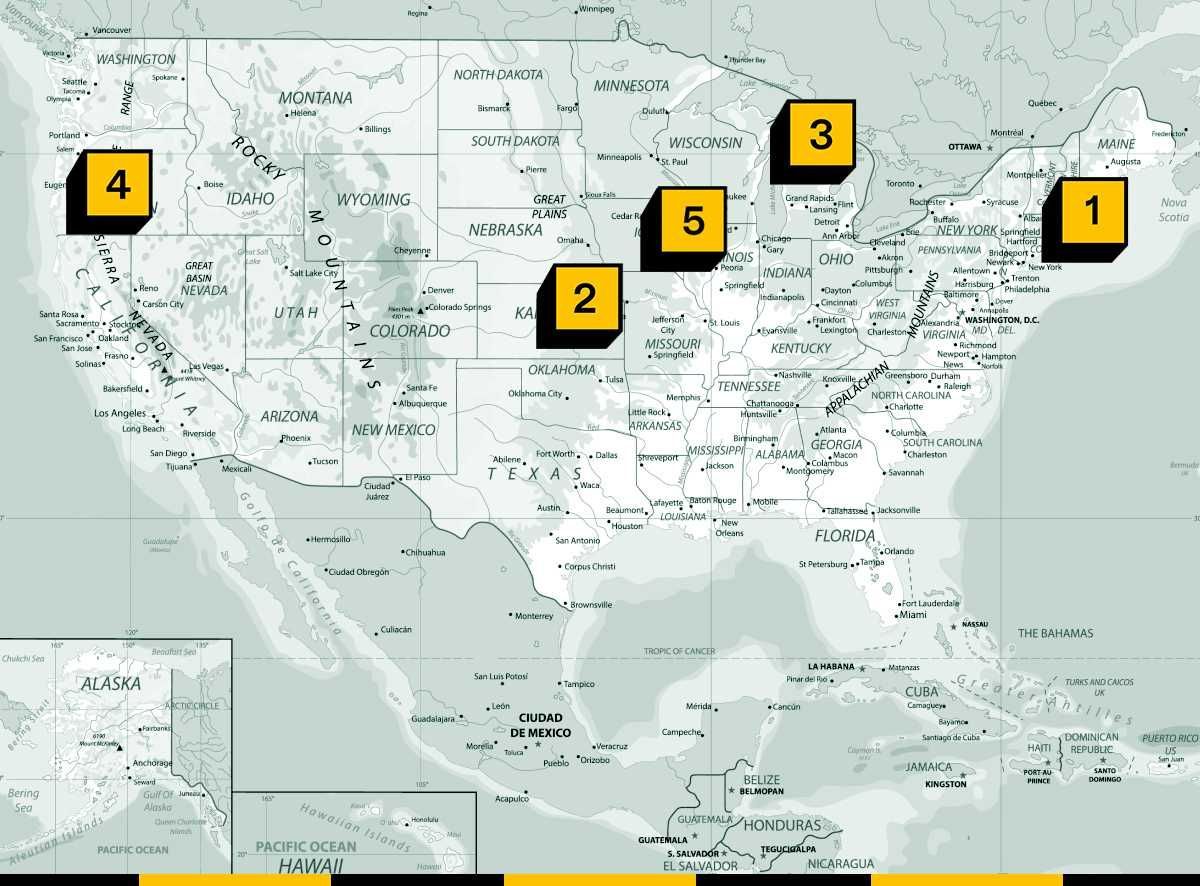
1. Nantucket, Massachusetts – A federal court for the first time has granted the Trump administration legal permission to rescind permits given to renewable energy projects.
- This week District Judge Tanya Chutkan – an Obama appointee – ruled that Trump’s Bureau of Ocean Energy Management has the legal latitude to request the withdrawal of permits previously issued to offshore wind projects. Chutkan found that any “regulatory uncertainty” from rescinding a permit would be an “insubstantial” hardship and not enough to stop the court from approving the government’s desires to reconsider issuing it.
- The ruling was in a case that the Massachusetts town of Nantucket brought against the SouthCoast offshore wind project; SouthCoast developer Ocean Winds said in statements to media after the decision that it harbors “serious concerns” about the ruling but is staying committed to the project through this new layer of review.
- But it’s important to understand this will have profound implications for other projects up and down the coastline, because the court challenges against other offshore wind projects bear a resemblance to the SouthCoast litigation. This means that project opponents could reach deals with the federal government to “voluntarily remand” permits, technically sending those documents back to the federal government for reconsideration – only for the approvals to get lost in bureaucratic limbo.
- What I’m watching for: do opponents of land-based solar and wind projects look at this ruling and decide to go after those facilities next?
2. Harvey County, Kansas – The sleeper election result of 2025 happened in the town of Halstead, Kansas, where voters backed a moratorium on battery storage.
- It’s bad news for Concurrent, the developer that was trying to build a large storage facility in the city. Halstead’s population isn’t very big – only about 2,000 people – and roughly a third of that population turned out to vote. The ballot-based battery ban won by a 2-1 margin with more than 400 people voting in favor.
- By the numbers, surrounding Harvey County is a difficult place for anyone to build battery storage or data centers, with an especially high 97 opposition risk score in the Heatmap Pro database. The county banned any approvals for new utility-scale solar and wind projects in 2023. So I guess this spot of land is off-limits now, entirely.
3. Cheboygan County, Michigan – A group of landowners is waging a new legal challenge against Michigan’s permitting primacy law, which gives renewables developers a shot at circumventing local restrictions.
- The lawsuit specifically goes after an EDP Renewables facility proposed in the small community of Grant Township in the upper tip of northern Michigan (the Mitten, not the Upper Peninsula). But it calls into question the legality of the siting law too, asserting that it allows solar facilities to skirt citizen protections provided by the state constitution that other businesses must follow.
- This is the second lawsuit filed against the siting law after a constellation of townships, counties and aggrieved landowners challenged the statute last year. We broke news of the lawsuit here in The Fight and have reported on ways some counties have still sought to restrict development anyway.
4. Klamath County, Oregon – It’s not all bad news today, as this rural Oregon county blessed a very large solar project with permits.
- The Klamath County Planning Commission approved permits for the Diamond Solar project – the county’s largest solar facility – which is being developed by an Invenergy subsidiary. Now that it has received this approval, the project shall proceed to construction and is expected to provide electrons to the grid by 2029.
- Diamond’s approval is a serious achievement. Klamath’s got a really rural character as its flush with classic Oregon forestland and it has a tendency to weigh local tribal concerns heavily against projects in siting decisions. This would ordinarily make it a more difficult spot for renewables projects, and this has bedeviled transmission proposals and pumped energy storage.
5. Muscatine County, Iowa – To quote DJ Khaled, another one: This county is also advancing a solar farm, eliding a handful of upset neighbors.
- Muscatine has a solar regulation dating back at least five years but doesn’t ban development, and this is an example of a county simply following an ordinance laying out a uniform process for projects, including hearings.
- One such hearing happened this week before the county zoning board during which Orion Renewables was apparently met with enthusiasm and support for their project. A likely reason for the happy faces: Orion is compensating adjacent landowners and giving a $200,000 donation to a county public works nonprofit every year.
- The Orion project still needs to be approved by the full county government and will likely require years more work to get all of its permits but signs are looking good for this one.