0

The United States and Israel have launched a devastating new war on Iran. What has happened so far, when could it end, and what could it mean for oil, gas, and the global energy shift?
Rob is joined by Gregory Brew, an analyst with the Eurasia Group’s energy, climate, and resources team focused on the geopolitics of oil and gas. He serves as the group’s country analyst for Iran. He’s also an historian of modern Iran, oil, and U.S. foreign policy, and the author of two books about the subject.
Shift Key is hosted by Robinson Meyer, the founding executive editor of Heatmap News.
Subscribe to “Shift Key” and find this episode on Apple Podcasts, Spotify, Amazon, or wherever you get your podcasts.
You can also add the show’s RSS feed to your podcast app to follow us directly.
Here is an excerpt from their conversation:
Robinson Meyer: I think the first place that people’s minds go when you’re talking about Iran, when you’re talking about the Strait of Hormuz, is oil. Why is the Strait of Hormuz particularly important to the global oil market? And then second of all, what have we seen as the initial effects here?
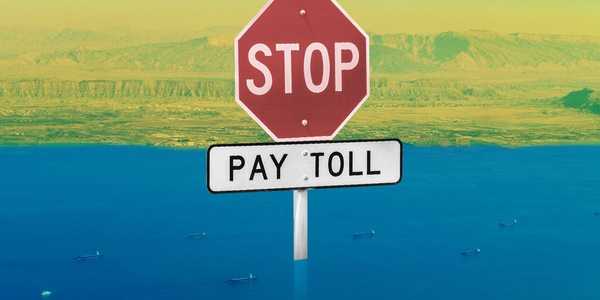
Gregory Brew: So the Strait of Hormuz matters for three reasons. One, it is a very narrow waterway. So it is quite easy, theoretically, to block it. Other waterways — even the Bab el-Mandab and the Red Sea, the Strait of Malacca, other strategic pathways through which large quantities of energy move — are not so easily disrupted as the Strait of Hormuz. That’s reason number one.
Reason number two, Iran. Iran is there. Iran frequently threatens to block the Strait of Hormuz, frequently threatens to close the Strait of Hormuz. It is a hostile actor vis-à-vis the other states in the region. We are now seeing proof of that, given that it is open fire on the GCC in a concerted way. That’s another reason why the Strait of Hormuz gets so much attention as far as the connection between the strait, the strait security and the situation in the global oil market.
The third reason — I guess there are four reasons. The third reason is the volume of energy moving through the strait. It’s close to a fifth of global oil supply. It’s 20 million barrels a day, sometimes a little more. It’s a significant portion of the global LNG supply coming from Qatar has to pass through the Strait of Hormuz. A large quantity of refined products, metal distillates, condensates, fuel oil moves through the strait. So the volume affected by the strait being closed or disrupted or affected in some way is very, very large.
Finally, fourth point, there’s nowhere else to go. You can’t go around the Strait of Hormuz. You have to go through it. Tankers that can’t transit the strait or are blocked from doing so have no other options. There’s no Africa route, as there was with the Red Sea disruption. So for those four reasons, the Strait of Hormuz gets a lot of attention. And it’s why it’s getting attention now. Although, interestingly enough, price of oil has responded, but has not moved so in a significant way, at least per some people’s expectations.
Meyer: Well, the theme of the year in oil so far has been that there’s a glut of oil. Or there’s at least a small glut of oil. We’ve kind of been dealing with that for a long time. And so I wonder if that is in some way — one hesitates to call this good for oil markets, but it is kind of solving an issue for the market. Do you think oil is the most important energy product affected by this war?
Brew: Well, it’s certainly the largest in terms of volume, given how much oil moves through the strait. However, I think this could end up being a gas story as much as an oil story.
You can find a full transcript of the episode here.
Mentioned:
From Heatmap: War With Iran Isn’t Just an Oil Story
From Heatmap: How Trump’s War Could Destabilize the Global Energy Market
This episode of Shift Key is sponsored by …
Accelerate your clean energy career with Yale’s online certificate programs. Explore the 10-month Financing and Deploying Clean Energy program or the 5-month Clean and Equitable Energy Development program. Use referral code HeatMap26 and get your application in by the priority deadline for $500 off tuition to one of Yale’s online certificate programs in clean energy. Learn more at cbey.yale.edu/online-learning-opportunities.
Music for Shift Key is by Adam Kromelow.