0

For this week's Q&A I hopped on the phone with Jesse Lee, a senior advisor at the strategic communications organization Climate Power. Last week, his team released new polling showing that while voters oppose the construction of data centers powered by fossil fuels by a 16-point margin, that flips to a 25-point margin of support when the hypothetical data centers are powered by renewable energy sources instead.
I was eager to speak with Lee because of Heatmap’s own polling on this issue, as well as President Trump’s State of the Union this week, in which he pitched Americans on his negotiations with tech companies to provide their own power for data centers. Our conversation has been lightly edited for length and clarity.
What does your research and polling show when it comes to the tension between data centers, renewable energy development, and affordability?
The huge spike in utility bills under Trump has shaken up how people perceive clean energy and data centers. But it’s gone in two separate directions. They see data centers as a cause of high utility prices, one that’s either already taken effect or is coming to town when a new data center is being built. At the same time, we’ve seen rising support for clean energy.
As we’ve seen in our own polling, nobody is coming out looking golden with the public amidst these utility bill hikes — not Republicans, not Democrats, and certainly not oil and gas executives or data center developers. But clean energy comes out positive; it’s viewed as part of the solution here. And we’ve seen that even in recent MAGA polls — Kellyanne Conway had one; Fabrizio, Lee & Associates had one; and both showed positive support for large-scale solar even among Republicans and MAGA voters. And it’s way high once it’s established that they’d be built here in America.
A year or two ago, if you went to a town hall about a new potential solar project along the highway, it was fertile ground for astroturf folks to come in and spread flies around. There wasn’t much on the other side — maybe there was some talk about local jobs, but unemployment was really low, so it didn’t feel super salient. Now there’s an energy affordability crisis; utility bills had been stable for 20 years, but suddenly they’re not. And I think if you go to the town hall and there’s one person spewing political talking points that they've been fed, and then there’s somebody who says, “Hey, man, my utility bills are out of control, and we have to do something about it,” that’s the person who’s going to win out.
The polling you’ve released shows that 52% of people oppose data center construction altogether, but that there’s more limited local awareness: Only 45% have heard about data center constructionin their own communities. What’s happening here?
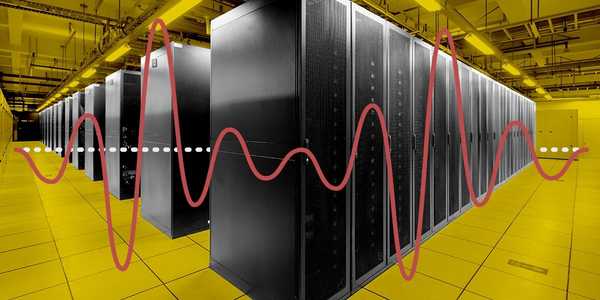
There’s been a fair amount of coverage of [data center construction] in the press, but it’s definitely been playing catch-up with the electric energy the story has on social media. I think many in the press are not even aware of the fiasco in Memphis over Elon Musk’s natural gas plant. But people have seen the visuals. I mean, imagine a little farmhouse that somebody bought, and there’s a giant, 5-mile-long building full of computers next to it. It’s got an almost dystopian feel to it. And then you hear that the building is using more electricity than New York City. This is very intimidating
The big takeaway of the poll for me is that coal and natural gas are an anchor on any data center project, and reinforce the worst fears about it. What you see is that when you attach clean energy [to a data center project], it actually brings them above the majority of support. It’s not just paranoia: We are seeing the effects on utility rates and on air pollution — there was a big study just two days ago on the effects of air pollution from data centers. This is something that people in rural, urban, or suburban communities are hearing about.
Do you see a difference in your polling between natural gas-powered and coal-powered data centers? In our own research, coal is incredibly unpopular, but voters seem more positive about natural gas. I wonder if that narrows the gap.
I think if you polled them individually, you would see some distinction there. But again, things like the Elon Musk fiasco in Memphis have circulated, and people are aware of the sheer volume of power being demanded. Coal is about the dirtiest possible way you can do it. But if it’s natural gas, and it’s next door all the time just to power these computers — that’s not going to be welcome to people.
I'm sure if you disentangle it, you’d see some distinction, but I also think it might not be that much. I’ll put it this way: If you look at the default opposition to data centers coming to town, it’s not actually that different from just the coal and gas numbers. Coal and gas reinforce the default opposition. The big difference is when you have clean energy — that bumps it up a lot. But if you say, “It’s a data center, but what if it were powered by natural gas?” I don’t think that would get anybody excited or change their opinion in a positive way.
Transparency with local communities is key when it comes to questions of renewable buildout, affordability, and powering data centers. What is the message you want to leave people with about Climate Power’s research in this area?
Contrary to this dystopian vision of power, people do have control over their own destinies here. If people speak out and demand that data centers be powered by clean energy, they can get those data centers to commit to it. In the end, there’s going to be a squeeze, and something is going to have to give in terms of Trump having his foot on the back of clean energy — I think something will give.
Demand transparency in terms of what kind of pollution to expect. Demand transparency in terms of what kind of power there’s going to be, and if it’s not going to be clean energy, people are understandably going to oppose it and make their voices heard.