0
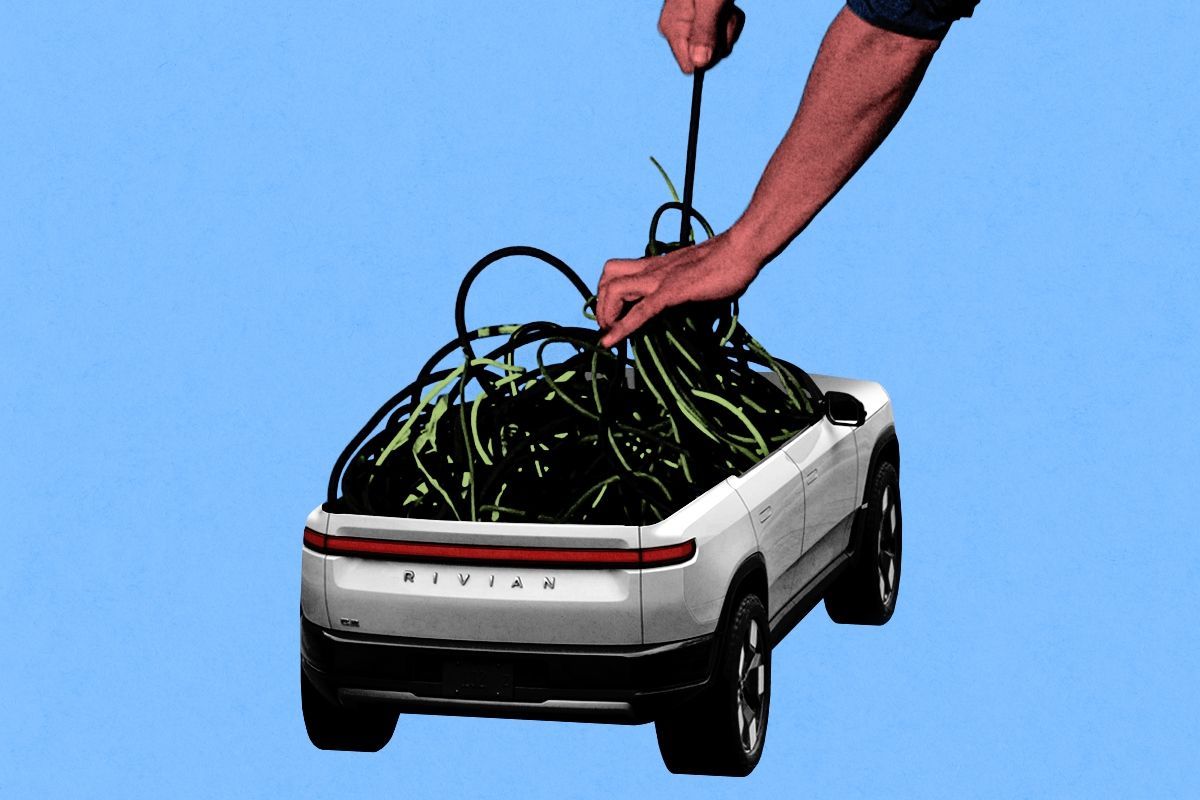
Batteries are the bugaboo. We know that. Electric cars are, at some level, just giant batteries on wheels, and building those big units cheaply enough is the key to making EVs truly cost-competitive with fossil fuel-burning trucks and cars and SUVs.
But that isn’t the end of the story. As automakers struggle to lower the cost to build their vehicles amid a turbulent time for EVs in America, they’re looking for any way to shave off a little expense. The target of late? Plain old wires.
Last month, when General Motors had to brace its investors for billions in losses related to curtailing its EV efforts and shifting factories back to combustion, it outlined cost-saving measures meant to get things moving in the right direction. While much of the focus was on using battery chemistries like lithium ion phosphate, otherwise known as LFP, that are cheaper to build, CEO Mary Barra noted that the engineers on every one of the company’s EVs were working “to take out costs beyond the battery,” of which cutting wiring will be a part.
They are not alone in this obsession. Coming into a do-or-die year with the arrival of the R2 SUV, Rivian said it had figured out how to cut two miles of wires out of the design, a coup that also cuts 44 pounds from the vehicle’s weight (this is still a 5,000-pound EV, but every bit counts). Ford has become obsessed with figuring out smarter and cheaper ways for its money-hemorrhaging EV division to build cars; the company admitted, after tearing down a Tesla Model 3 to look inside, that its Mustang Mach-E EV had a mile of extra and possibly unnecessary wiring compared to its rival.
A bunch of wires sounds like an awfully mundane concern for cars so sophisticated. But while every foot adds cost and weight, the obsession with stripping out wiring is about something deeper — the broad move to redefine how cars are designed and built.
It so happens that the age of the electric vehicle is also the age of the software-defined car. Although automobiles were born as purely mechanical devices, code has been creeping in for decades, and software is needed to manage the computerized fuel injection systems and on-board diagnostic systems that explain why your Check Engine light is illuminated. Tesla took this idea to extremes when it routed the driver’s entire user interface through a giant central touchscreen. This was the car built like a phone, enabling software updates and new features to be rolled out years after someone bought the car.
As Tesla ruled the EV industry in the 2010s, the smartphone-on-wheels philosophy spread. But it requires a lot of computing infrastructure to run a car on software, which adds complexity and weight. That’s why carmakers have spent so much time in the past couple of years talking about wires. Their challenge (among many) is to simplify an EV’s production without sacrificing any of its capability.
Consider what Rivian is attempting to do with the R2. As InsideEVs explains, electric cars have exploded in their need for electronic control units, the embedded computing brains that control various systems. Some models now need more than 100 to manage all the software-defined components. Rivian managed to sink the number to just seven, and thus shave even more cost off the R2, through a “zonal” scheme where the ECUs control all the systems located in their particular region of the vehicle.
Compared to an older, centralized system that connects all the components via long wires, the savings are remarkable. As Rivian chief executive RJ Scaringe posted on X: “The R2 harness improves massively over the R1 Gen 2 harness. Building on the backbone of our network architecture and zonal ECUs, we focused on ease of install in the plant and overall simplification through integrated design — less wires, less clips and far fewer splices!”
Legacy automakers, meanwhile, are racing to catch up. Even those that have built decent-selling quality EVs to date have not come close to matching the software sophistication of Tesla and Rivian. But they have begun to see the light — not just about fancy iPads in the cockpit, but also about how the software-defined vehicle can help them to run their factories in a simpler and cheaper way.
How those companies approach the software-defined car will define them in the years to come. By 2028, GM hopes to have finished its next-gen software platform that “will unite every major system from propulsion to infotainment and safety on a single, high-speed compute core,” according to Barra. The hope is that this approach not only cuts down on wiring and simplifies manufacturing, but also makes Chevys and Cadillacs more easily updatable and better-equipped for the self-driving future.
In that sense, it’s not about the wires. It’s about all the trends that have come to dominate electric vehicles — affordability, functionality, and autonomy — colliding head-on.