Current conditions: The winter storm barreling from Texas to Delaware could drop up to 2 feet of snow on Appalachia • Severe floods in Mozambique’s province of Gaza have displaced nearly 330,000 people • Parts of northern Minnesota and North Dakota are facing wind chills of -55 degrees Fahrenheit.
THE TOP FIVE
1. Trump takes an off-ramp from Greenland push
President Donald Trump announced a “framework of a future deal” on Greenland on Wednesday and abandoned plans to slap new tariffs on key European Union allies. He offered sparse details of the agreement, though he hinted that at least one provision would allow for the establishment of a missile-defense system in Greenland akin to Israel’s Iron Dome, which Trump has called “The Golden Dome.” On the Arctic island in question, meanwhile, Greenlanders have been preparing for the worst. The newspaper Sermitsiaq reported that generators and water cans have sold out as panic buyers stocked up in anticipation of a possible American invasion.
2. Two leading geothermal startups raise a combined $212 millio
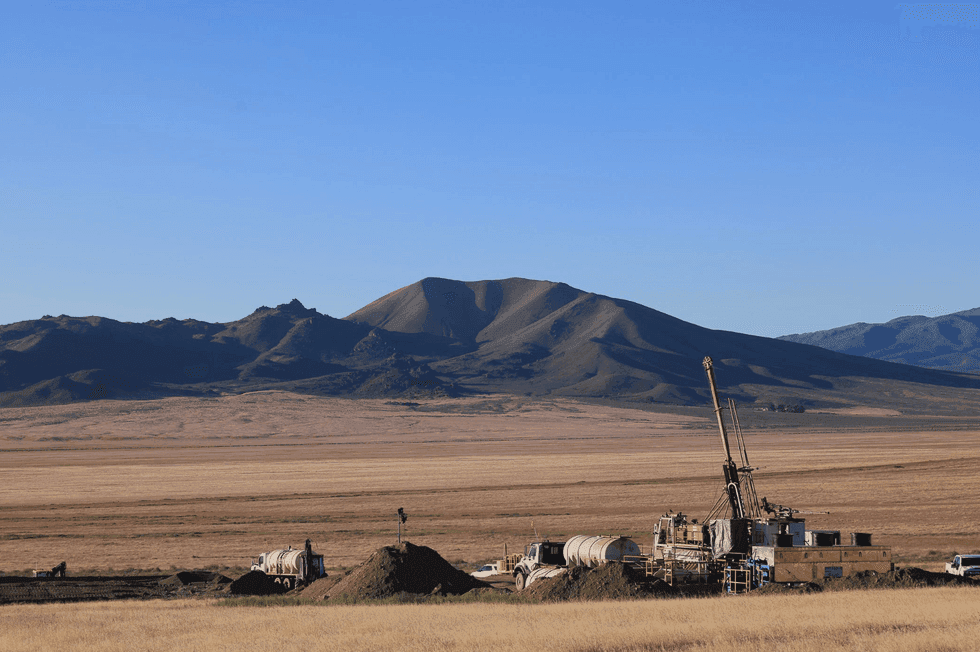
Geothermal startups had a big day on Wednesday. Zanskar, a company that’s using artificial intelligence to find untapped conventional geothermal resources, raised $115 million in a Series C round. The Salt Lake City-based company — which experts in Heatmap's Insider Survey identified as one of the most promising climate tech startups operating today — is looking to build its first power plants. “With this funding, we have a six power plant execution plan ahead of us in the next three, four years,” Diego D’Sola, Zanskar’s head of finance, told Heatmap’s Katie Brigham. This, he estimates, will generate over $100 million of revenue by the end of the decade, and “unlock a multi-gigawatt pipeline behind that.”
Later on Tuesday, Sage Geosystems, a next-generation geothermal startup using fracking technology to harness the Earth’s heat for energy in places that don’t have conventional resources, announced it had raised $97 million in a Series B. The financing rounds highlight the growing excitement over geothermal energy. If you want a refresher on how it works, Heatmap’s Matthew Zeitlin has a sharp explainer here.
3. Europe’s flagship green steel project inks a major deal
Stegra, the Swedish startup racing to build the world’s first large green steel mill near the Arctic Circle, has recently faced troubles as project costs and delays forced the company to raise over $1 billion in new financing. But last week, Stegra landed a major new customer, marking what Canary Media called “a step forward for the beleaguered project.” A subsidiary of the German industrial giant Thyssenkrupp agreed to buy a certain type of steel from Stegra’s plant, which is set to start operations next year. Thyssenkrupp Materials Services said it would buy tonnages in the “high-six-digit range” of “non-prime” steel, a version of the metal that doesn’t meet the high standards for certain uses but remains strong and durable enough for other industrial applications.
Sign up to receive Heatmap AM in your inbox every morning:
4. Tesla updates its mission statement
For years, Tesla’s mission statement has captured its focus on building electric vehicles, solar panels, and batteries: “Accelerating the world’s transition to sustainable energy.” Now, however, billionaire Elon Musk’s manufacturing giant has broadened its pitch. The company’s new mission statement, announced on X, reads: “Building a world of amazing abundance.” The change reflects a wider shift in the cultural discourse around the transition to new energy and transportation technologies. Even experts polled in our Insiders Survey want to ditch “climate change” as a term. The fatigue was striking coming from the very scientists, policymakers, and activists working to defend against the effects of human-caused temperature rise and decarbonize the global economy.That dynamic has fueled the push to refocus rhetoric on the promise of cheaper, more efficient, and more abundant technological luxuries — a concept Tesla appears to be tapping into now. It may be time for a change. As Matthew wrote in September, Tesla’s market share hit an all-time low last year.
5. The world’s biggest nuclear plant comes back online
In yesterday’s newsletter, I told you that the Tokyo Electric Power Company had delayed the restart of the Kashiwazaki Kariwa nuclear power station in western Japan over an alarm malfunction. It wasn’t immediately clear how quickly Japan’s state-owned utility would clear up the issue. It turns out, pretty quickly. The pause lasted just 24 hours before Tepco brought Unit 6 of the seven-reactor facility back online, NucNet reported.
THE KICKER
Things are getting steamy in the frigid waters of Alaska’s Bristol Bay. New research from Florida Atlantic University’s Harbor Branch Oceanographic Institute found that a small population of beluga whales survive the long haul by mating with multiple partners over several years. It’s not just the males finding multiple female partners, as is the case with some other mammals. The study found that both males and females mated with multiple partners over several years. “What makes this study so thrilling is that it upends our long-standing assumptions about this Arctic species,” Greg O’Corry-Crowe, the research professor who authored the study, said in a press release. “It’s a striking reminder that female choice can be just as influential in shaping reproductive success as the often-highlighted battles of male-male competition. Such strategies highlight the subtle, yet powerful ways in which females exert control over the next generation, shaping the evolutionary trajectory of the species.”