GLOBALVARS
0

This transcript has been automatically generated.
Subscribe to “Shift Key” and find this episode on Apple Podcasts, Spotify, Amazon, or wherever you get your podcasts.
You can also add the show’s RSS feed to your podcast app to follow us directly.
Robinson Meyer:
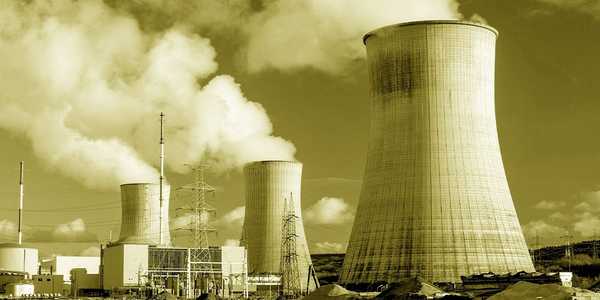
[1:26] Hi, I’m Robinson Meyer, the founding executive editor of Heatmap News. It is Friday, March 20. Earlier this month, China released the draft outline of its next five-year plan, which sets out the country’s development pathway for 2026 to 2030. The plan is a big deal. China remains the world’s number one climate polluter, but its greenhouse gas emissions have been flat or declining for the past two years, depending on how you count. Its clean energy industry, and particularly its electric vehicle industry, is now the envy of the developed world. At the same time, as we’ve covered on this show, China has re-embraced coal in the past five years as part of an energy security push that has kept its emissions from falling as fast as they otherwise might have. In particular, the country has built these huge, new, and unbelievably carbon-intensive facilities that convert coal into petrochemicals. These are somewhat, frankly, duplicative factories within the country that were meant to protect China if the global oil trade were to ever shut down or suffer some kind of crisis. And while these factories might have been built to give the country some leverage over Taiwan and the United States, they’re coming in handy now given the current global energy crisis caused by the closure of the Strait of Hormuz.
Robinson Meyer:
[2:38] Given all of that context, I think the five-year plan doesn’t lean into clean energy as much as some might have hoped. In the new outline, China says it wants to keep expanding the massive clean energy bases in the country’s interior. These are huge rural areas that are connected to its coastal cities by huge long-distance transmission lines. China’s made it very easy to build wind and solar power there. The new plan also says China should build what it calls a quote, new type power system, unquote, which would incorporate variable wind and solar, smart grids, batteries, large-scale long-distance transmission.
Robinson Meyer:
[3:13] China wants to build 100 gigawatts of offshore wind capacity and another 100 gigawatts of pumped hydro storage. It thinks it will add 10 gigawatts per year of new nuclear capacity along the coast, which is actually a bit of a slowdown. The new five-year plan, though, doesn’t say a lot about coal. And while it calls for promoting the peaking of coal and oil consumption, that’s actually a bit of a walkback compared to what the country was saying in 2021. As you’ll hear, China’s also revised how it accounts for its carbon emissions in ways that are pretty politically convenient and may allow the country to hit Paris Agreement goals that it wasn’t on track to meet.
Robinson Meyer:
[3:50] So there’s a lot to talk about here. It’s a very important document. It helps us understand where the world’s biggest air polluter thinks it’s going in the next five years. It also helps us understand the direction of the global energy industry over the next five years, given that China is both the number one consumer of fossil fuels globally and also the number one producer of clean energy. And here to talk about it today, I am joined by one of the world’s greatest experts on Chinese emissions outside of China.
Robinson Meyer:
[4:17] Lauri Myllyvirta is the lead analyst and co-founder of the Centre for Research on Energy and Clean Air, which is an independent research organization headquartered in Finland. It produces some of the most respected and cited independent assessments of China’s greenhouse gas emissions. I’ll say ’s work and the center’s work is behind a lot of the headlines you’ll see about China’s falling emissions, about its carbon intensity, about its energy future. If you ever see like a news story at the New York Times or the BBC or heat map about the direction of China’s emissions, actually, the Centre for Research on Clean Air’s assessments are probably somewhere in there. We had a great conversation with Lauri last year on Shift Key, so I’m excited to welcome back to the podcast. This time, we get into the new five-year plan, what actually drives China’s energy policy, and whether China is keeping the climate promises that it’s made. We also talk about what the closure of the Strait of Hormuz and this new global energy crisis could mean for China. It is always good to talk to Lauri. I had a lot of fun with him. This time, let’s go to that conversation now. All of this and more. It’s all coming up today on Shift Key. Lauri Myllyvirta, welcome to Shift Key.
Lauri Myllyvirta:
[5:27] Thanks so much. Thanks for having me.
Robinson Meyer:
[5:29] So China recently released its new five-year plan. Looking at this plan through the point of view of global decarbonization, was the plan good or bad news?
Lauri Myllyvirta:
[5:40] I think it was very much expected with a few surprises, but overall, it’s really a continuation of the theme of pursuing an ambitious build-out of clean energy industries, manufacturing, technological development, and overall building the basis for a decarbonized power system. There was one quite specific bit of that news, which was that China had been falling quite badly behind on its carbon intensity targets, which are the key targets that China has set under the Paris Agreement for 2030. And so there was a question of how is the country going to get back on track? And the answer is that they did that by revising the numbers to date rather than by setting a stronger target for the next five years to make up for what had seemed like a shortfall before the new numbers came out.
Robinson Meyer:
[6:44] When we look at these goals, it seems like sometimes they’re linear extensions of trends that are already in place. They’re goals that would be very hard to miss because in some cases, the concrete’s already being poured for the scale of nuclear buildout, for instance, that the planet imagines or the production capacity already exists to make the scale of solar panels, for instance, that would need to be installed. But it also does seem that these goals do serve as useful targets for the Chinese economy, for Chinese local and provincial planners, how does the five-year plan kind of trickle down into actual economic outcomes and how does it shape them?
Lauri Myllyvirta:
[7:23] Right. That is a very good question. A lot of that is soft signals about priorities rather than hard numbers, especially when we’re talking about this top-level plan. So this is the draft of the outline of the five-year plan that we’re talking about right now. So this will inform five-year plans for the provinces. This will inform five-year plans for all the different sectors prepared by different ministries, prepared by state-owned enterprises, and so on. And during the five-year period, these priorities inform financing, lending decisions, and a whole host of other decisions around the country. And again, this is much more about the soft signals. Also, if a specific technology gets a mention that it’s to be vigorously promoted, then that just tells you, like tells every banker in the country that when there’s a loan application on your desk for this specific tech, then you should
Lauri Myllyvirta:
[8:29] view it more favorably, and so on. So in that sense, those signals do trickle down in a lot of ways. And so then if you think about some of the technologies that did get such a mention in the five-year plan, so that would be, for example, green fuels, synthetic fuels made with green electricity. And so that’s something that this five-year plan signals is going to start happening a lot faster than was previously anticipated so the standard way to think about the clean energy transition is that you first build as much clean power as the grid will take get the grid very clean and then only after that you start to think about how do you convert that clean electricity into fuels to replace those bits of fossil fuel use that can’t be electrified but this is starting to happen a lot faster and it reflects a couple of different things so one of them is concerns about how fast you can reform and overhaul the grid to be able to take as much clean power as is being built at the moment. And the other one is shifting priorities. So more focus on replacing imported oil and gas because of the energy security concerns. So for both of these reasons, it makes sense to start building up this industry.
Robinson Meyer:
[9:49] When you were last on the show, we were talking about the rise of the coal to chemicals industry in China. And in some ways, it seems quite prophetic because of what’s now happened with Hormuz. And we can talk about that in a second. But what does the plan suggest about China’s goals for the coal industry And does the plan suggest that Chinese leaders understand the coal industry to be in secular decline? Or do they see it as like a core part of the energy security package for the country?
Lauri Myllyvirta:
[10:18] There’s very little about coal in this five-year plan document. So obviously, there will be a coal industry five-year plan and a chemical industry five-year plan and so on. Later on, What is more notable is what isn’t there on coal. Xi Jinping had said earlier in 2021 that China would, during this five-year period that’s now starting, would gradually reduce coal consumption.
Lauri Myllyvirta:
[10:46] And that line is not there. It’s been replaced by promoting the peak of coal consumption. And there was also a bit of nuance on that because this line came out already in the autumn from the central committee of the communist party and the official news agency ran a Q&A piece on what that means before the conference where the five-year plan was to be adopted and they explained that what it actually means is that coal consumption should reach a plateau in 2027 and coal consumption in the power industry, so coal-fired power generation and coal consumption in the chemical industry, so coal-to-chemicals would continue to grow beyond this 2027 peak date. So the idea is that coal consumption would be reduced in the other sectors, other heavy industry sectors and so on. But the current downtrend in coal-fired power generation would turn into another period of growth and coal consumption in the coal to chemicals industry would continue to grow rapidly.
Robinson Meyer:
[11:59] So interesting. And also it kind of turns on the fact that my understanding, part of what’s happening here is that these phrases kind of circulate at the highest level and she may say them or another kind of national leader may say them and then they assume a kind of totemic quality, but sometimes their deeper Talmudic meaning needs to be spelled out by a lower entity that says exactly kind of what this totemic phrase is supposed to mean.
Lauri Myllyvirta:
[12:27] Yeah, absolutely. But one thing that has happened is that ministries seem to have a lot less leeway to interpret and take these things further. When something has been announced by President Xi personally as the timeline for carbon peaking and so on has been, then it’s very hard for lower level officials to make tweaks to that. And I think that the low ambition for clean energy in the plan signals this overall. So basically, if you take the clean energy targets in the plan at face value, they would mean significantly slowing down, significantly reducing the amount of clean energy that is added every year, which I don’t think the policymakers really want or anticipate. But the plans have to maintain this storyline that emissions have been growing but they haven’t for the past two years but so they will go back into growth and then only start peaking towards 2030 because that’s the official timeline.
Robinson Meyer:
[13:35] There’s a lot of excitement online, and I think in some parts of, let’s say, like the Western or international left, about China establishing a new kind of global energy regime, and that China’s claim to some kind of global leadership status or quasi-hegemony is premised on its clean energy industry, on its batteries, on its EVs. Do China’s leaders seem to embrace that vision as represented in this plan or other recent rhetoric from them?
Lauri Myllyvirta:
[14:05] They have increasingly started to do that. So China’s leaders have been very cautious of claiming any kind of leadership. There was, in fact, a major debate about this about five years back. Can China claim to be a leader and have been very conscious of the-
Robinson Meyer:
[14:23] In climate change or globally and politically?
Lauri Myllyvirta:
[14:26] Exactly. And so then the line that they landed on in 2020 was that China is a major contributor to the global effort on climate, but it’s a leader on building ecological civilization.
Lauri Myllyvirta:
[14:41] Which is a project that obviously China can own and define. But so the whole point here is that China’s leaders have been very aware of the expectations that they would set by claiming leadership and have been wary of doing that. But so in 2025, China’s diplomats and even Xi Jinping himself started to emphasize China’s role as a supplier of clean tech to the rest of the world and started to embrace that message. And that’s a significant reimagining of China’s role in the world. And I do think there is some truth to China creating a new paradigm. So So this approach that I called supply-side climate policy, so making clean energy, solar, energy storage, electric vehicles, so competitive, so affordable, that they become the preferred way for a lot of developing and emerging countries to pursue modernization, industrialization, growth, and an alternative to the fossil fuel-based path of pursuing those things. And this message of pro-growth, clean energy has obviously a lot of appeal in countries that want to develop and industrialize.
Robinson Meyer:
[16:07] I guess what I’m asking is, it sounds like China’s leaders are both talking about China as a global leader or global contributor to climate action, but also maybe not leaning into it in the same way in this five-year plan outline as much as they could have. And or they talk about scaling up clean energy but they also talk about scaling up lots of other technologies needed for this kind of primary goal of energy security such as the coal to chemicals industry or the coal industry or the green fuels industry can you just like walk through that tension a bit between energy security and climate change what do china’s leaders emphasize more And when China’s leaders kind of imagine, to the extent we can get into this, obviously, but like when China’s leaders imagine a future global security regime in which China plays a larger role, do they see these clean energy technologies as essential to that new order? Or do they see energy security kind of coming first and the clean energy technologies are a tool to achieve that energy security? But so is the coal to chemicals industry, this enormously carbon intensive and often duplicative industry that China seems to have spun up entirely for energy security reasons.
Lauri Myllyvirta:
[17:25] For sure, I think there are both synergies and tensions very clearly. So one thing is electrification very clearly hits both targets at the same time. So electrification enables the industrial sector, building sector, transport sector to become ... And much less carbon intensive because electricity keeps getting cleaner, the fuels don’t. But it’s also something that the coal industry likes because it enables coal-fired power plants to supply more to those sectors instead of oil and gas. So then the coal industry was very heavily promoting this line that coal-fired power generation can keep growing while emissions peak and start to decline. And electrification is also the enabler of that. And of course, clean energy is a part of China’s domestic energy portfolio. Very clearly, they have very strong domestic supply chains for solar, for wind, for nuclear, for batteries, for all the key technologies. So it’s very much something that is secure domestic energy in every sense. But then the tension is with coal-fired power generation, which also overall China imports about 10% of the coal that it uses.
Lauri Myllyvirta:
[18:48] But for some provinces, it’s a lot more, especially on the coast. And so there has been tension here. So the long-term plan has been to move the coal industry inland, where it can use domestic coal. It’s very hard for Chinese coal mines far inland to compete with imported coal on the coast. But so then during the previous five years, many of the coastal provinces built very large amounts of new coal-fired power plants because of concerns about another aspect of energy security, which is whether you have enough capacity to meet electricity demand during times of peak demand. And that increased the structural reliance on imported coal. So just as any other policymakers, they’re juggling multiple emergencies and perceived emergencies and priorities at the same time and making a lot of compromises, some of them short term and so on.
Robinson Meyer:
[21:17] So let’s get into this question about the Chinese emissions target. So China, I think, has a reputation internationally for always meeting its emission targets and for setting emissions targets that it can hit. And when it’s sometimes conservative in its targets, there’s a sense that, OK, well, it is being conservative, but that’s because it’s very focused on setting targets that it can hit. But it sounds like in the run up to this report, it became clear that China was not going to hit its 2030 target under the Paris Agreement. And so As you write, it basically revised its own accounting metric. Can you just describe what happened there and how it was able to change its accounting midstream, basically?
Lauri Myllyvirta:
[22:02] I’ll start with what is known. China has been reporting on reduction in carbon intensity. Carbon intensity is the amount of CO2 per unit of GDP. And so if emissions stay flat, GDP goes up by 5%, carbon intensity falls by a bit less than 5% in a year.
Robinson Meyer:
[22:21] My understanding, and maybe this is wrong, is that up until 2030, the bulk of its emissions targets under the Paris Agreement, its nationally determined contributions are phrased in the terms of carbon intensity, not in the terms of like, here’s what our national emissions target is going to be. They were primarily talking about our big target is reducing the carbon intensity of our economy, rather than hitting some kind of tons per year goal that the U.S. and Europe and a lot of other countries adopted.
Lauri Myllyvirta:
[22:50] For sure. So for 2020 and 2030, China has had a few different targets, but the one that is most closely related to emissions, and in that sense, the cornerstone target is carbon intensity. And so until 2020, China was overachieving that target. But then during the COVID and Zero COVID period, China went through very ...
Lauri Myllyvirta:
[23:18] energy-intensity, a period of very energy-intensive and carbon-intensive period of growth with the service industries and other less energy-intensive industries were obviously not doing great. So that meant that carbon intensity started falling much more slowly, CO2 emissions grew faster during that period, at least according to the numbers that China had reported. So they had been reporting carbon intensity reductions every year. And if you take the numbers from 2021 to 2025 they add up to a reduction of about 12% in China’s carbon intensity over that five-year period and the target was 18% and that’s what they needed to get on track to or stay on track to the 2030 carbon intensity target and so that means that if you have a shortfall of six percentage points during these five years then the target for the next five years becomes very demanding.
Lauri Myllyvirta:
[24:18] But so then along comes this new five year plan. And it says that we achieved a reduction of 17.7% instead of the 12-point-something percent. So that is a huge revision. If you rephrase that in emission terms, it means that earlier China had said that their emissions over this five year period had increased about 13% in absolute terms. And now they say the increase was only 6%. So half of the emission growth disappeared. So this is what we know for a fact. The less clear part is what is this revision based on?
Lauri Myllyvirta:
[24:59] The only indication of that is the latest annual report that discloses this carbon intensity reduction had a footnote saying that carbon intensity means carbon emissions per unit of GDP from energy activities and industrial processes. Whereas earlier, there had been no definition. But if you work with China’s numbers, the only way to make the earlier numbers add is that it’s only CO2 emissions from fossil fuels. So they included industrial processes and quite clearly excluded so-called non-energy use of energy, of fossil fuels, which means fossil fuels being used as a feedstock for producing things like plastics or fertilizer or whatnot. And so the big question here is non-energy use went up massively over the five-year period. We know that that’s all the culture chemicals and oil-based petrochemicals growth which has been massive but.
Lauri Myllyvirta:
[26:05] Did the amount of carbon that is stored in the products from this industry really increase so much that it justifies this massive revision to the numbers? And I’ve been trying to calculate that in a number of different ways, and I don’t think there’s a way to make this up. So especially with coal-based chemical production, much less than half of the carbon in the coal ends up in the products and the less ends up as process emissions from the coal to chemicals process. And so I think the most likely explanation here is that there are major gaps in the process emissions data from this industry and those process emissions are substantially underreported. But this is, again, this is just my best attempt at parsing the picture together from very partial information. So the really important thing is to push for and get clarification on this revision and what it means for the integrity of China’s carbon accounting for the future.
Robinson Meyer:
[27:16] How does this fit with other information that we have about Chinese emissions? Because my sense was that outside assessments of Chinese emissions, like yours, for instance, show that China’s greenhouse gas emissions have plateaued over the past two years. So how does that fit in with these carbon intensity data?
Lauri Myllyvirta:
[27:36] So my estimates and those by others such as global carbon projects have shown a plateauing of emissions starting from early 2024, but this is about the period from 2020 to 2025. And those other assessments, as well as China’s earlier annual reporting, showed a very sharp increase from 2020 to 2023. One thing that I want to just point out is that I think for most people, if you hear 2020 being used as the base year, you assume that was a massive dip because of COVID, but it was not the case in China. In China, CO2 emissions increased year on year in 2020.
Robinson Meyer:
[28:18] What it sounds like you’re describing very diplomatically is China misrepresenting or not fully reporting its emissions and air pollution data for politically convenient reasons. I remember there was some of this back during the days of, say, like, really bad Beijing air pollution. But have we seen China distort and or misrepresent or kind of edit its own carbon accounting in climate pollution data before?
Lauri Myllyvirta:
[28:48] Not in this way. So there was, in fact, there was a big revision to coal consumption data, a decade ago, but that was to correct earlier underreporting. And it was a massive increase in reported numbers back then. So there have been adjustments. And I try to be balanced about this because on one hand, we do want process emissions to be included. We do want accounting that is truthful and with the massive increase in non-energy use of fossil fuels you know i can see see that this change is something that you would want to make that just the earlier calculation of how much carbon is contained in all the fossil fuels that you used that was getting out of date because of the massive non-energy use but i’m working with very partial information parsing it together. So I just don’t want to say that I can say with 100% certainty that it’s wrong. But clearly, it was a very politically convenient revision. So yeah, that’s just one to lay out this full picture.
Robinson Meyer:
[29:56] I mean, I guess the kind of broader question is like, China has a reputation for setting these very conservative climate targets, and then meeting them.
Lauri Myllyvirta:
[30:04] Yeah, well, so one thing that’s important to point out is that they did not claim that they met it to the dot. So a very small, small shortfall, but still a shortfall compared with the target.
Robinson Meyer:
[30:16] Well, I guess my kind of question here is that they have this reputation for always meeting the fairly conservative climate targets they set. And I think to some degree, this allows China to play to a different standard than other countries, which are really encouraged to set very ambitious climate targets, and then maybe not judged as harshly when they don’t meet them. But it’s always kind of characterizes the run up to UN events is that there’s a lot of elicitations of lots of countries to set very, very ambitious targets. And then when China comes out with a not so ambitious target. To some degree, they have the world’s largest clean energy industry. And so people are inclined to be merciful anyway. But the sense is, well, China always sets these very conservative targets, but then it meets them. And that and it attaches a high level of international credibility to its ability to meet these targets. Is that … does this episode, which I realize is a singular episode, but does it suggest that like that is no longer a good way to understand China’s emissions targets or that that system could be breaking down and China’s leadership is willing to sacrifice emissions targets for the sake of energy security? Because it sounds like a lot of this emerges from the coal to chemicals industry, the kind of demand for domestic energy security and secure domestic production and feedstock inputs.
Lauri Myllyvirta:
[31:33] And one thing that’s very clear is that there was no last-minute push to make up for the shortfall.
Lauri Myllyvirta:
[31:43] So, well, of course, you could say that maybe the major clean energy build-out could be seen as that. But comparing with earlier, back in 2010, China, in fact, missed its energy intensity goal. And there was a very strong last minute push to reduce energy intensity and get as close to the target as possible and then in 2017 China was badly off track to the ambitious air quality targets that had been set for that year in the first national air pollution action plan and there was a very aggressive campaign especially on small-scale coal use that in fact succeeded in meeting those targets but that episode especially gave a very bad name to these what are known as campaign style efforts to meet targets because what happened was that a lot of small-scale coal stoves and boilers were eliminated and the infrastructure to replace them with gas fired heating was not there when the winter started so a lot of people were very very cold for some time and that really rightfully put those kinds of measures out of favor but so then back in.
Lauri Myllyvirta:
[33:06] 2022 or 2023, there was the midway review of the five-year plan. And it said that carbon intensity is badly off track. The state council issued an action plan to get back on track and it didn’t have a whole lot of traction. It didn’t even set annual targets that would have enabled the country to get back on track and so on. So yeah, certainly during this five-year period, Maybe there has been a sense that because of COVID and whatnot, it was a force majeure situation, but there hasn’t been an emphasis on meeting those targets, to be sure.
Robinson Meyer:
[33:44] So we’ll release this episode tomorrow. We don’t know exactly what’s going to happen in the next 24 hours in Iran. But when we’re recording this, the Strait of Hormuz remains closed and basically the world has lost 20% of global oil capacity and a fair amount of global liquefied natural gas capacity, as well as many, many chemical inputs and other chemical commodities, including fertilizer and aluminum. How has China, a lot of the oil that comes out of the Strait of Hormuz goes to Asia and specifically goes to China. And the price effects of the loss of that oil are global, but the actual supply constraints are going to first hit Asia. How has China responded to the Strait of Hormuz closure so far?
Lauri Myllyvirta:
[34:27] So the main thing that China has done is ban the exports of refined oil products. The country has massive reserves, massive inventories of oil and somewhat regulated fuel prices. They’re indexed to global prices with a bit of discretion. And so that at least delays the way that global prices filter to Chinese fuel prices and it gives the policymakers control over that. So in that sense, if this ends up being a relatively temporary situation, I think the Chinese market could be fairly sheltered from it. But of course, there’s the economic impact, for example, on those chemical industries.
Lauri Myllyvirta:
[35:15] Overall, I think this kind of a crisis is exactly what Chinese planners have had in their minds for a long time. And so there was a refocusing on energy security during Trump’s first term. There was a speech by Li Keqiang, the then premier in 2019, where he brought energy security very strongly back to the frame. And that was, far as anyone can tell, that was because of the perception of a much more hostile geopolitical environment. And because of that, the risk of the Straits of Malacca. So the other strait that much of the oil to China passes through being blocked. So everything that has happened in the past months is very much validating and reinforcing the energy security approach that Chinese planners have taken. The other event that I think is significant in that was the seizure of Russian flag tankers in high seas on the Atlantic by the U.S.
Robinson Meyer:
[36:18] This is what happened a few weeks after the Venezuela invasion, right? The U.S. Pursued these Russian-flagged tankers carrying, I think, Venezuelan oil. Out of the Gulf of Mexico into basically the open Atlantic Ocean and ultimately did board them. And there was some question about whether they were Russian-flagged at the beginning of the pursuit. At the beginning of the pursuit, but they were Russian-flagged by the end of the pursuit, but it represented kind of the U.S. Navy’s willingness to interdict, you know, seaborne fossil fuels.
Lauri Myllyvirta:
[36:47] Exactly. So all of this is going to reinforce the approach of reducing reliance on seaborne fossil fuels. And of course, things like seeing tankers hit by cheap drones, and so on.
Lauri Myllyvirta:
[37:01] I think anyone who buys seaborne fuels should be paying attention. And I’m sure Chinese planners are.
Robinson Meyer:
[37:07] It seems to me that when you look at the kind of whole picture, what emerges is that you can understand basically, a lot of Chinese energy policy, I’m not going to say all of it, but you You can understand a lot of Chinese energy policy at the absolute highest level out of anxiety about the seaborne fossil fuel trade and anxiety about domestic air pollution in big cities. Follow those trends. You get a big inland coal industry, you get a willingness to rely on coal, you get a willingness to electrify, you also get, of course, these huge clean energy industry. Am I kind of right to draw the lines from those two points? Absolutely.
Lauri Myllyvirta:
[37:47] So the third one that I would add is, I think there has been a very clear, longstanding determination that clean energy technologies are a key part of the technological and an economic and energy future. And so wanting to make sure that China has technological leadership, market leadership in those technologies has been one long-running thread in this as well. But I think most of the misunderstandings about China’s energy policy just comes from wanting to force it into a mold that fits some kind of an argument that people are making about things other than China. So you want China to be the clean energy champion, a global savior that you can put on a podium or want them to be the bad guys who always lie and always can be used as to say that it doesn’t matter what we do because China is always going to be doing something terrible. So if you try to approach things from one of those perspectives and try to make sense of it, then of course they don’t make sense. But if you make an effort exactly as you did to think about what are the actual motivations and aims, then surprisingly a lot of things start to make sense.
Robinson Meyer:
[38:58] It kind of all falls into place. I mean, what do you think that Western countries in Europe and North America can learn from the Chinese approach? Because it seems to me that the U.S., certainly the Biden administration’s approach to climate policy would have been very different if it followed a more Chinese-style approach. I think the same is true of the European Green Deal. But it also seems to me that goals that Western liberals in the kind of broadest sense attached to climate policy would not. Be as achievable if we adopted this same security-minded approach. It would be a much more paranoid world uh you are yourself a european so like how do you understand what we should learn as a west to the degree that that’s a useful category from China versus what do you think is kind of worth discarding or you hope that China eventually could move past.
Lauri Myllyvirta:
[39:54] That’s a great question. Of course the China system is special in a lot of ways but some of the policies that have been used to to roll out clean energy are very smart and could work just as well in many other systems. So if you think about this layout of the gigantic clean energy bases that China has in the western and northern
Lauri Myllyvirta:
[40:17] deserts, abandoned coal mines, offshore wind, all of these things designating large areas where, permitting is made easy, where land conflicts are less, and planning transmission and planning clean energy at an enormous scale around those make a lot of sense. And then on the other side, the rod of distributed solar, China used a model of whole county solar. So the idea is that you have a district or a county that sets a target of X% of rooftops covered by solar. And then you do centralized procurement, centralized contracting with the grid operator. And that drives down costs by quite a bit when you can just have a bunch of installers who are working their way from one building to the next and so on but it also creates this effect of we know that the most important predictor of whether people put on a solar panel is whether their neighbor has one EVs as well so the point is that i think people look too much at the differences between the Chinese system and other systems of government and dismiss those things where China has innovated and come up with ways to overcome obstacles that are exactly the same in other places in the world.
Robinson Meyer:
[41:42] When China does something like declare a clean energy base in a rural area or set a country, a province-wide target for solar, that’s also a domestic industrial policy. And China has a very big domestic solar industry, has a very big domestic manufacturing industry in basically all industries. And so when it sets a target or when it eases permitting, the domestic political economy is like very friendly to it. It strikes me because it has manufacturers who are always looking for a place to put their manufactured goods, to sell their manufactured goods. And I guess my question is like, how much of Chinese clean energy policy or how much of these beneficial policies, I’m fixating on the differences, as you said, I shouldn’t do, but I’m going to do it, is like how much of what it’s able to do in terms of deployment is downstream of its consumer market and manufacturing base. And is that something we should learn from too? I mean, should we, should Europe or North America be trying to encourage some, a much larger manufacturing sector than maybe we have now because while it could be kind of globally duplicative, it actually allows for a lot of implementation and infrastructure level policy and expertise to build up that then helps you when you’re kind of structuring the engineering of a society or the infrastructure in a society.
Lauri Myllyvirta:
[43:03] I’m all for policies that diversify the supply of clean energy technologies and that strengthen the political economy as well. I think that’s certainly a big factor. And that is a factor in China. So for example, provinces do have the motivation to deploy very clear in the EV industry that it’s been the provinces even more than the central government creating whole markets for their car manufacturers and so on but at the same time if you look at europe we have the biggest wind industry winter wind power manufacturing industry in the non-chinese market and that hasn’t meant that we’ve done very well in in deploying wind with with underperformed and that we have a big very significant auto industry but we’ve certainly failed to transform that for the age of electricity.
Lauri Myllyvirta:
[44:00] So it doesn’t always translate that way. Arguably, we’ve been a lot better at deploying solar where there’s less of a European manufacturing base. But so I do think that if we do get those policies in place, that will help. And also, I do want to remind people that there are significant manufacturers of cleantech outside of China, whether it’s Japanese and Korean battery makers or European producers of wind turbines, heat pumps, air frisers, so on. So the first step is making sure that those producers are able to stay in business and expand and have a strong market. And we are also a significant and a surplus producer of EVs and so on. And then the next step is thinking about the harder questions like solar where China does have a very significant role.
Robinson Meyer:
[44:54] When we talk about these massive clean industrial bases, or I was just thinking when we talk about those, because there’s this, we’ll stick it in the show notes, but there’s this amazing map in your post about the five-year plan, which shows the areas where China is trying to encourage clean energy in the country’s interior. And then these giant arrows kind of representing its high voltage grid, where it’s going to move this energy to the cities, generating cheap energy in the rural interior and sending it to cities is very GDP maximizing. It’s very pro-city. How much of the policies that we like or that are kind of praised internationally by an international audience arise from maybe a system that is much more willing to... Adopt, let’s say, policy that’s good for cities and urban areas, or that relies on a system that kind of is willing to uplift urban agglomerations and urbanization, as opposed to say, I think of the U.S. example here as the kind of classic counterexample where rural areas have far more power in our political system than cities do.
Lauri Myllyvirta:
[46:03] Now, right, I would actually say that that pull is the other way around. So there is a big regional economic policy component to moving all kinds of industries, often extractive industries, coal, wind, solar, into the west and into the north. So because the coastal urban areas are the ones that pulled ahead of the rest of the country economically. And even these long distance transmission lines, of course, they’re sold as it helps reduce air pollution in the east and so on but it’s really the coastal provinces don’t like these they have to be pushed into accepting this supply of electricity because they would rather generate within the province to grab that bit of gdp and tax revenue and everything else from that production so yeah the central government policy on this is more focused on spreading the economic gains towards the interior and the less well-off places.
Robinson Meyer:
[47:09] Wow, that’s so interesting. Okay, we have to leave it there. But Lauri Myllyvirta, thanks so much for joining us here on Schipski, and we’ll talk again soon.
Lauri Myllyvirta:
[47:17] Thank you so much.
Robinson Meyer:
[47:22] That will do it for us today. If you enjoyed this episode of Shift Key, please leave us a review on your favorite podcast app or just send this episode to a friend who you think might enjoy it. You can find me on BlueSky, LinkedIn, X, basically any social network. There’s only one of me so far, so you can find me there. We’ll be back next week with a new episode of Shift Key. Enjoy your weekend. Until then, Shift Key is a production of Heatmap News. Our editors are Jillian Goodman and Nico Lauricella. Multimedia editing and audio engineering is by Jacob Lambert and by Nick Woodbury. Our music is by Adam Kromelow. Thanks so much for listening. See you next week.