GLOBALVARS
TEST TEST TEST
0
Products
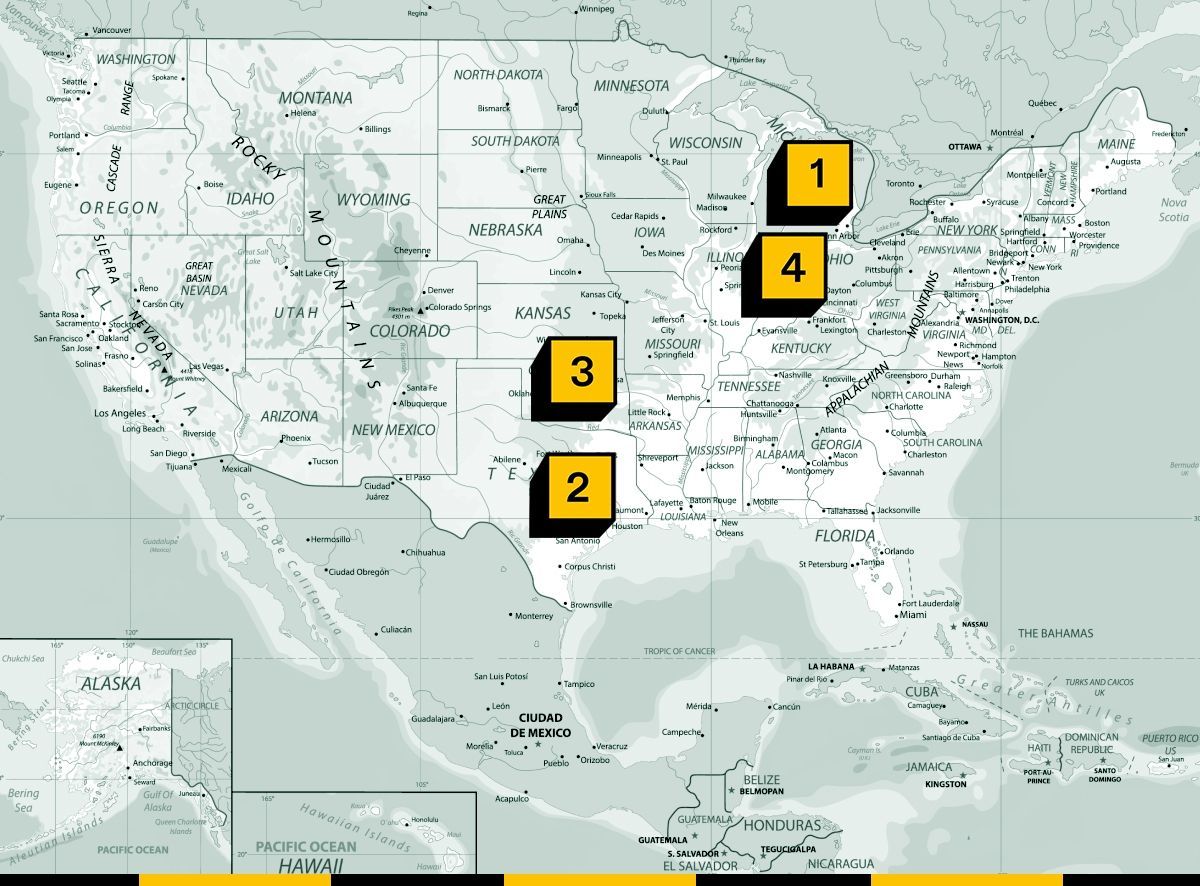
1. Ottawa County, Michigan – A congressional district House Democrats are targeting for control of the Lower Chamber is now a battleground over solar development on farmland, and I’m waiting to see if President Trump gets involved.
- On Sept. 24, the Michigan township of Zeeland wrote a letter to the president – and reportedly Agriculture Secretary Brooke Rollins – requesting the federal government intervene in the development of RWE’s utility-scale Silver Maple Solar project. The letter to Trump which is public requests the president visit Zeeland and the project site to “provide an opportunity to meet directly with local farmers, business owners, elected officials, and residents who are living with the consequences of the poor policies you are fighting against.”
- Shortly thereafter, Zeeland Township supervisor Kerri Bosma, who authored the letter, met with Rep. Bill Huizenga and presented him with a copy of the letter. “Thank you for reaching out Kerri and keep up the fight against this Lansing big government takeover!” Huizenga said on Facebook. Huizenga’s office did not respond to a request for comment on how they would support this request further.
- This is remarkable because local officials are beckoning for Trump to arrive at a time when he’s historically unpopular and Huizenga’s congressional district is one being targeted by the Democratic Congressional Campaign Committee in this year’s midterm elections as a priority. Maybe this is about ginning up partisan red meat, as Huizenga’s opponent, State Sen. Sean McCann, has been publicly supportive of more solar development in agricultural communities.
- Locals appear most irate with the state permitting primacy law which allows the state regulator, Michigan Public Service Commission, to supersede local opposition toward renewable energy projects. So far, the legality of that power is withstanding court challenges, and it’s unclear to me how the federal government could in any way stall this large solar farm aside from helping out in that legal effort on behalf of localities.
- Clearly, RWE is confident they can go ahead – they just resubmitted their application to build the project with the MPSC, citing the primacy law’s survival in the courts.
2. Texas – The Lone Star State sure is action-packed right now, huh? Let’s break down a few of the most important fights.
- First off, speaking of requests for a Trump intervention, a Texas state senator publicly pleaded for Rollins to join calls for a statewide pause on transmission approvals. I’ve previously covered the campaign for such a halt but if Team Trump got behind the effort, it would be quite the coup. (Rollins has not done so, as of now.)
- Then in Austin, the state NAACP chapter just issued an open letter decrying Gov. Greg Abbott’s statewide review of data center development as pointless, claiming many projects are exempt and that it encourages projects to bring their own on-site fossil generation which “will inevitably lead to more fossil fuel pollution in communities.”
- And now the Republican U.S. Senate candidate Ken Paxton, the sitting attorney general, is coming out supportive of continued data center growth in the state, in contrast with nearly the entire statewide Republican orthodoxy at this point. I said it before and I’ll say it again: the most important U.S. Senate race for the data center sector this year is Texas.
3. Lincoln County, Oklahoma – A massive wind project in rural Oklahoma is now on hold amidst continued local opposition, according to a Republican member of the state legislature.
- Rep. Jim Shaw, a foe of the wind industry in the state, stated in a Facebook post Tuesday that Apex Clean Energy personally informed him the developer was closing their office in Lincoln County, where the roughly 35,000 acre Sandstone Hills wind project was under development. Shaw said Apex claimed the project is “on hold for the time being” and was told “they are looking to make a final decision on whether to abandon the project altogether by Q1 2027.”
- Apex’s website still includes Sandstone Hills on its public-facing map of projects in the development pipeline and says it’ll generate up to 400 megawatts of power, enough for 130,000 homes. But a link directing users to more information goes to a dead webpage.
- This would be at least the second large Apex wind farm to be confirmed as frozen or scrapped, after the Montcalm project in Michigan was reported to be axed in March.
4. Clinton County, Indiana – Well hey, at least some places are still approving some things. Like in rural Indiana, where a community actually voted for considering a data center.
- It’s not a greenlight for construction. But DataOne got the small city of Frankfort in central Indiana to approve a “community enhancement agreement” tied to their $7 billion hyperscale facility, which includes many millions in payments from DataOne to the city over the course of development. Even signing the agreement requires the company to pay Frankfort one million dollars within 30 days. There are apparently at least two more votes required by the city council before construction can actually begin, but if that happens, there’s more millions in payment required.
- As I’ve written before, payments like these are probably one of the best methods available to developers for getting approvals at municipal government levels, given the heightened anxieties around data centers generally. Frankfort’s budget is struggling after the state significantly cut property taxes and is apparently on the verge of laying off police officers. The DataOne agreement clearly lays out a way for the project to fill that shortfall, so it’s not a surprise this project is advancing in some fashion.