GLOBALVARS
0
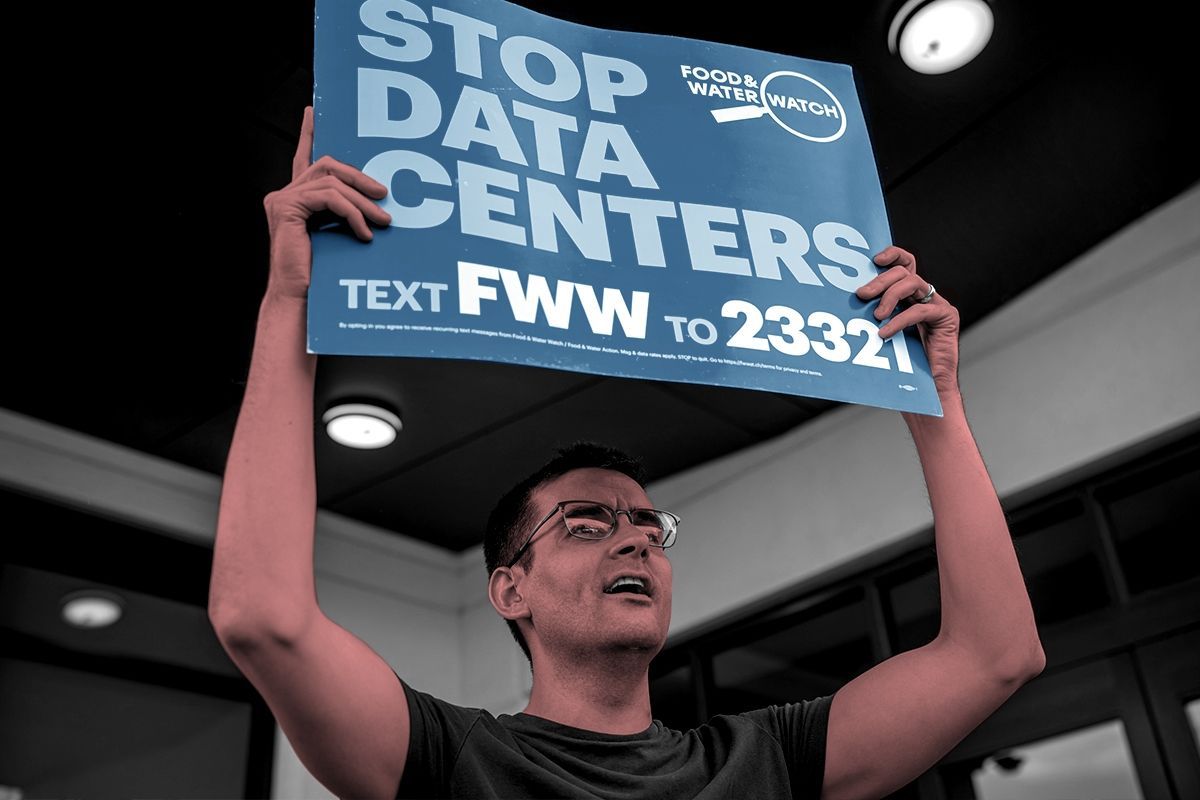
I’ve got an update for you on the data center backlash — and what it could mean for the governor’s race in Wisconsin, one of the country’s most important state-level battles in the upcoming midterms.
Last week, I wrote about how the Republican congressman and Wisconsin gubernatorial candidate Tom Tiffany was trying to turn the data center issue into a kind of trojan horse for slowing down renewables. Tiffany claimed to be anti-data-center, but he was really looking to apply new and stricter rules to clean energy development, as well.
Over the weekend, Tiffany said the quiet part loud. “David Crowley wants to cover our farmland with industrial-scale wind, solar, and data centers,” he posted on X. (He also started calling his opponent “David Center David Crowley.”) Tiffany vowed to “protect Wisconsin farmland,” picking up on the idea — already used by the Trump administration to stymie solar development — that renewables threaten the integrity of agricultural land.
Now Crowley isn’t nearly as pro-data-center as Tiffany claims, although he has said the computing facilities should run on 100% clean energy. Yet Tiffany's accusation made me curious: How many local governments now see data centers and renewables as a package deal — and a farmland-threatening incursion that should be blocked? Back in March, my colleague Jael Holzman has covered how data centers are turning Americans against renewables. Are we seeing that on the ground?
Our market intelligence service Heatmap Pro tracks local laws affecting clean energy, batteries, and data centers. I asked the Pro team to look at how many local governments have now banned all three types of infrastructure — communities with what you might call a “none of the above” policy.
There’s mostly good news in the results for renewables advocates. The number of towns and counties that have blocked data centers, solar, and batteries remains small. As of late last week, 21 counties across the country have an active restriction or moratorium on solar, batteries, and data centers combined.
Another 10 counties have banned either data centers and solar, or data centers and batteries, but not all three. Six cities or municipalities have placed combined restrictions on the technologies nationwide.
The bad news: The number is growing fast. Most of these “none-of-the-above” restrictions were passed in 2026, and the overwhelming majority are in the rural Midwest and Great Plains. Kansas, Iowa, and Indiana account for most of the moratoriums or restrictive laws.
Not all of the restrictions are new. Although most of these multi-technology restrictions get passed at the same time, a handful of counties blocked solar and batteries first, then tacked on data centers later. Dickinson County, Kansas, for instance, has long blocked solar and batteries. But this spring, as the data center boom came along, the county’s leaders extended that moratorium to apply to data centers and all forms of energy development — including natural gas.
Overall, the scale of the trend remains small. Less than 10% of data center restrictions nationwide also target clean energy. That’s good news for renewable developers because the number of data center ordinances is surging. More than 530 data center restrictions are now on the books nationwide, and most restrictions have come in the past 12 months.
And what about the Wisconsin election? As of right now, only one county in America’s Dairyland has restricted data centers and batteries together. None have restricted solar, wind, and batteries. But Tiffany does seem to be tapping into a much larger zeitgeist. When you look at the stated reasons why communities nationwide are adopting these policies, farmland protection ranks high on the list. When it comes to permitting politics, in other words, farmland looks like the next frontier.