GLOBALVARS
TEST TEST TEST
0
Products
This is an edition of Heatmap Daily, an evening review of the day’s news written by our executive editor. Sign up for it here.
It’s been a big week for the data center backlash.
In Pennsylvania, the governor required data center developers to comply with new restrictions. Texas began its mandatory audit for grid-connected data centers. And Nebraska limited tax incentives for data centers and started a new task force.
In Wisconsin’s governor race, candidates began posturing over who will treat data centers the toughest; in Michigan’s Senate race, the GOP candidate Mike Rogers called for a statewide moratorium on them. A Politico analysis found that of the more than 100 campaign ads mentioning data centers this election, none have put the technology in a positive light.
It makes sense, then, that when Heatmap published its most recent polling on data centers — finding that 75% of Americans oppose their local development — it seemed to blow up. But there’s one aspect of that polling that I want to discuss here, because I think it has been underacknowledged.
It’s this: According to our polling, data centers are about as unpopular in urban areas as rural areas. They’re slightly less unpopular in the suburbs.
The differences in disapproval, to be clear, aren’t enormous. Local data center development is 63 points underwater in rural areas and 60 points underwater in urban areas. That’s close enough to our poll’s 2.3% margin of error that it may just be noise. Even in the suburbs, data center development is 58 points underwater — a small distinction.
But it represents a big shift from the political geography of recent decades, where cities and rural areas have tended to disagree profoundly over policy. Since the 2000 election or so, cities have elected Democrats, rural areas have picked Republicans, and then the parties have fought over the suburbs.
Data centers, however, appear to unite these two partisan bases against some of the country’s largest companies — and some of our political systems’ odder ducks. Heatmap’s polling earlier this year found that AI YIMBYs tend to be urban, largely Trump-voting men who are optimistic about technology. And in March, the Republican pollster Echelon Insights found that some of data centers’ biggest fans were MAGA Republicans with graduate degrees living in cities.
These results help explain why Republicans have suddenly turned on a dime against data centers: Their base has rejected it. As a political reporter friend put it to me, after looking at our data, you don’t want to be on the wrong side of a trend that’s uniting college-educated and non-college-educated Americans.
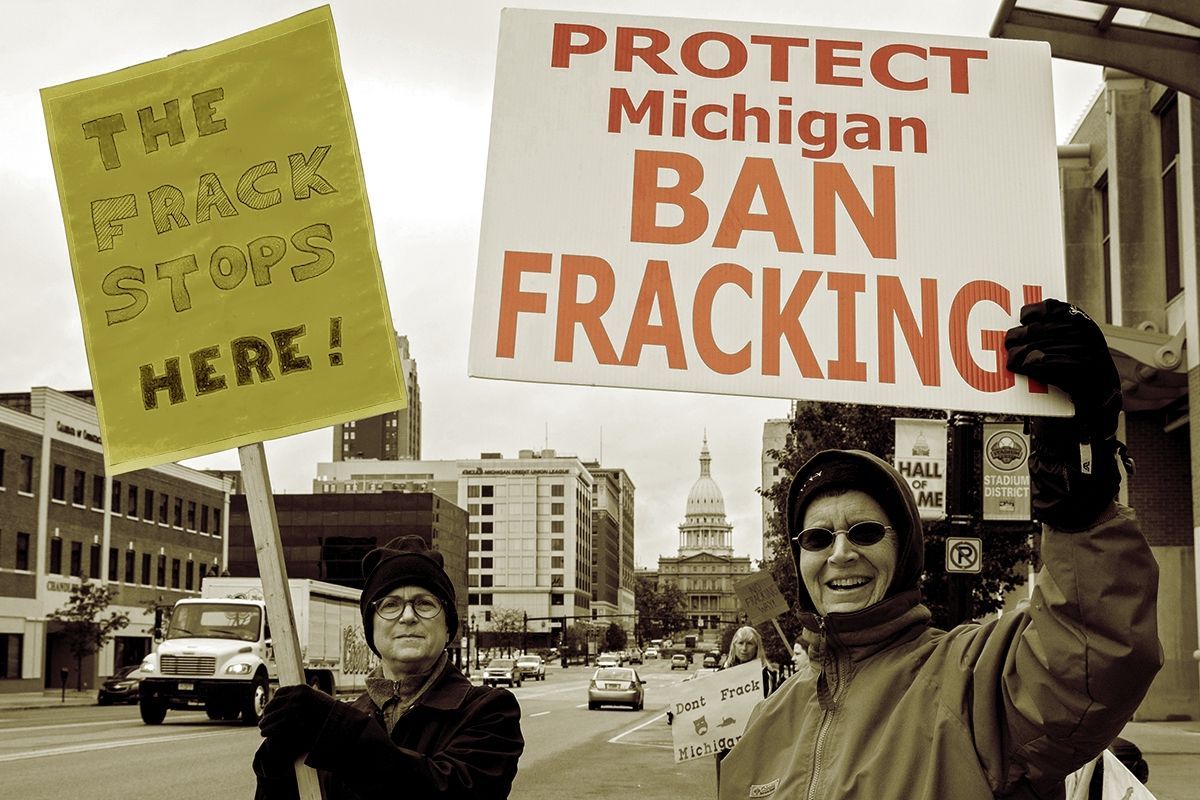
In trying to understand this transition, I’ve tried to think about other technologies that have undergone similar investment booms in recent American history. One oft-made comparison is fracking, which expanded quickly across the country in the 2010s. Many commentators — myself included — have suggested that data centers may follow fracking’s example, where blue states ban a new type of economic activity and red states welcome it. The red (and sometimes purple) states then get to reap much of the resulting economic growth — and the tax receipts — while everyone has to deal with the emissions. The revelation that data centers are driving a new natural gas boom only deepens the link.
But there’s one big problem with that analogy: Fracking was never this unpopular. While fracking has rarely commanded a large majority of support among the mass public, its popular nadir came in spring 2020, when 60% of Americans told Pew that they opposed an expansion of fracking. (Its popularity began to recover after President Biden took office — a classic case of thermostatic public opinion.)
In every poll that we could find at Heatmap, too, expanding fracking always commanded a majority of Republican support. Throughout the 2010s and 2020s, rank-and-file Republicans have wanted to “drill, baby, drill.” But they don’t seem to want to “compute, baby, compute.” And that means — among other things — energy and climate analysts like me need to find another analogy.