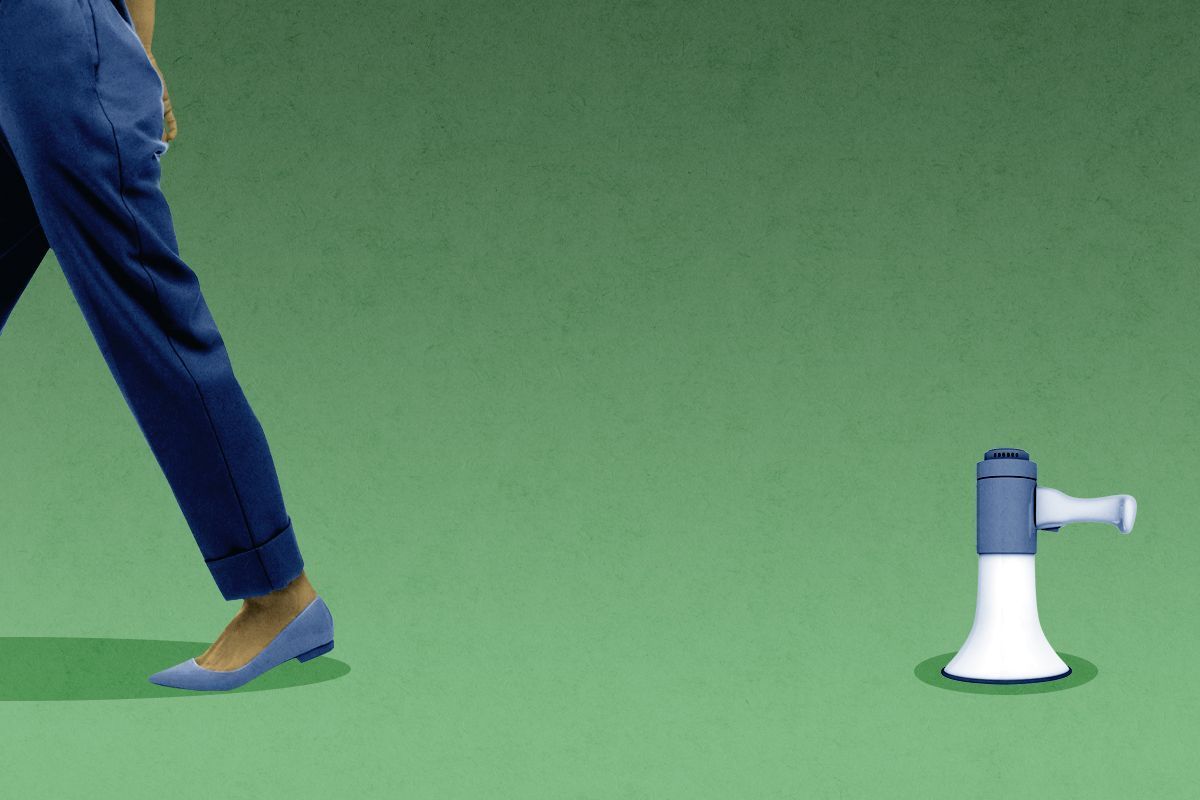
These are strange times to be a reporter. The vice president has openly mocked journalists concerned about apparently arbitrary limits to their reporting abilities. Referring to the Gulf of Mexico as such can get you barred from the White House. Say the wrong thing on air and one of the most powerful people in the country might demand you face “a long prison sentence.”
The Trump administration’s flagrant disregard for the law and its mass firings of career civil servants have created an atmosphere of chaos and confusion — one that reaches far beyond Washington. In recent weeks, longtime reliable sources have ghosted Heatmap reporters. Household-name brands and organizations, sought for comment on the administration’s new policies, have avoided responding to queries or apologized for “not being able to contribute at the moment.” Questions sent to government email addresses have begun to return to sender. The pattern of hesitance cuts across sectors: advocacy groups, academics, nonprofits, and commercial enterprises have all declined to comment.
In my own experiences as a reporter, I’ve never found it this difficult to get people to speak with me. To be fair, not everyone has clammed up: Last week, I had an excellent conversation with Corley Kenna and Matt Dwyer, Patagonia’s chief impact officer and vice president of product footprint, respectively, in which we candidly discussed how much Biden-era policies informed their ambitious corporate sustainability goals (almost not at all, they said), as well as some of the backtracking on green initiatives by banks and other major corporations since Trump has taken office.
But tight lips nevertheless abound, and for a number of reasons. Some sources have said they’re unable to offer additional information or clarity on a situation; even experts often can’t hazard a guess as to what will happen next. For example, my colleague Jael Holzman has reported on the “confusing state of affairs” for the renewables industry, with the Army Corps of Engineers sending contradictory messages. The entire federal environmental review process is currently a giant question mark as well — never mind the overarching uncertainty of whether Trump is allowed to be doing any of this in the first place.
But I suspect there’s a more significant reason sources have clammed up: fear. Some might be worried about what will happen if they stick their necks out and are playing a sort of wait-and-see game with everyone else; others, justifiably, might be scared of more direct forms of retribution. Some organizations have policies against their employees speaking on Trump-related developments, or are otherwise preparing or engaged in lawsuits that prevent them from talking to the press more candidly. Even offers to go off the record or publish comments anonymously have been turned down. The hesitation is understandable: Musk and Trump have said they’re eager to snuff out “leakers.”
This makes it challenging to report stories, of course. But it’s also, more existentially, a crisis of democracy. “Although the press is not always the first institution to be attacked when a country’s leadership takes an antidemocratic turn, repression of free media is a strong indication that other political rights and civil liberties are in danger,” Freedom House, a global watchdog, writes. An independent and free press serves to hold power accountable, and it relies on the stories and voices of the people in order to do that well.
The more difficult it becomes to find people willing — or able — to speak freely about what they’re seeing and experiencing, the ever more vital it becomes to report just that.
And, well, if you do have something you want to get off your chest? You know where to find us.