
GLOBALVARS
TEST TEST TEST
0
Products
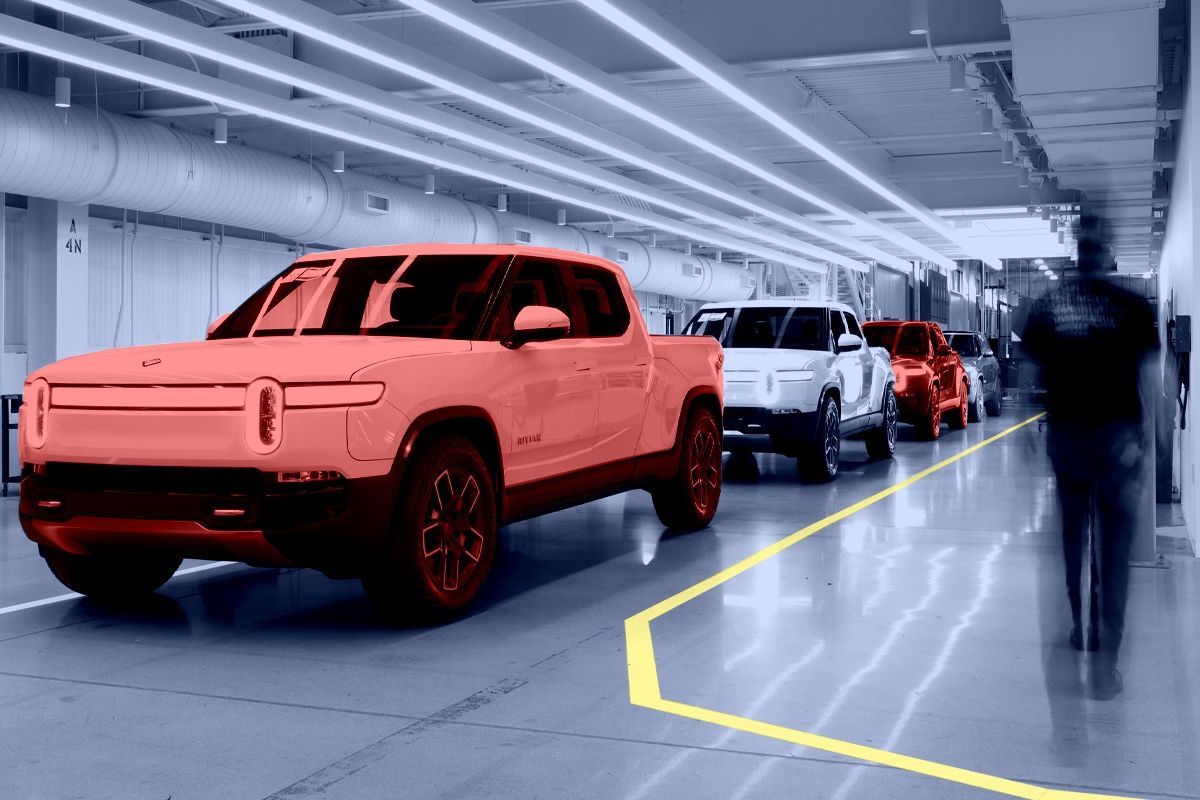
The past three months have been crucial for Rivian, America’s biggest all-electric car company not run by Elon Musk.
The California-based automaker debuted the R2, its long-awaited and somewhat more affordable sport utility vehicle. (Our reviewer gave it high marks.) Rivian also formally took out a nearly $6.6 billion loan from the Department of Energy to finance its new Georgia factory. And it finally unveiled the plans for that facility, which will include a rail tie-in and a 1,000-acre preserved woodland.
All that was well and good, but the crucial question remained: How is the R2 selling? And the answer is: Pretty well, seemingly! Rivian delivered 19,248 vehicles last quarter, beating analyst expectations and setting a new all-time quarterly sales record. More importantly, its vehicle deliveries have now recovered above where they stood in the third quarter of last year — a key milestone, since President Trump and Congress ended the federal government’s consumer-side EV incentives last September.
Tesla is seemingly also about to clear that threshold, although nobody outside the firm knows for sure. Elon Musk’s company doesn’t break out its sales by continent or model, but it delivered 486,532 vehicles last year — just about 2% below last year’s third quarter results. (Although a few of Rivian’s Amazon delivery vans have made their way into fleets abroad, the company only sells its consumer R1 and R2 vehicles in the United States and Canada, so its sales data is mostly U.S. by default.)
Alas, those two stand alone for now. No other automaker is close to breaking its quarterly EV sales record in the United States, and Ford, General Motors, and Hyundai all saw their domestic EV sales crumble last quarter. The new Chevrolet Bolt, GM’s most affordable EV — and its only American-made vehicle of any kind priced below $30,000 — has sold abysmally, moving just 8,090 units since the year began. The company is now likely to cap its production run at 35,000 units sold; it initially planned to produce 150,000.
Looking at these trends, I think you can see two different phenomena taking place.
The first is a big and growing divergence between America’s transportation sector and the rest of the world’s. The oil supply shock triggered by America’s war in Iran (and the resulting closure of the Strait of Hormuz) may be driving a long-term shift, encouraging consumers and countries to move away from oil. But for now, the crisis’s high prices have hit parts of Europe, Africa, and Asia far worse than they’ve impacted much of North America. Global EV sales reached a record high in the spring, for instance — just not in the United States.
The second is that we’re seeing demand destruction without decarbonization. According to new Nikkei data, gasoline-only cars made up less than half of global new car sales during the six months of 2026.
That’s never happened before, and it is a remarkable change: Gasoline-only cars have lost about a quarter of their global market share in less than five years. But as consumers switched away from gasoline, they didn’t move only to battery-only cars — instead, more than half of them shifted to hybrids or plug-in hybrids. That shift is good news, in that it will depress global oil use and therefore global greenhouse-gas emissions. But it won’t allow for the possibility of zeroing out emissions in the same way that EVs can.
But sometimes demand destruction will cut emissions significantly. If want to see that in the United States, check out the diesel market. As my colleague Alexander Kaufman wrote about this morning, FedEx has responded to eye-watering domestic diesel prices by placing an order for 2,000 electric box trucks with the California-based automaker Harbinger Motors. The shipper believes that the move will save it $800 million in fuel costs over time. When I talked to John Henry Harris, Harbinger’s CEO, last year, he told me the company didn’t need tax credits to sell vehicles — the math justified it on its own. Seems like FedEx agrees.