0

Current conditions: A megastorm is bombarding more than 200 million Americans from the Midwest to the East Coast, blasting dozens of states with wind speeds as high as 80 miles per hour • Eight states — Alabama, Arkansas, Louisiana, Missouri, Oklahoma, Tennessee, and Texas — are bracing for sub-zero temperatures • It’s rainy and just over 50 degrees Fahrenheit in Dublin, Ireland, for St. Patrick’s Day.
THE TOP FIVE
1. Exclusive: New bipartisan geothermal bill would give the industry more federal funding
When someone writes the definitive history of the Biden-era Inflation Reduction Act, one of the more ironic footnotes will be the fact that the breakthrough that gave rise to a new era for geothermal energy came 11 months after the law passed. As a result, geothermal was little more than a rounding error in the bill, receiving relatively little support compared to the billions of dollars allocated for next-generation nuclear power. Like nuclear power, geothermal is carbon-free, runs 24/7, and loved by both climate hawk Democrats and energy hawk Republicans. That’s exactly what’s behind a new bill to bolster the industry. Legislation set to be introduced in the Senate would boost federal funding and research for geothermal power, I can report exclusively in this newsletter. On Tuesday, Senators John Hickenlooper, the Democrat from Colorado, and Steve Daines, the Montana Republican, plan to propose the GEO Power Act to authorize the Department of Energy to “move beyond limited-scale pilots and unlock the large-scale geothermal electricity generation needed to meet surging demand and drive down costs,” according to the senators’ description of the bill. If passed, the GEO Power Act would allow the Energy Department to offer “innovative financing approaches” to help build up the industry in areas with little existing geothermal power. The bill would also “generate public data to de-risk future geothermal projects” and set milestones to make sure companies that receive funding maintain fiscal accountability. Two of the industry’s top trade groups, Geothermal Rising Action and the Enhanced Geothermal Systems Deployment Coalition, backed the bill, as did companies such as Fervo, Eavor, XGS Energy, and Quaise Energy. “We’re on the verge of harnessing a new wave of geothermal energy to meet surging electricity demand, lower prices, and address the climate crisis,” Hickenlooper said in a statement. “The key will be in scaling up new, next-generation geothermal projects across the country.”
Enhanced geothermal, a specific subset of next-generation technologies, could actually come online fairly quickly, too. New research by the Center for Public Enterprise, a think tank that tracks effective government spending on energy, suggests that a commercial-scale project of up to 500 megawatts could enter into commercial production within 36 to 52 months of active development, “with a conservative planning horizon of three to six years from project initiation to in-service,” assuming developers can secure necessary permits and transmission. That timeline “can be compressed even further, to less than three years, if a sufficient number of drill rigs and crews are available.”
2. Exclusive: Oklo receives it first NRC license
Oklo has received its first license from the Nuclear Regulatory Commission, allowing the nuclear startup to begin producing and selling isotopes “across medicine, research, advanced manufacturing, and national security,” I can exclusively report in this newsletter. The approval makes the California-based company the first of the cohort of fourth-generation reactor startups whose technologies use coolants other than water to get the green light to start up a commercial operation of any kind. Once operational, it will also allow Oklo to begin generating revenue for the first time. The NRC has given out permits to rival fourth-generation companies only for construction activities. The Bill Gates-backed TerraPower, for instance, was granted permission just this month to begin construction on its first commercial power plant in Wyoming, as was the Google-backed Kairos Power for its demonstration facility in Oak Ridge, Tennessee.
The permit for the facility, dubbed Atomic Alchemy and located at the Idaho Radiochemistry Laboratory, authorizes the company to “receive, possess, use, store, and conduct” chemical and mechanical processing, packing, manufacturing, and distribution of a limited amount of Radium-226, which is used to make advanced cancer treatments, in addition to a handful of other isotopes. “Demand for critical isotopes is rising, but U.S. supply remains limited,” Jacob DeWitte, Oklo’s chief executive and co-founder, said in a statement. “This work helps create a more resilient and dependable domestic supply chain of isotopes and supports the transition from early operations to durable, commercial isotope production in the United States.” The license grants the company a foothold in one of its core businesses. On top of designing liquid sodium-cooled microreactors the startup plans to own and operate for electricity production, Oklo is building out a division to reprocess and recycle nuclear waste into fresh fuel for its power plants. That business, too, would involve extracting and selling high-priced medical isotopes from spent fuel, and Atomic Alchemy lays the groundwork for that future effort. To construct this debut facility, Oklo plans to build four non-power Versatile Isotope Production Reactors systems with a capacity of about 15 megawatts-thermal each.
3. The U.S. is planning its first new coal power plant in Alaska in 13 years
The United States could get its first new coal-fired power plant since 2013 as part of a sweeping $56 billion deal the Trump administration announced Monday with 17 Indo-Pacific countries. Terra Energy Center reached a $1 billion deal with South Korea’s Hyundai Industries Power Systems to supply large-scale boilers for a new, more than 1.2-gigawatt coal plant in Alaska. It’s the first order for utility-scale coal boilers in the U.S. since about 2006. KOREIT, one of Korea’s largest private equity firms focused on infrastructure, pledged to make a $500 million equity investment in the Terra Energy Center project.
Coal use has collapsed in the U.S. over the past two decades as hydraulic fracturing, or fracking, made natural gas cheap and abundant, the prices of renewables and batteries dropped, and decarbonization policies encouraged the closure of existing stations. Today coal generates about 16% of America’s electricity. But President Donald Trump has sought to stimulate demand for coal by forcing retiring plants across the country to remain open past their closure deadlines and easing regulations such as limits on mercury emissions from existing stations. The policies have delivered mixed results. Coal use has recently seen spikes. But states such as Washington are finding loopholes, as Heatmap’s Emily Pontecorvo reported. Either way, as Heatmap’s Matthew Zeitlin wrote last year, coal plants just keep breaking down.
Sign up to receive Heatmap AM in your inbox every morning:
* indicates required
Email Address *Our Privacy Policy & Terms Apply.
4. In a bid for permitting reform, Trump declines to appeal offshore wind ruling
The Trump administration declined to appeal a federal court ruling in favor of the offshore wind project that, as I wrote yesterday, came online this week off the coast of Rhode Island. Last week, the Department of Justice whiffed on filing an appeal before the deadline to challenge a federal judge's injunction blocking a Department of the Interior order meant to stop construction on Revolution Wind over national security concerns.
E&E News called the move “a potential sign of the importance of bipartisan permitting negotiations.” In December, the top climate hawks in the Senate told Heatmap’s Jael Holzman that their votes on permitting reform hinged on the legislation barring the Trump administration from continuing its assault on offshore wind and solar. When the SPEED Act passed in the House later that month, right-wing Republicans conditioned their support on a carve-out specifically granting Trump the power to go after renewables. A new bipartisan bill introduced last month, called the FREEDOM Act, rekindled those negotiations by specifically barring the executive branch from yanking already-granted permits, whether it’s an offshore wind farm or an oil pipeline.
5. Anti-nuclear NRDC backs the restart of Iowa’s lone closed plant
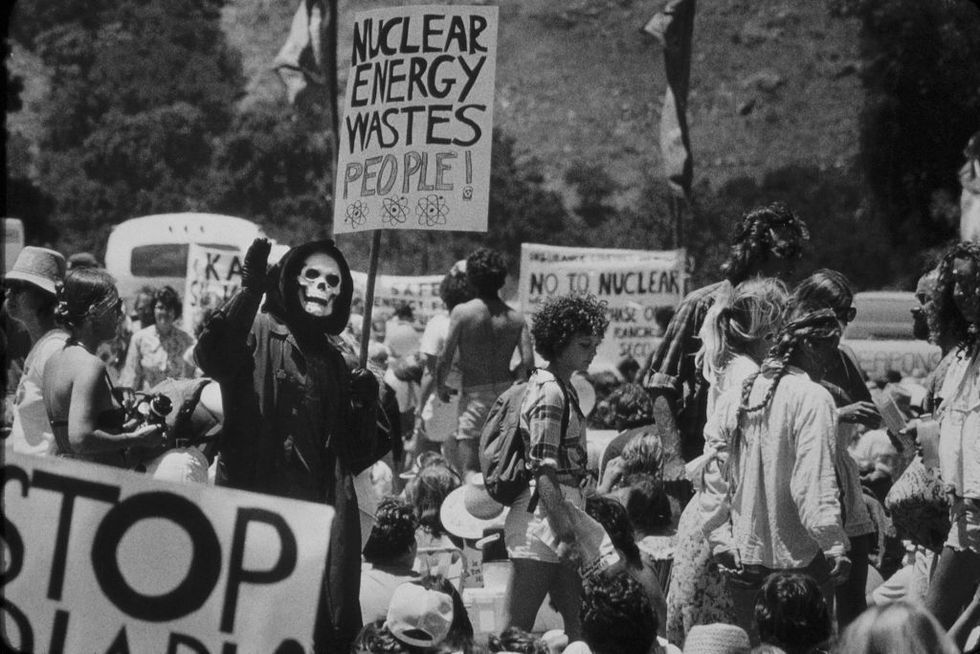
The Natural Resources Defense Council cut its teeth fighting against the expansion of nuclear power. Now the storied conservation group has come out in support of atomic energy for the first time. The NRDC filed comments in support of restarting Iowa’s defunct Duane Arnold nuclear plant, the state’s only atomic power station, which closed in 2020. “This is unprecedented for us because it marks the first time in our history that we have taken action in support of an individual nuclear power plant,” Manish Bapna, president and chief executive of NRDC, told Axios.
The move comes just days after the Nuclear Regulatory Commission took its latest step to speed up approvals of new reactors. The rule proposed last week would set fixed, accountable fee caps for new and current licensees and reduce fees for prospective applicants. “We need to cultivate accountability internally, incentivize applicants, and lower barriers for new technologies,” NRC Chairman Ho Nieh said in a statement. “This rule supports innovation and aligns with the NRC’s principles of efficiency and reliability.”
THE KICKER
Nevada’s biggest utility is putting off launching a new rate structure that critics warn could raise household electricity costs by changing the billing formula. State regulators gave NV Energy permission last year to charge customers in southern Nevada on the 15-minute period each day when they use electricity the most rather than tallying up total usage. The new charge was set to come into effect on April 1. But NV Energy told E&E News it would hold off until October 1 to inform customers of what they should expect. “Postponing the implementation of daily demand is the right decision for our customers,” NV Energy President Brandon Barkhuff said in a statement. “This additional time will allow us to provide customers with personalized information and practical tools so they can better understand how their energy use affects their bill before daily demand takes effect.”