GLOBALVARS
0
This is an edition of Heatmap Daily, an evening review of the day’s news written by our executive editor. Sign up for it here.
The country's fastest-growing market for data centers is, for now, frozen. Governor Greg Abbott of Texas announced on Monday that the state’s grid authority should not allow any more data centers to hook up until state regulatory agencies complete an audit of existing projects.
As part of this audit, data center developers will have to disclose the following, according to the governor:
- any tax incentives they benefit from,
- their water and energy use,
- their physical footprint on the land,
- their plans for future energy use, and
- their ownership structure.
“Any data center project that fails to comply” with the audit “must be denied,” Abbott wrote in a letter to the agencies.
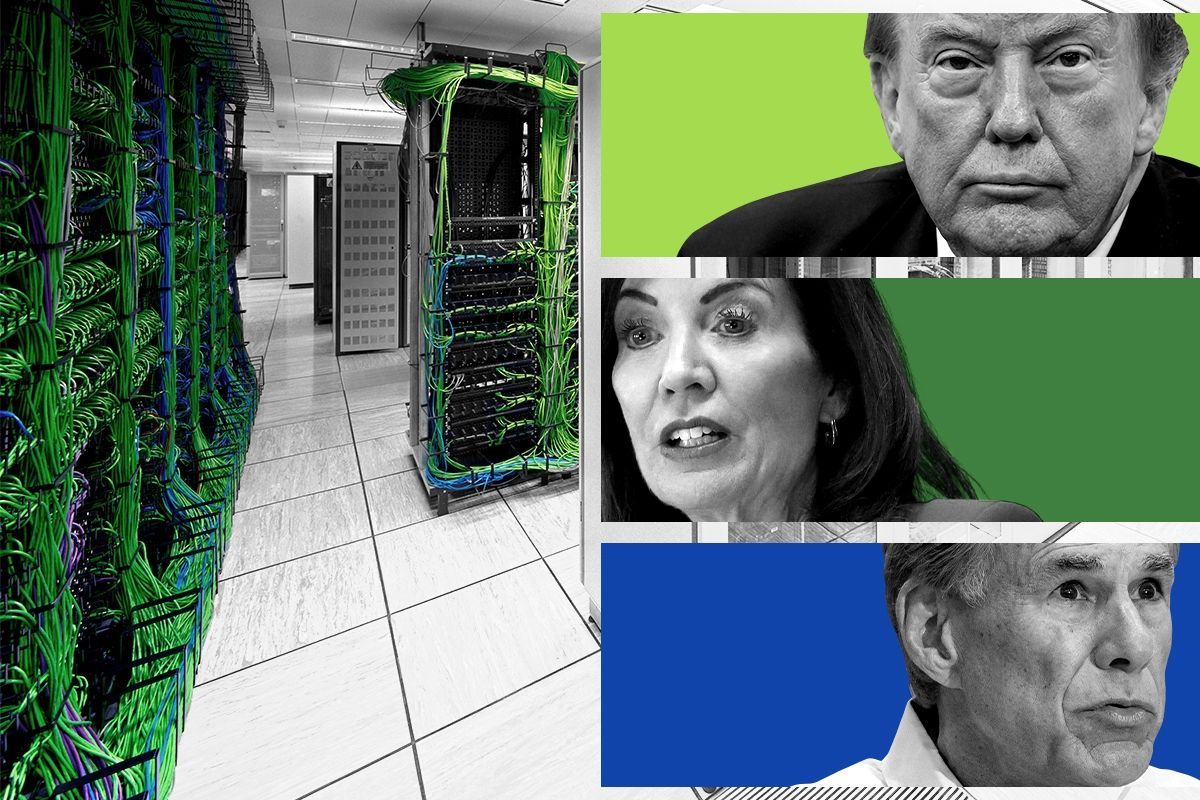
Abbott's freeze isn't quite broad enough to be called a full-on moratorium. As The Texas Tribune noted, data centers that aren’t asking to connect to Texas’ power grid can proceed as planned. But the announcement does mean New York is no longer the only state where the governor is trying to slow down data center development. As my colleague Alexander Kaufman wrote today in Heatmap AM, Texas’s governor has more than a little in common with New York’s chief executive, Kathy Hochul — above all, they’re both running for re-election in November.
Now, as far as data center regulation goes, Abbott's disclosure requirements are pretty weak tea. That’s chiefly because they are, well, disclosure requirements — they don't require that any developer actually changes their behavior, just that they publish data saying what they were going to do in the first place.
Yet his announcement put me in mind of something I've been thinking about for a while: There might be more agreement about data center regulation than we think.
Take Michigan, for instance. The progressive Senate candidate in that state, Abdul El-Sayed (who could very likely win the Democratic primary tonight), has become prominent partly by speaking out about data centers. He was early to the topic, publishing mandatory “terms of engagement” for data center developers back in January, and his own rise has tracked the issue’s rising salience in American politics.
Some of El-Sayed’s recent remarks about data centers have an undertone of surprise, as if he is a little astounded by how prominent the issue has become. “People really effing hate data centers,” he said at a campaign event last week, chuckling. “I just want us to step back and think about the trade-offs here.”
He hasn't called for a national data center moratorium, though, as his allies and endorsers Senator Bernie Sanders or Representative Alexandria Ocasio-Cortez have. Instead, his blessedly short document says Michiganders should have a few “rights” when a data center wants to build in their community:
- “No rate hikes,” meaning data centers have to pay for their own energy demand and not pass costs onto ratepayers.
- Data centers should adopt “binding,” “enforceable” and “transparent” community benefits agreements, which can include a developer paying for new water or electricity infrastructure, burying power lines, or making other upgrades.
- Communities must have a “meaningful say” in permit approvals, too.
- Blackouts can’t get worse because of a new data center, and utilities should face “enforceable commitments” to invest in reliability projects “funded by data center revenues.”
- Companies can’t use data centers to “weaken or sidestep clean energy laws.”
- Data centers have to create the jobs they promise and must hire Michigan contractors with state-registered apprenticeship programs.
- Data centers have to use closed-loop water systems.
He’s also called for an end to tax breaks for data centers.
El-Sayed is on the Democratic Party's left. Earlier today, a candidate seen as in the party’s center — Iowa gubernatorial candidate Rob Sand — released his own data center plan. It demands the following, at somewhat greater length:
- Data centers should cover 100% of their own costs “so that Iowans’ bills don’t go up one cent.”
- Towns or counties should have “open public hearings” on data center permit approvals, end the use of nondisclosure agreements, and make sure communities have “local control of the ultimate decision” to build a project.
- The state should adopt new mandatory transparency rules requiring data centers to report their water and energy use, their building size and acreage, and other statistics.
- Data centers should be built by "Iowa union workers” and “make investments in local workforce development.”
- The state should end sales tax incentives for data centers.
Look — it’s pretty similar to El-Sayed’s list! Sand might be a moderate, and El-Sayed might be a progressive, but it’s hard to see too much daylight between their data center policies.
What’s notable about these policies is what’s not in them. Neither El-Sayed nor Sand would require that data centers be powered by clean energy, as, say, the Wisconsin DSA gubernatorial candidate Francesca Hong has proposed. Neither El-Sayed nor Sand moots a statewide moratorium on data centers, either. And while their proposals would have more teeth, in theory, than Abbott’s audit, the three proposals are interested in the same questions — energy use, water use, physical footprint, and tax incentives.
As we’ve frequently noted at Heatmap, the data center backlash is strikingly bipartisan. Americans of many backgrounds, belief systems, and byways of life agree that the data center boom is becoming a problem. I wonder if there’s more agreement about the solution, too, than we might think.