0
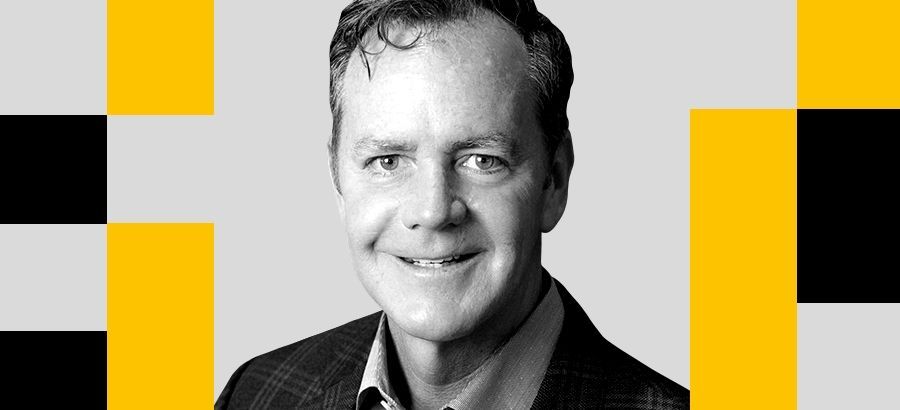
This week’s conversation is with Reagan Farr, CEO of solar developer Silicon Ranch. I connected with Farr after my story last week on legislation in the Alabama Senate potentially banning solar in the wake of a fight over a single Silicon Ranch project, which would help offset power demand from a large Meta data center outside the state capitol of Montgomery. To my surprise, Farr was incredibly candid about the solar sector’s increasingly fraught circumstances amidst the AI boom. Yes, demand is going up – but the public’s animosity towards data centers is starting to rub off on clean energy too.
The following conversation was lightly edited for clarity.
Why do you think the Alabama bill is happening?
It is “silly season” in politics. Primaries are coming up, and one thing about the zeitgeist right now, whether its data centers or renewable power, is you can start a social media group and get a lot of members. Whether they’re bots or real people, a politician sees 4,000 people in a group they can access without paying advertising dollars, they do things that wouldn’t normally happen if it wasn’t election season.
Do you see any similarities between the localized backlash we’ve been seeing with data centers and opposition to solar farms?
I do. I think there’s a conflation of all these issues, including rising power prices, and a general feeling that people don’t understand it so it creates a lot of concern. There’s a lot of conflation: Is this bitcoin? Is this AI? I have found that, and it creates a lot of passion in a lot of questions we’re trying to address.
How do you feel about the way solar goes about community relations in situations where its attached to a data center as opposed to the overall grid, where people aren’t as able to easily tie your construction to lowering energy prices?
First of all, our project in Stockton – we’re selling power to Alabama Power at the point of interconnection. Meta is not a party to our transaction. So it’s not really a data center project, as far as Silicon Ranch is concerned. But I would say not just in Stockton, but other geographies, is that people conflate large renewable energy projects with data center demand whether they’re directly tied to each other or not. Its tough to explain because we’ve tried to explain how this project is helping the grid in Stockton build additional resiliency and is going to be generation that just by physics is going to support the communities in and around Stockton. If there’s an accounting entry on the back end between Alabama Power and Meta, that really is between Alabama Power and Meta and doesn’t really have to do with Silicon Ranch or this project.
You said there’s a conflation between renewable projects and data centers – can you say more about that?
If you read the content in all of these “Stop Solar” Facebook groups, they really don’t distinguish between AI, data centers, Bitcoin and renewables. It’s just a general complaint against all of the above.
A big part of the effort we have to undertake is to segregate. Silicon Ranch shouldn’t be bracketed with other solar owners and operators. Our business model is unique. Its just requiring more and greater effort to tell our story. We’ve always had people bring us questions. It's the preconceptions we’re really having to overcome.
What you’re describing I’ve taken to calling an “industrial techlash.” A turn against advanced energy and tech infrastructure. I hear similar arguments around noise, electromagnetic fields, or farmland. Do you think if a solar farm is tied to a data center, does that make it more or less likely to get permitted today in the U.S.?
I look back to one of our first large projects in the state of Georgia, where we were building in Bancroft Station using modules manufactured by Hanwha Qcells and we were selling to a co-op, but it was also the first time Meta had signed a power supply agreement with a co-op. At that time we had the governor, the head of economic development, and half the state legislature there celebrating this virtuous cycle of investment in Georgia. I don’t think you’d have that in today’s political environment. Today, we would probably focus more on the very distinct benefits of our investment in the community and our approach to agri-voltaics, land use.
I mean, look at the situation in Stockton. Those modules are going to be manufactured in Alabama, and we played a role in helping First Solar site their project in Alabama. So when you hear people, these concerns about how the modules are “toxic” or are “going to poison the ground” – I’m happy to answer that, but man, this is y’alls manufacturer. First Solar invested $1.2 billion into Lawrence County, Alabama. You’ve got to have some trust. Call them.
It’s a fraught environment, and one I think is going to only continue to be more difficult as we move forward.
A while ago you would’ve seen that yay response from politicians across the board to that level of investment. Now, there’s eggshells that need to be walked on. What led to that dynamic shifting?
I’ve thought about it a lot. It actually reminds me of Occupy Wall Street. It’s a different demographic protesting, but they’re against Big Tech, AI, big capital, and their power prices are going up but they don’t know why. It’s the same lack of faith in large institutions, and it’s hard to address.
Even when they’re talking to me, a founder and CEO, they’re like, You’re a big, faceless company. And no, we’re actually people who care about the environment and your community.
We faced a similar situation to this in Georgia – a different solar farm than the Bancroft one – and I wanted to better understand what was going on in the local community here. So I met with the community, answered a lot of questions, took people on tours, met with business leaders who had nothing to do with renewables and politics. That’s what gives me hope. But it’s not scalable. I really enjoyed it, but it’s the CEO and founder of a company spending months in a community. We have a team, but it was interesting – they didn’t believe my team in the same way they believed me.
Do you think the environmental and climate space is wrestling with the data center question in a way that’s sensitive to this?
Let’s use Stockton as an example. I believe solar done well is a huge asset to these communities. When the Stockton social media anti-solar campaign started, someone we’d worked with before from an environmental organization emailed us saying, I know Silicon Ranch. Why are you doing this? You’re better than this. So I called her and we had a really productive conversation. So she said, Reagan, why don’t I offer to convene more environmental groups together so you don’t have to have a dozen of these calls. You can have one. Then on that social media group, someone posted they’d “heard” Silicon Ranch was “paying off this nonprofit.” Totally not true. It put the nonprofit on the backfoot and they instantly had to distance themselves. They asked me, Did you say we were working for you? And I said no, it’s this echo chamber of misinformation where certain gatekeepers have different agendas.
I feel the environmental organizations, the farm bureaus, they need to get in front of these conversations. But they’re all donation-driven. So if they get in a crosshair they’ll just sit on the sidelines, and I understand that because I volunteer and sit on boards of non-profits. You can’t throw yourself into a discussion that’ll lead to you losing funding.