GLOBALVARS
0
Current conditions: Temperatures in Laredo, Texas, are soaring past 103 degrees Fahrenheit amid a heat wave scorching the Southern and Central United States • Tropical Storm Norbert is weakening in the Pacific right as another depression is strengthening into Tropical Storm Odalys • South Africa’s KwaZulu-Natal is facing severe thunderstorms with winds of up to 50 miles per hour.
THE TOP FIVE
1. Russia and Ukraine agree to an energy truce as oil hits $109
President Donald Trump declared a truce Monday morning between Russia and Ukraine over energy infrastructure, claiming that both countries had agreed to stop attacking refineries, pipelines, and power plants going forward despite those facilities representing frequent targets since the war began in 2022. In a post on his Truth Social platform, the U.S. leader said record-high diesel prices were “mostly caused by the Russia/Ukraine war, not Iran,” suggesting prices would come down now that “Ukraine has agreed to not hit Russian energy targets” and “Russia has agreed to do likewise.” Neither Kyiv nor Moscow has confirmed the pact, according to Reuters.
Meanwhile, the price of Brent crude, the global oil benchmark set out of Europe, briefly surpassed $109 per barrel before coming back down to $106 by the time the market closed Monday. West Texas Intermediate, out of the U.S., hit about $102, while Murban crude from the United Arab Emirates shot up 10% to $131 per barrel. The latest surge came after Saudi Arabia halted shipments via its East-West Pipeline, the main conduit through which the kingdom has exported oil since the Strait of Hormuz’s closure stopped tankers from leaving the Persian Gulf.
2. Fuel surcharges for shipping grain by rail more than doubled in the past year
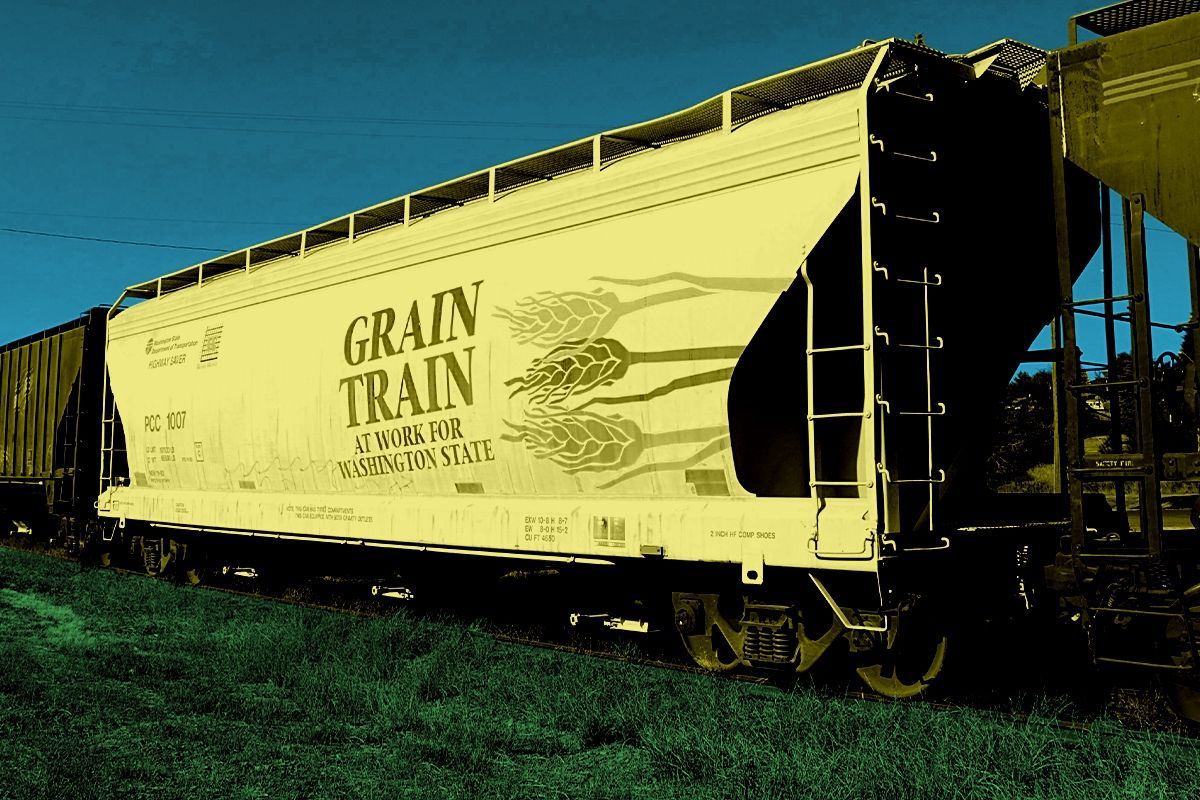
The average fuel surcharge for grain shipments on U.S. railways more than doubled over the past year, in the latest sign of how soaring energy prices will spur inflation of food costs. The surcharge skyrocketed 153% to 48 cents per rail car-mile by the second week of September, according to a Reuters analysis of U.S. Department of Agriculture data. The surcharges accounted for 11% of the total rail transportation costs for shipping corn and soybeans, compared to 5% a year ago. Railroads collected about $3 billion in fuel surcharges in the second quarter of this year, covering 90% of diesel costs. The situation highlights why now is “the worst time for diesel to get expensive,” my colleague Matthew Zeitlin wrote last month, since harvest season is around the corner and most farming equipment runs on the fuel.
3. Democrats have a new climate policy agenda
House Democrats are out with their first new climate agenda since the Green New Deal’s glory days of 2020. This time, however, it’s more of what the top Democrat behind the proposal called “a workable plan for long term economic and job growth” than an emissions-cutting blitz. My colleague Emily Pontecorvo has a detailed breakdown of what’s in it, but here are the five big takeaways:
- Wind and solar tax credits probably aren’t coming back.
- Congress is poised to get wonkier on energy markets and transmission.
- Future policies will be difficult to “Trump-proof.”
- Data centers are in the middle of everything.
- Instead of calling it “climate change,” they’re talking around issues of “risk” and “adaptation.”
“We’re not introducing a bill after this,” Representative Kathy Castor, the Florida Democrat who oversaw the project to draft the agenda, told Emily. “We’re providing it to policymakers in Washington for them to build the bipartisan support you need to get something across the finish line. The Trump administration is going to be there for two more years. What can we get done now that would have bipartisan support?”
Sign up to receive Heatmap AM in your inbox every morning:
Email Address *Our Privacy Policy & Terms Apply.
4. The U.S. data center boom needs $110 billion for 45 gigawatts of new power generation
The U.S. needs $110 billion to build 45 gigawatts of new power generation through 2030 to meet the surging demand from data centers, according to a Moody’s Ratings analysis. More than 30 gigawatts of that supply is slated to come from natural gas-fired plants, with solar and storage making up much of the rest and nuclear restarts accounting for less than 5%, Bloomberg reported. That all sounds like a lot. But consider that the U.S. started this year on track to add 86 gigawatts of new generation, much of which it from solar and storage, according to data from the U.S. Energy Information Administration. In other words, we deployed nearly twice as much new generation in the past year as we would need for data centers through the end of this decade.
The nation’s largest operator of nuclear and geothermal power plants, Constellation Energy, certainly sees gas as the likelier near-term source of power generation in New England. On Monday, Utility Dive reported that the utility giant plans to buy the 609-megawatt Rhode Island State Energy Center from Shell Energy for $715 million. It’s easy to see why gas looks like a safe bet. Three Massachusetts utilities are now suing Hydro-Quebec, the state-owned utility in Canada’s French-speaking province, over a shortfall in deliveries during particularly hot days this summer — while Hydro-Quebec is, in turn, suing for payments it says the American power companies owe, according to Canary Media. That electricity drama is unfolding as New Englanders prepare to “pay through the nose to stay warm this winter” as the price of heating fuel soars, Matthew wrote last week.
5. U.S. takes a 10% stake in company behind Alaskan mining project
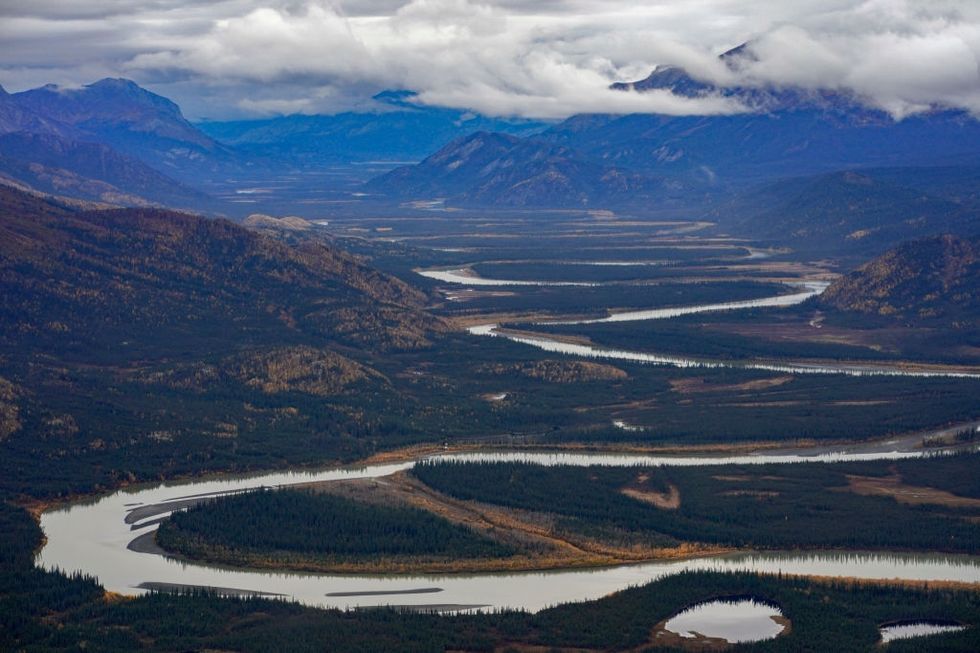
Almost exactly a year ago, Trump issued an executive order approving the long-stalled federal project to build a road through the Alaskan wilderness to support production of minerals from the remote Ambler Mining District. Now the U.S. government is taking a 10% stake in Trilogy Metals, the 50% co-owner of a joint venture with the Australian miner South32 focused on extracting copper, zinc, and other metals from the site. As part of the deal, the company said in a press release, the Department of Defense “committed to work in good faith to help facilitate financing required for construction of the proposed 211-mile, industrial-use-only Ambler Road.”
The Pentagon also inked a $450 million deal with The Elmet Group, an integrated miner and processor, with $150 million earmarked for Toronto-based Blue Moon Metals’ tungsten mine in Nevada, Mining.com reported.
THE KICKER
There’s still an open debate about how much of the nuclear supply chain Saudi Arabia would be allowed to control under the kingdom’s coveted deal with the Trump administration. Whether the Saudis should enrich — or, even more worrying from a nonproliferation standpoint, recycle — nuclear fuel will generate heated discussion in the years to come. But it looks increasingly likely that the oil-rich nation will mine at least some of its own uranium. “Exploration and geological studies at the Jabal Sayid project in Madinah have revealed estimated resources of around 110 million tonnes of ore with high concentrations of rare earth minerals, especially the heavy elements, alongside promising concentrations of uranium,” Prince Abdulaziz bin Salman, the kingdom’s energy minister, told Arab News.