0

Customers get a whole lot of choice in Texas’ deregulated electricity market — which provider to go with, fixed-rate or variable-rate plan, and contract length are all variables to consider. If a customer wants a home battery as well, that’s yet another exercise in complexity, involving coordination with the utility, installers, and contractors.
On Wednesday, residential battery manufacturer and virtual power plant provider Lunar Energy and U.K.-based retail electricity provider Octopus Energy announced a partnership to simplify all this. They plan to offer Texas electricity ratepayers a single package: a three-year fixed-rate contract, a 30-kilowatt-hour battery, and automatic participation in a statewide network of distributed energy resources, better known as a virtual power plant, or VPP.
This structure is novel for the way it packages the electricity rate, the physical battery, and the VPP into one single offering. It’s also the first time that Octopus, the U.K.’s largest retail electricity provider, is deploying standalone home batteries for customers in the U.S. without rooftop solar.
“As the price of batteries has come down and the data center dynamics really take shape, I think we’ve gained conviction that Texas — and frankly the rest of the U.S. — is ripe for deploying batteries at scale in households,” Nick Chaset, CEO of Octopus Energy’s U.S. arm, told me.
Octopus already offers a range of retail electricity plans in Texas’ market, which encourages competition among electricity providers by allowing consumers in most parts of the state to choose their provider. That structure made the state a natural first market for the rollout of this new model.
Participating customers will be able to lease a Lunar battery for $45 a month with no upfront cost and the option to purchase the system at the end of the 10-year battery lease. The program is open to ratepayers regardless of whether they have rooftop solar or are existing Octopus Energy customers.
Lunar will provide the battery hardware and — at least initially — the VPP software used to coordinate this statewide network of home batteries. That could evolve though, as Chaset told me that as the partnership grows, “there’s going to be a really good conversation about what is the right software platform.” Octopus’ platform and subsidiary, Kraken Technologies, manages what the company says is the “the world’s largest virtual power plant of residential assets.”
Lunar will orchestrate the batteries’ charging schedules so that they draw power when electricity prices are low and discharge back to the grid during periods of peak demand, effectively operating as a cheaper, cleaner alternative to a fossil fuel peaker plant. According to Octopus, customers will see the benefit of those energy arbitrage savings through the fixed price of their three-year contract. Households will also gain resiliency benefits — in the event of a power outage, their battery can keep the lights on and critical appliances running for as long as a day or so.
One of the biggest draws, Chaset told me, may just be the plan’s three-year term. In Texas, he said, it’s common for households to sign up for six- to 12-month fixed-rate electricity plans, which exposes them to significant price swings in between renewals. “This is as much as anything about stability,” he told me. “Oftentimes what we hear from Texans is yes, they want to save money. But what they don’t want is to feel like every six months they’re having to go shop again. They want to just know, this is my plan, I’m getting a fair rate.”
This model could thus gain traction simply by appealing to customers’ desire to reduce decision fatigue, while hopefully, at a much larger scale, demonstrating the outsize impact home batteries can have on the grid. “We believe that is going to be changing how [distributed energy resources] are viewed in a big way, Kunal Girotra, founder and CEO of Lunar Energy and former head of Tesla Energy, told me.
Girotra framed the Octopus partnership as “a blueprint that we hope we can replicate across other markets.” In practice, that would involve the two companies working with utilities in regulated territories to offer this subscription-style home battery to their customers. Octopus can’t serve as the electricity provider in regulated markets, meaning the company would have to add value in other ways. “Because we have so many different regulatory constructs, there’s going to be a lot of different flavors of this,” Chaset told me. Octopus did not specify the role it would play in a regulated market, other than to say, “We’re excited to explore how we can partner with utilities to deploy distributed battery systems.”
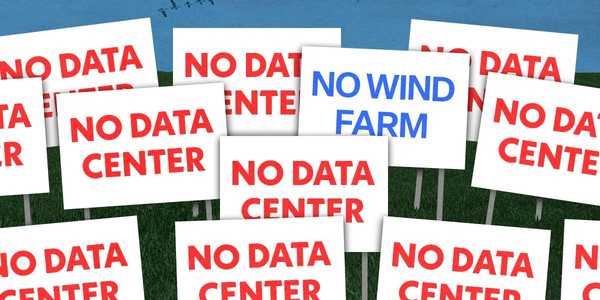
Unsurprisingly, the two companies are excited to bring their new retail electricity model to data center developers, as they aim to demonstrate “a world where you can see win-wins for the consumer and for this sector of the economy that we have to build,” Chaset told me. The idea is that data centers would help drive the deployment and adoption of distributed energy resources in communities where they plan to operate, which would effectively expand local grid capacity and potentially accelerate grid interconnection timelines — a binding constraint for hyperscalers in the AI race.
“If you are building a data center in Amarillo, Texas, and you want to make sure that the community around you benefits, come to us. We will deploy 25,000 batteries, put one in every single home in that county or in that community,“ Chaset told me. Reaching literally every household is wishful thinking, of course, as participation is voluntary and these programs remain unfamiliar to most consumers. Still, the broader message he’s trying to convey is clear: “Utilities, communities, we’re here to help.”