Key Senate Democrats are opposing a GOP-led permitting deal to overhaul federal environmental reviews without assurances that clean energy projects will be able to reap the benefits. Winning these lawmakers’ support will require major concessions to build new transmission infrastructure and greater permitting assistance for renewable energy projects.
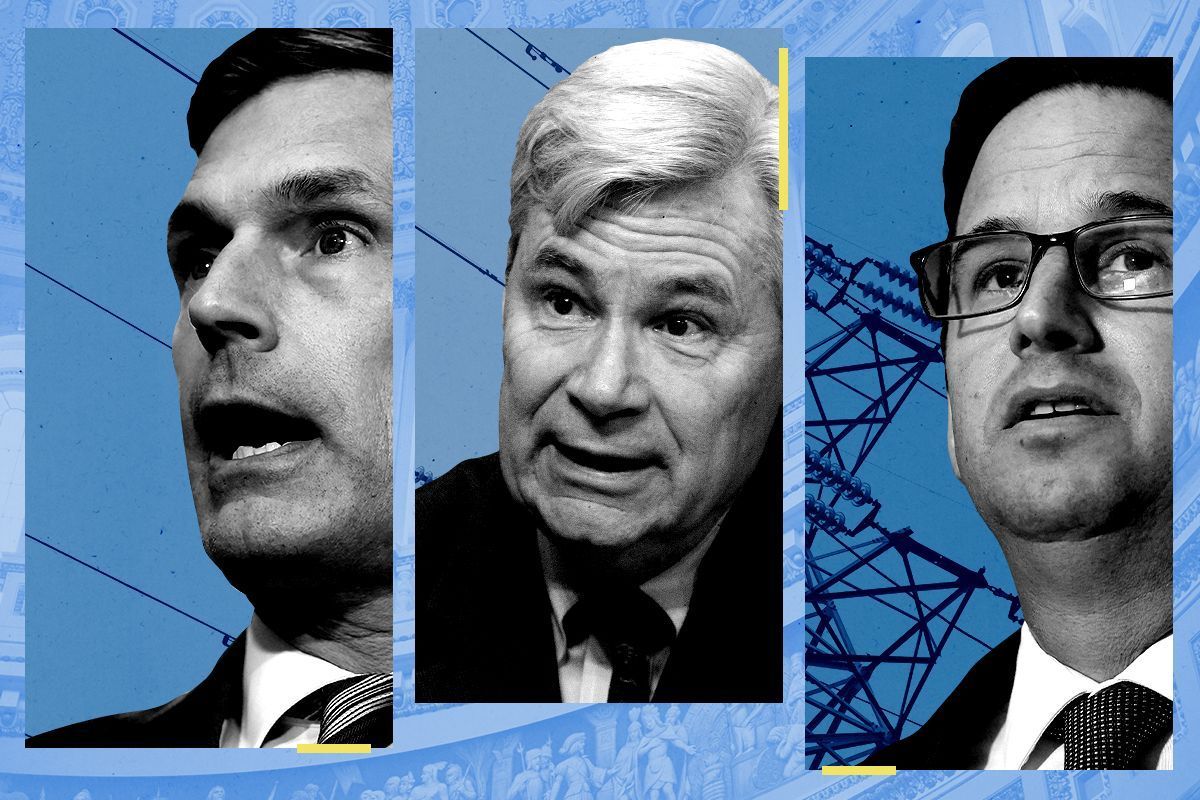
In an exclusive joint statement provided Tuesday to Heatmap News, Senate Energy and Natural Resources ranking member Martin Heinrich, Environment and Public Works ranking member Sheldon Whitehouse, and Hawaii senator Brian Schatz came out against passing the SPEED Act, a bill that would change the National Environmental Policy Act, citing concerns about how it would apply to renewable energy and transmission development priorities.
“We are committed to streamlining the permitting process — but only if it ensures we can build out transmission and cheap, clean energy. While the SPEED Act does not meet that standard, we will continue working to pass comprehensive permitting reform that takes real steps to bring down electricity costs,” the statement read.
As I wrote weeks ago, there’s very little chance the SPEED Act could become law without addressing Senate climate hawks’ longstanding policy preferences. Although the SPEED Act was voted out of committee in the House two weeks ago with support from a handful of Democratic lawmakers, it has yet to win support from even moderate energy wonks in that legislative body, including Representative Scott Peters, one of the Democratic House negotiators in bipartisan permitting talks. Peters told me he would need to see more assurances dealing with the renewables permitting freeze, for example, in order for him to support the bill.
Observers had initially expected a full House vote on the SPEED Act as soon as this week, but an additional hurdle arose in recent days in the form of opposition from House conservative Republicans, led by Representative Chip Roy. The congressman from Texas had requested additional federal actions targeting renewables projects in exchange for passage of the One Big Beautiful Bill Act, which effectively repealed the Inflation Reduction Act. What followed was a set of directives from the Interior Department that all but halted federal solar and wind permitting. Roy’s frustration with the SPEED Act concerns a relatively milquetoast nod to renewables permitting problems that would block presidents from rescinding already issued permits. This upset appears to have delayed a vote on the bill in the House.
There’s an eerie familiarity to this moment: Almost exactly one year ago, the last major attempt at a permitting deal, authored by Senators Joe Manchin and John Barrasso, died when then-Majority Leader Chuck Schumer refused to bring it up for a vote. Unlike the SPEED Act, that bill offered changes to transmission siting policy that even conservative estimates said would’ve hastened the pace of national decarbonization.
Having Schatz, Heinrich, and Whitehouse — the three most powerful climate hawks in Congress — throw their weight against the SPEED Act casts serious doubt on the prospects for that legislation becoming the permitting deal this Congress. It also exposes an intra-energy world conflict, as it appears to position these lawmakers in opposition to American Clean Power, an energy trade group that represents a swath of diversified energy companies and utilities, as well as solar, wind, and battery storage developers.
Last week, ACP joined with the American Petroleum Institute and gas pipeline advocacy organizations to urge Congress to pass the SPEED Act. In a letter to House Speaker Mike Johnson and Minority Leader Hakeem Jeffries, ACP and the fossil fuel industry trade groups said that the legislation “directly addresses” the challenges facing their interests and “represents meaningful bipartisan progress toward a more stable and dependable permitting framework.” The only reference to potential additions came in a single, vague line: “While the SPEED Act makes important progress, there are additional ways Congress can facilitate the development of reliable and affordable energy infrastructure as part of a broader permitting package.”
This letter was taken by some backers of the renewable energy industry to be an endorsement without concessions. It was also a surprise because just days earlier, American Clean Power responded to the bill’s passage with a vaguely supportive statement that declared “additional efforts” were needed for “transmission infrastructure,” without which “energy prices will spike and system reliability will be threatened.” (It’s worth noting that the committee behind the SPEED Act, House Natural Resources, has no authority over transmission siting. No other proposal has yet emerged from Republicans in that chamber for Republicans to address the issue, either.)
One of the renewables backers taken aback was Schatz, who took to X to sound off against the organization. “Congratulations to ‘American Clean Power’ for cutting a deal with the American Petroleum Institute, but to enact a law both the house and the Senate have to agree, and Senators are finding out about this for the first time,” Schatz wrote in a post, which Whitehouse retweeted from one of his official X accounts.
In a subsequent post, Schatz said: “I am not finding out about the bill’s existence for the first time, I am tracking it all very closely. I am finding out that ACP endorsed it as is without anything on transmission, for the first time.”
By contrast, the statement from the three senators aligns them with the Solar Energy Industries Association, which sent a letter from more than 140 solar companies to top congressional leaders requesting direct action to fix a bureaucratic freeze on permit-related activity that has already helped kill large projects, including Esmeralda 7, which was the largest solar mega-farm in the United States.
In its message to Congress, the trade association made plain that while the SPEED Act was a welcome form of permitting changes, it was nowhere close to dealing with Trumpian chicanery on the group’s priority list.
We’ll have more on this unfolding drama in the days to come.