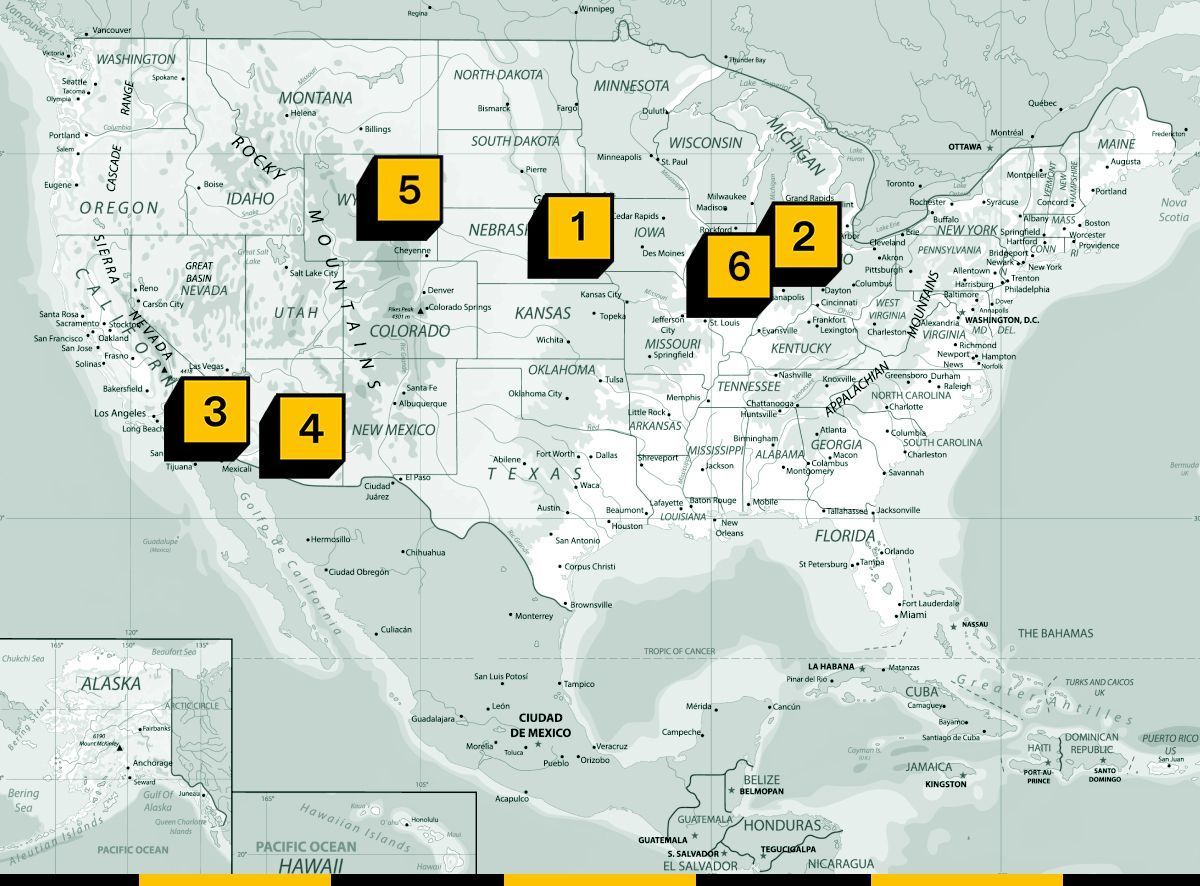
1. York County, Nebraska – A county commissioner in this rural corner of Nebraska appears to have lost his job after greenlighting a solar project.
- On Monday, York County closed a special recall election to remove LeRoy Ott, the county commissioner who cast a deciding vote in April to reverse a restrictive solar farm ordinance. Fare thee well, Commissioner Ott.
- In a statement published to the York County website, Ott said that his “position on the topic has always been to compromise between those that want no solar and those who want solar everwhere.” “I believe that landowners have rights to do what they want with their land, but it must also be tempered with the rights of their neighbors, as well as state, safety and environmental considerations.”
- This loss is just the latest example of a broader trend I’ve chronicled, in which local elections become outlets for resolving discontent over solar development in agricultural areas. It’s important to note how low turnout was in the recall: fewer than 600 people even voted and Ott lost his seat by a margin of less than 100 votes.
2. St. Joseph County, Indiana – Down goes another data center!
- The St. Joseph County Council denied a request to rezone agricultural land for construction of a large new data center campus in New Carlisle, a farming community that already hosts a large Amazon Web Services facility, despite support from local elected leaders and the area’s schools. Residents stormed the rezoning hearing in droves, leading to a 7-2 rejection vote. That effectively kills the project proposal as is, though the request can be brought back in six months.
- This is evidence of Indiana’s bend towards hostility against data center development after a boom in Big Tech infrastructure investments. Just a few months ago, I explained how the state was a coveted jurisdiction for data center developers looking to find cheap, easy-to-access power and areas desperate for fresh sources of tax revenue. Now that we’re watching popular opposition take down projects, it’s unclear whether that’ll remain the case.
3. Maricopa County, Arizona – I’m looking at the city of Mesa to see whether it’ll establish new rules that make battery storage development incredibly challenging.
- Mesa, one of the state’s largest cities, is debating whether to institute a 1,000-foot setback on battery storage sited near residential properties. City officials proposed the idea as an update to city code this week. While municipal planning staff have pushed back on the distance, requesting 400 feet, representatives of the solar sector are piping mad because the National Fire Protection Association says only 100 feet is needed for public safety.
- Battery storage fires are a sensitive issue in Arizona, not just because of the heat but also because of the history. Before the Moss Landing disaster in California this past January, a BESS fire in the Maricopa County city of Surprise was known as the worst example of a blaze befalling the sector. Surprise now has a 1,500-foot setback on battery storage near residences.
4. Imperial County, California – Solar is going to have a much harder time in this agricultural area now that there’s a cap on utility-scale projects.
- This week, the Imperial County Commission enacted a development cap mandating that no more than 7% of all farmland in the county be used for solar projects or battery storage development. At the same meeting, the commission approved a series of permits for a large utility-scale solar and storage facility on agricultural land – the Big Rock 2 Cluster project. Per press reports, this will not stop any projects under development today, but will mean only about 1,500 acres remain for potential solar farms.
- Solar caps aren’t uncommon and are a more flexible method for restricting unfettered solar development than an outright moratorium. In Virginia, for example, rural counties have instituted solar caps to ensure new generation comes online while maintaining their ideal amount of farming acreage.
5. Converse County, Wyoming – The Pronghorn 2 hydrogen project is losing its best shot at operating: the wind.
- As you may or may not recall, Pronghorn 2 is a fledgling hydrogen production facility under development in Wyoming that would, if completed, manufacture raw material for jet fuel. The plan has been to power the hydrogen process through wind energy generated on site.
- Except now that can’t happen. A state judge ruled last week in favor of landowners suing to invalidate the wind lease for Pronghorn 2, reversing a decision by the State Board of Land Commissioners.
- I personally expect this to be the end of the project, between the expiration of the federal hydrogen production tax credit and an increasingly hostile political landscape for wind energy in Wyoming. Only time will tell.
6. Grundy County, Illinois – Another noteworthy court ruling came this week as a state circuit court ruled against the small city of Morris, which had sued the county seeking to block permits for an ECA Solar utility-scale project.
- The ruling came after the Illinois legislature enacted statutory language explicitly clarifying that counties have greater authority over siting projects than municipalities.