GLOBALVARS
TEST TEST TEST
0
Products
Current conditions: Typhoon Champi swept past Taiwan, leaving one dead and 500 injured as the weakened storm slams into South Korea and Japan • Hurricane Vance is churning off Mexico, bombarding the coast with waves up to 13 feet tall • Tropical Storm In-Fa could strengthen into a powerful storm as it heads toward the Northern Mariana Islands, a U.S. territory.
THE TOP FIVE
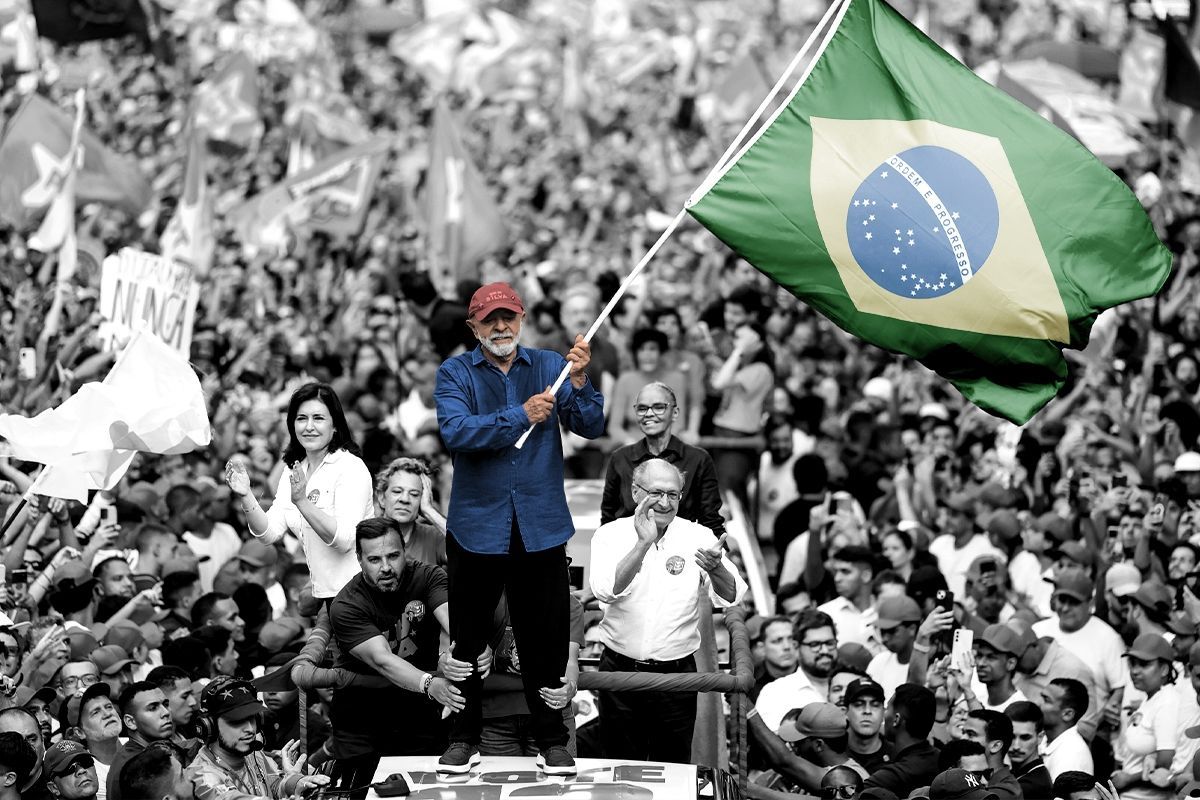
1. Lula wins an unprecedented fourth term as Brazil’s president
Brazilian President Luiz Inácio Lula da Silva has secured an unprecedented fourth term, winning 51% of votes in Sunday’s run-off election with far-right challenger Flávio Bolsonaro. The photogenic son of the imprisoned former president Lula defeated in 2022, Bolsonaro, 45, had promised to cut taxes, slash government spending on things like environmental enforcement, and bring South America’s largest economy in closer alignment with President Donald Trump. His message, which resonated in the Amazon’s frontier boomtowns, secured Bolsonaro more votes in the first round of the election on October 4. Lula’s win makes history twice over. He’s the first since democracy returned to Brazil in 1988 to pull ahead and defeat the first-round winner in the runoff. He’s also the first president elected to four terms, with his first two served between 2003 and 2011. On energy, the differences between the candidates are primarily over the role of government in the market, with the conservative Bolsonaro advocating more privatization and Lula seeking to strengthen the role of state-backed enterprises in generating income for the government and carrying out industrial policy.
On actual energy technologies, however, the discrepancy is relatively small, at least compared to the partisan divides in U.S. politics. Brazil’s grid is overwhelmingly clean, powered primarily by hydroelectricity. And Lula, an octogenarian leftist, has ramped up production of oil and gas through Brazil’s state-backed Petrobras. Lula’s signature since he first won the presidency in 2002 has been growing the economy and shrinking poverty while reducing deforestation of the Amazon. Bolsonaro, by contrast, had promised to strip away protections for the world’s largest tropical rainforest. The Amazon is currently seeing a surge of fires as ranchers look to clear woodlands to make way for more cattle pastures. Folha de S.Paulo, Brazil’s newspaper of record, wrote that Trump would now be Lula’s chief foreign challenge.
2. Serbia’s strongman leader ousted, casting uncertainty over the country’s nuclear plans
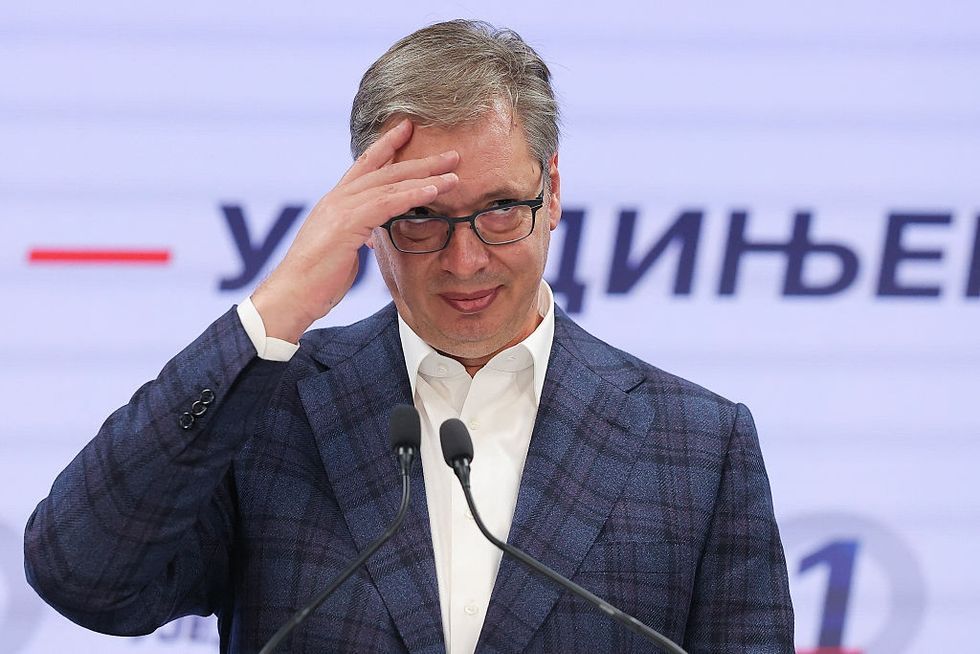
Brazil’s election wasn’t the only political earthquake on Sunday. Serbian voters booted out former President Aleksandar Vučić, a pro-Russian figure widely described as a “strongman” in the Western press, in a student-led movement that the Associated Press said heralded a “seismic shift” in the Balkan country’s politics. The victorious Student List party had formed adjacent to protests against what would have been Europe’s largest lithium mine, Rio Tinto’s so-called Jadar. Amid increasingly fierce protests, the Anglo-Australian mining giant mothballed the project last year. Vučić had championed the mine as a way to improve his country’s ties to the West as European battery makers look for sources of the metal outside of China. His defeat signals little hope of the project’s return. Serbia’s other energy megaproject, its planned first nuclear power station, now faces new uncertainty. The Student List has not, from what I can tell, made any statements for or against atomic energy. But the previous government had been in talks with Russia’s Rosatom and the Chinese government to build its first reactors. That decision on whether and with whom to move forward on the plant will now fall to the new government.
3. The U.S. designates helium as a critical material
Helium may seem like a pretty casual commodity, the sort of thing you can buy a tank of in Costco to fill party balloons. But the gas, which has the lowest boiling point of any element, has a wide range of industrial applications. It’s used to make semiconductors, as a tool to detect leaks in natural gas pipelines, and as a coolant in a next-generation class of high temperature gas-cooled nuclear reactors. Now the Department of Energy has anointed helium with a special strategic status. On Friday, the agency designated helium as the latest critical material, a key step toward directing more federal funding toward domestic production of the gas. The U.S. is already among the top three suppliers of helium in the world. But global supplies took a hit this year when Iran closed off the Strait of Hormuz, preventing Qatar’s vast helium exports from reaching the market. “Helium is essential to producing the semiconductors and advanced technologies that power our economy,” Secretary of Energy Chris Wright said in a statement. “By designating helium as a critical material, we are taking another step toward securing our supply chains, creating American jobs, and ensuring the United States leads the world in energy and technological innovation.”
Sign up to receive Heatmap AM in your inbox every morning:
Email Address *Our Privacy Policy & Terms Apply.
4. Russia is ‘secretly controlling’ a Trump-linked U.S. LNG project, ex-CEO says
The Russian energy giant Novatek is “secretly controlling” Polar Train LNG, the Trump-linked company developing a liquified natural gas export terminal on Alaska’s North Slope, the Financial Times reported. The venture — launched in March by Gentry Beach, an investor with ties to the Trump family, to repurpose work the Russians had done on a facility in Alaska — had “featured in high-level negotiations between Washington and Moscow over potential business deals that could help secure an end to Russia’s war in Ukraine,” the newspaper reported. Polar has been awaiting permission from the Trump administration to circumvent U.S. sanctions to negotiate with Russia. Now Polar LNG’s American chief executive, Joel Riddle, told the FT “that he discovered Novatek was already financing the venture and directing operations before the necessary approvals were obtained.” He resigned from his post last month, along with most of the executive leadership team. “I resigned as chief executive of Polar LNG because I felt uncomfortable that the Russian company Novatek was financing and ultimately controlling the strategic direction of the company,” Riddle said. “Building an LNG facility in Alaska is a very strategic project for the U.S. and as a patriot I feel this needs to be developed using US technology and funded by U.S. investors, not a Russian company.”
5. Sweden is backing a new tidal energy push in Indonesia
Unlike other kinds of intermittent renewable power sources, tidal energy promises almost guaranteed predictability. The problem, however, is that it’s geographically limited. A lot of the most advanced projects attempting to make the technology work are in Canada or Europe. Yet renewable technologies have, in recent decades, found commercial viability after sorting out the details of their hardware in Asia. That’s what makes tidal energy developer Minesto’s project in Indonesia so interesting. It’s in one of Asia’s fastest-growing economies, with an archipelagic geography that offers a lot of potential for tidal. Last week, the trade magazineInternational Water Power & Dam Construction reported that the company had been chosen to participate in the Sweden-Indonesia Sustainability Partnership, a Swedish government-backed program backing clean energy projects in Indonesia. “Indonesia has significant untapped potential in ocean and hydropower resources, which can play an important role in diversifying the country’s renewable energy mix,” said Johan Lennefalk, the acting country manager for Indonesia at Business Sweden, the government agency that promotes Swedish companies overseas. “Minesto’s technology offers a particularly promising solution by harnessing tidal currents that have previously been difficult to utilise, providing predictable renewable electricity that complements other hydropower and ocean energy solutions.”
THE KICKER
Remember when solar panels were exclusively large, rooftop rigs? The commodification of the solar panel in recent years has begun making photovoltaics almost ubiquitous, a reality set to expand as more countries legalize plug-in solar that can work on a balcony like a satellite dish. Chinese panels are now so cheap that Europeans have started using them to build garden fences. Now, in Nigeria, solar panels are the must-have wedding gift du jour. Bloomberg reports that solar panels, batteries, and inverters “are turning up on wedding registries, alongside more traditional gifts such as bed linen and microwaves.”