
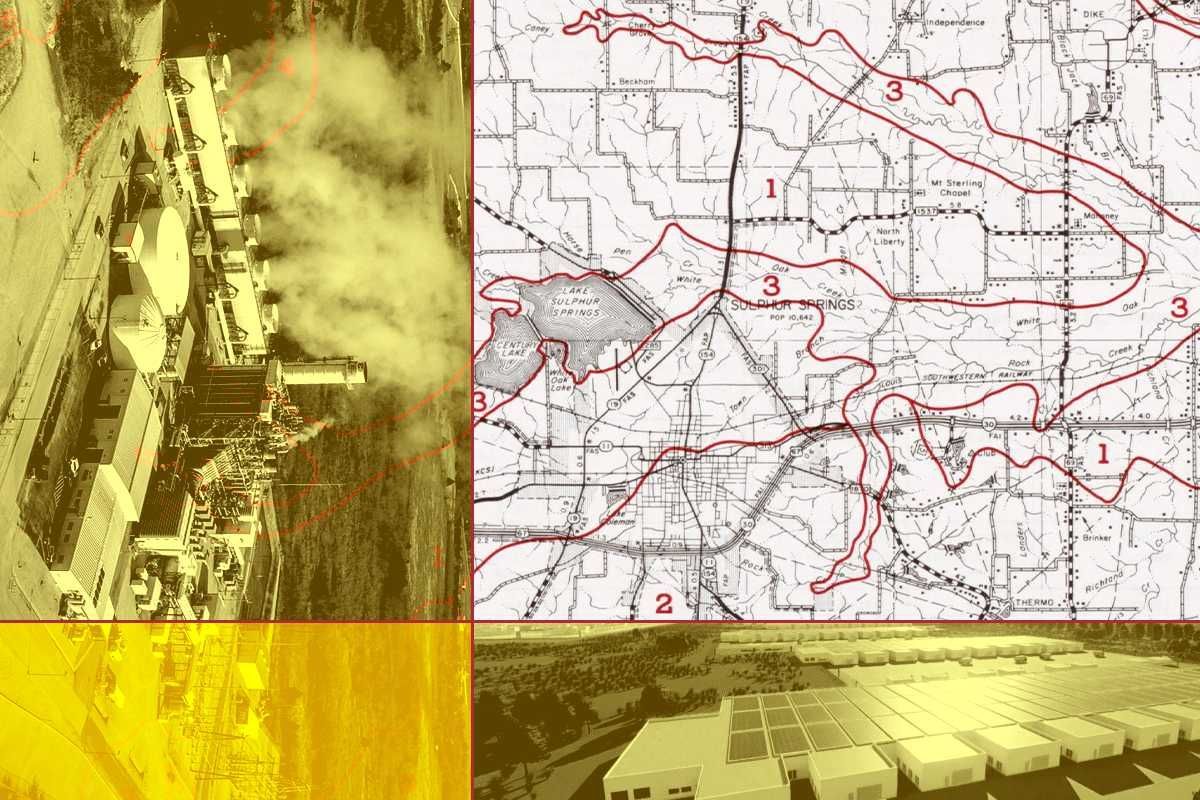
Texas Attorney General Ken Paxton is trying to pressure a company into breaking a legal agreement for land conservation so a giant data center can be built on the property.
The Lone Star town of Sulphur Springs really wants to welcome data center developer MSB Global, striking a deal this year to bring several data centers with on-site power to the community. The influx of money to the community would be massive: the town would get at least $100 million in annual tax revenue, nearly three times its annual budget. Except there’s a big problem: The project site is on land gifted by a former coal mining company to Sulphur Springs expressly on the condition that it not be used for future energy generation. Part of the reason for this was that the lands were contaminated as a former mine site, and it was expected this property would turn into something like a housing development or public works project.
The mining company, Luminant, went bankrupt, resurfaced as a diversified energy company, and was acquired by power giant Vistra, which is refusing to budge on the terms of the land agreement. After sitting on Luminant’s land for years expecting it to be used for its intended purposes, the data center project’s sudden arrival appears to have really bothered Vistra, and with construction already underway, the company has gone as far as to send the town and the company a cease and desist.
This led Sulphur Springs to sue Vistra. According to a bevy of legal documents posted online by Jamie Mitchell, an activist fighting the data center, Sulphur Springs alleges that the terms of the agreement are void “for public policy,” claiming that land restrictions interfering with a municipality’s ability to provide “essential services” are invalid under prior court precedent in Texas. The lawsuit also claims that by holding the land for its own use, Vistra is violating state antitrust law by creating an “energy monopoly.” The energy company filed its own counterclaims, explicitly saying in a filing that Sulphur Springs was part of crafting this agreement and that “a deal is a deal.”
That’s where things get weird, because now Texas is investigating Luminant over the “energy monopoly” claim raised by the town. It’s hard not to see this as a pressure tactic to get the data center constructed.
In an amicus brief filed to the state court and posted online, Paxton’s office backs up the town’s claim that the land agreement against energy development violates the state’s antitrust law, the Texas Free Enterprise and Antitrust Act, contesting that the “at-issue restriction appears to be perpetual” and therefore illegally anti-competitive. The brief also urges the court not to dismiss the case before the state completes its investigation, which will undoubtedly lead to the release of numerous internal corporate documents.
“Sulphur Springs has alleged a pattern of restricting land with the potential for energy generation, with the effect of harming competition for energy generation generally, which would necessarily have the impact of increasing costs for both Sulphur Springs and Texas consumers generally,” the filing states. “Evaluating the competitive effects of Luminant’s deed restrictions as well as the harm to Texans generally is a fact-intensive matter that will require extensive discovery.”
The Texas attorney general’s office did not respond to multiple requests for comment on the matter. It’s worth noting that Paxton has officially entered the Republican Senate primary, challenging sitting U.S. Senator John Cornyn. Contrary to his position in this case, Paxton has positioned himself as a Big Tech antagonist and fought the state public utilities commission in pursuit of releasing data on the crypto mining industry’s energy use.