0
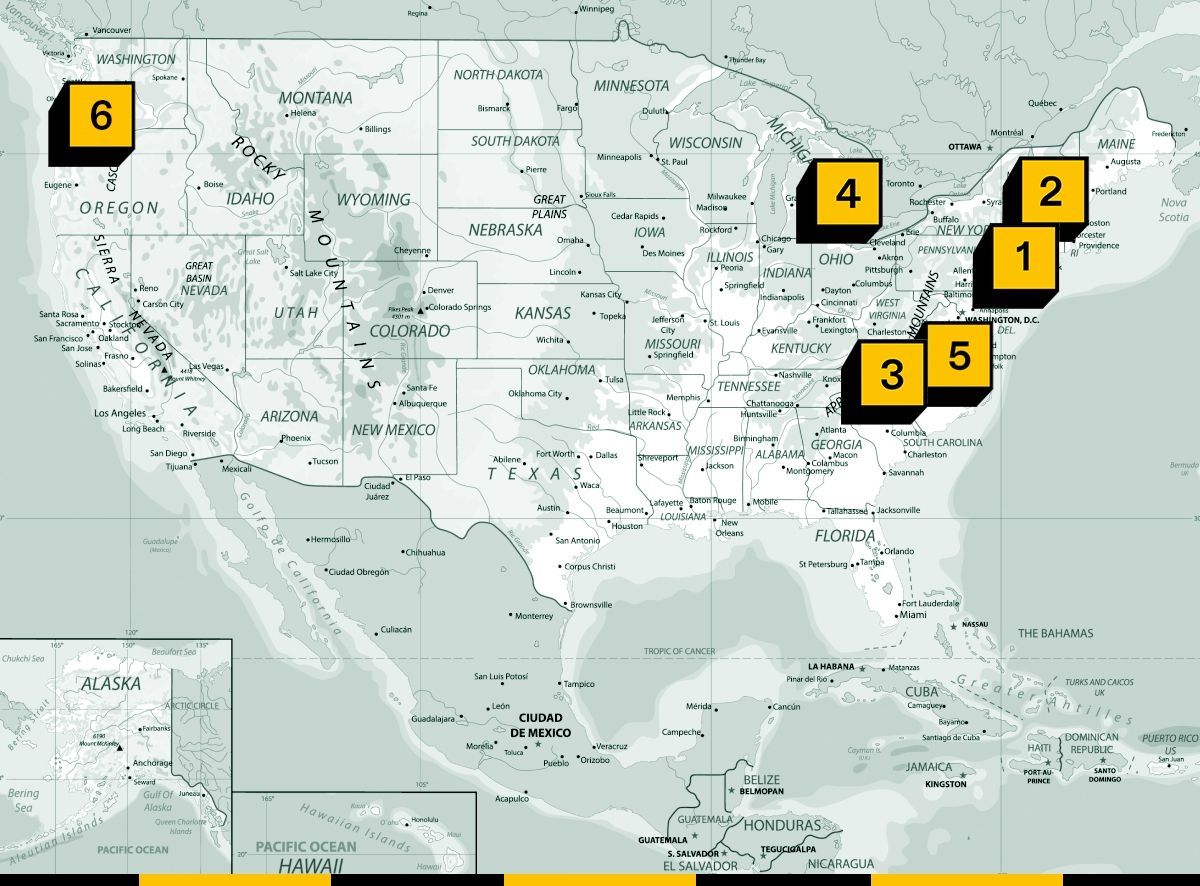
Cumberland County, New Jersey – A Democratic candidate for Congress is vying to oust one of the most powerful anti-renewable voices in Congress with a surprising maneuver: leading the public fight against a data center complex.
- Meet Bayly Winder, a former staffer in the U.S. Agency for International Development (or USAID) who is running for office after he lost his job because the Trump administration tore the agency apart. Winder is the frontrunner for the Democratic nomination to try and oust Jeff Van Drew, one of the most influential anti-wind voices in Congress. Though this is a right-leaning community, Van Drew used to represent this area as a Democrat before he switched his party affiliation in 2019.
- Winder is campaigning for Congress while also helping organize opposition to a large DataOne hyperscaler campus in the suburban community of Vineland. Phase 1 of the gas-powered project is under construction, and grassroots activists are currently fighting municipal approvals for any potential expansions with support from the Sierra Club. Residents say they received little to no public notice of the project and are up in arms about water and noise impacts from construction and operation. (Listen to the humming.)
- Winder published an op-ed on March 16 claiming Van Drew “championed this data center while taking money from the CEO of one of the non-union construction companies involved” – a serious charge. “How can we trust a representative who lets his conflicts of interest override the concerns of his own voters?”
- Van Drew’s campaign quickly issued a response saying that Winder was lying and that it is “completely false” to claim Van Drew “had any role whatsoever in approving or advocating for a data center in Vineland.”
- “Van Drew understands and shares concerns about the rapid growth of artificial intelligence (AI) and the demands that come with it, but it’s important to be clear that unlike offshore wind – which involved FEDERAL permits – there is no federal government component to the Vineland data center project so anyone who tells you otherwise simply isn’t shooting straight,” wrote Ron Filan, Van Drew’s campaign manager and director of political affairs.
- Could focusing on a single data center help Winder win office? Genuinely, who knows! Clearly Van Drew is scared of the 2026 midterms as the Trump ally recently said his party could be “killed” in the coming elections. For what it’s worth, newly elected governor Mikie Sherill flipped Cumberland County and the city of Vineland from Republican to Democrat in the off-year elections last November.
Hampden County, Massachusetts – This Commonwealth just killed an anti-battery storage ordinance.
- Poor Blandford – all the town wanted was to ban BESS in its backyard. But under state law, zoning proposals like these must be approved by the Massachusetts government, and the Massachusetts attorney general found the moratorium would violate legal restrictions against solar bans. Legal analysis of the decision indicates that municipalities won’t be able to restrict solar or battery storage without a lengthy legal battle.
- The timing couldn’t be better for solar and storage growth in Massachusetts, where the governor this week signed an executive order setting a 4-gigawatt target for solar power capacity by 2035.
York County, South Carolina – The Palmetto state area freaking out about a solar plant chemical spill is now going to regulate data centers.
- The Silfab Solar plant in the town of Fort Mill is an important and underscrutinized conflict in the U.S. energy transition. We’ve been reporting on the growing frustrations since The Fight started. Now, due to a chemical spill at the plant, the Move Silfab movement has become an issue in the state governor’s race and involves the Trump Environmental Protection Agency.
- The county’s commission this week wound up hearing from upset residents frustrated about both the Silfab plant and a QTS data center in the works. In classic industrial techlash fashion, this resulted in news coverage conflating the two topics.
Wayne County, Michigan – Detroit looks like it could ban data centers.
- The Detroit city council this week voted to recommend a two-year freeze on any data center approvals as yet another data center proposal – this one from Google – made itself known outside the city. Per public reporting, the moratorium push was driven by city councilor Scott Benson, who represents the northeast side of the city, and rooted in concerns about power bills and water availability.
- This is a clear blow to any notion the Motor City would embrace data centers as a new industrial boon. But the Heatmap Pro database shows this shouldn’t be a surprise: Wayne County has a higher data center opposition risk score than anything related to renewable energy, a score driven by profoundly negative public polling.
Orange County, North Carolina – Expect a data center moratorium in this rural county just outside of the Raleigh-Durham area.
- The Orange County commission voted this week to hold a hearing on banning data center permits for at least one year. This comes after neighboring Chatham County instituted a similar moratorium, and a data center in nearby Wake County was scrapped under profound grassroots opposition.
- A wrinkle in the minutiae of state land law is affecting officials’ thinking on a moratorium: North Carolina law precludes cities and counties from de-prioritizing specific kinds of land use. Officials want to pause giving the green light to any more data centers because they will have to be creative in order to, for example, limit data center projects on agricultural land or change what properties are for industrial use.
Washington County, Oregon – Environmentalists are fighting a battery storage project outside Portland because they say it poses a risk to a nearby wildlife refuge.
- You should be paying attention to this BrightNight battery project in Sherwood, a Portland exurb, which is getting all kinds of flack over environmental concerns. The land use application was approved last May, but aggravated residents are writing their members of Congress – all elected Democrats – asking them to intervene against construction.
- Oregon politicians can quickly turn from climate hawks to willing participants in the industrial techlash. Senator Ron Wyden helped author the Inflation Reduction Act but was also a leading advocate against offshore wind development along Oregon’s coastline, proving instrumental in halting progress under the Biden administration.
- Washington County is also one of those contradictory areas that has high support for renewable energy and a high opposition risk score in the Heatmap Pro database.