GLOBALVARS
TEST TEST TEST
0
Products
Current conditions: Hurricane Trudy has weakened from its peak as a Category 2 storm but still threatens up to 8 inches of rain as it swirls off Baja California • A nor’easter is howling through the Mid-Atlantic this week, hammering the coast with winds of up to 70 miles per hour • A humid overcast has settled over Paris this week as French authorities struggle to regain control after protests over living costs gave way to anarchic riots.
THE TOP FIVE
1. America’s AI infrastructure boom ‘is starting to fray’
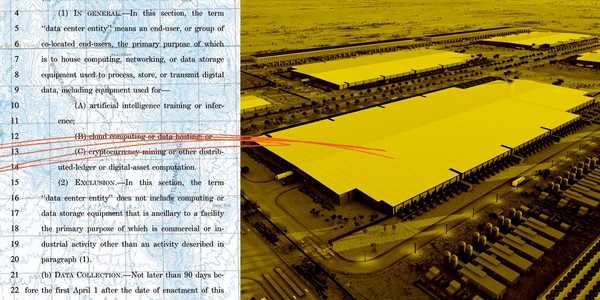
At least 47 major data center projects have been delayed, withdrawn, or blocked so far this year, according to data the regulatory intelligence service RegLayer shared with the Financial Times — and that may be a “conservative estimate.” Just 35% of planned data centers are “credible,” analysts told the newspaper, as more than 1,000 communities across the United States now have restrictions on artificial intelligence infrastructure. The data comes as investors look increasingly jittery about AI following ChatGPT-maker OpenAI’s missing a key revenue metric this year.
Those findings stand in contrast with the numbers from our data service, Heatmap Pro. Based on our research, at least 107 projects faced cancellation so far this year, putting 2026 on track to beat last year, which saw 108 proposals nixed.
2. Want to sell neighbors on a data center? Guarantee power rates
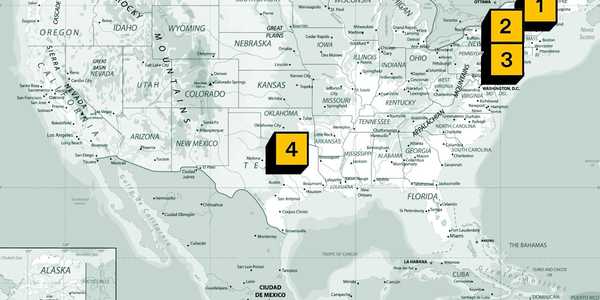
Unless you’re living off the grid and away from any social media (if so, I’m jealous), then you can probably surmise that not-in-my-backyard opposition prevails in many such cases against proposed data centers. That makes selling would-be neighbors on the projects critical. New polling by the advocacy group GoodPower found that a binding promise to protect local electricity rates boosts support for the projects upward by as much as 14 points. Such a pledge worked primarily on the 78% of voters who distrust data centers. Another potential winner: Pair a data center with renewables. At least 46% of respondents to the poll said their support would increase if a project were powered by renewables. The survey spoke to 2,610 registered voters last month and oversampled in states with at least 200 data centers completed: Arizona, Georgia, Indiana, Pennsylvania, Texas, and Virginia.
3. Greenland proposes a ban on deep-sea mining
Greenland wants to find ways to exploit its mineral riches in hopes of generating enough income from industries other than fishing and tourism to eventually wean off subsidies from the governments of Denmark and the European Union. Earlier this month, as you may recall, the self-governing Danish island gave a project the green light. But the government in Nuuk doesn’t want miners harvesting metals from the seabed surrounding the Arctic island, which are fertile fishing grounds and could, in theory, lead to mineral production without meaningful infrastructure to create jobs for Greenlandic people. Last week, the Greenlandic Parliament adopted a resolution requiring the government to draft legislation banning deep-sea mining. All members present voted to approve the proposal, according to Sermitsiaq, a leading newspaper in Nuuk. The ban would, if adopted, last until the end of 2029, with the possibility of an extension for two years at a time.
Sign up to receive Heatmap AM in your inbox every morning:
Email Address *Our Privacy Policy & Terms Apply.
4. Indonesia agrees to buy two Russian floating nuclear plants
Long before the race for small modular reactors kicked off, Russia launched a floating nuclear power station and sailed the vessel up to the Arctic to power a small town. Now, as you may recall, the state-owned Russian nuclear company Rosatom is making plans to build more floating nuclear plants, and it has a major nuclear newcomer nation as an offtaker. Last week, NucNet reported, Rosatom announced a deal with Indonesia’s state-owned PT Pembangkit Listrik Nuklir to supply electricity to northern Indonesia from at least two floating nuclear plants with a capacity of 200 megawatts each.
5. U.S. rooftop solar output has increased by nearly 400%
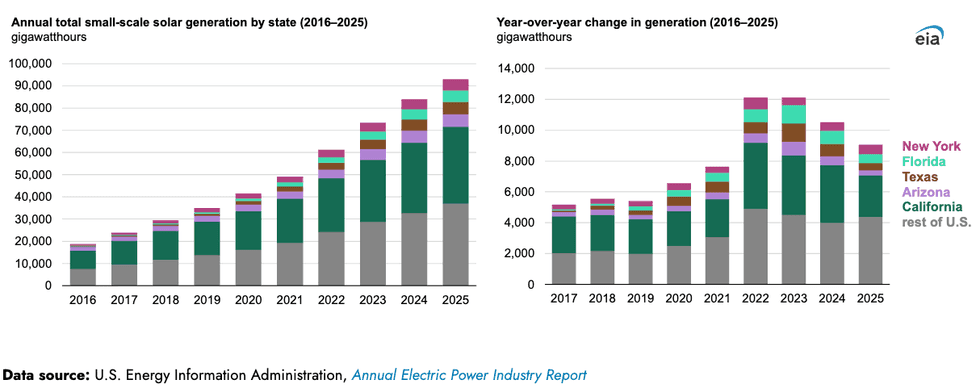
Over the past decade, small-scale and rooftop solar systems increased from 18,812 gigawatt-hours to 92,979 gigawatt-hours, an increase of over 394%. That’s according to a new analysis from the Energy Information Administration, which found that California, Arizona, Texas, Florida are the regions with the most abundant solar resources. Even though the state has worse solar resources in general, New York ranked fifth as a result of growing capacity. Still, the rate of growth in generation has slowed over the past three years. l
THE KICKER
The Trump administration is pulling out all the stops for Alaskans who want to drill and transport fossil fuels, mine minerals, and log trees. Now he’s easing rules on hunters. A new final rule from the National Park Service has revived a hunting method the Biden administration banned in 2024: Baiting bears with doughnuts soaked in bacon grease. Hunters use the baits to lure bears to close range before shooting them. “Some hunters prefer to use strong-smelling, high-calorie foods like pastries, doughnuts, meat scraps or fish remains to lure bears from miles away,” The New York Times reported. “But some conservationists say the practice is unethical and risks making the bears accustomed to human food, which could endanger people.”