GLOBALVARS
0
Current conditions: Guam and the Northern Mariana Islands are carrying out damage assessments after Super Typhoon Bavi made landfall Monday as the equivalent of a Category 5 hurricane • A wildfire has scorched more than 11,000 acres in the French Pyrenees, forcing thousands to evacuate • Heavy rain from Typhoon Maysak has killed at least 15 people in China this week.
THE TOP FIVE
1. 11 Western U.S. states unite to bolster the grid
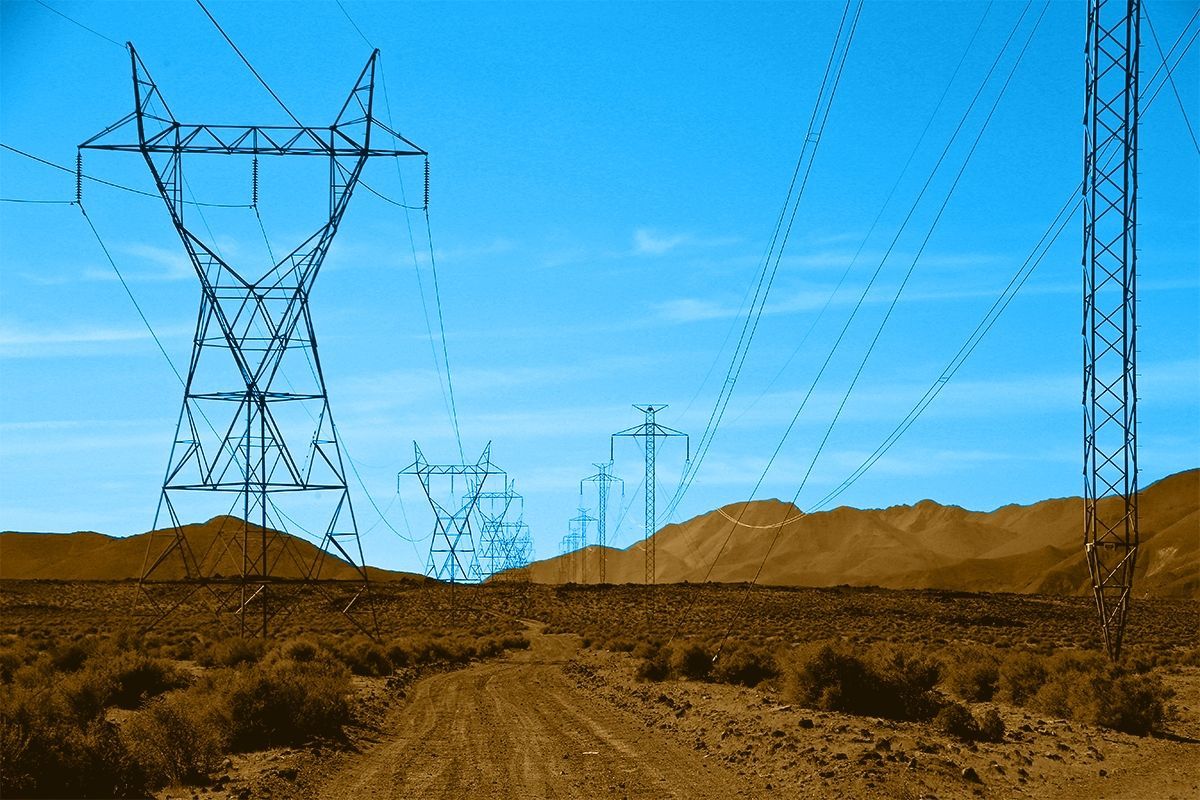
The governors of 11 states across the American West signed onto a pact to speed up permitting and increase coordination on the regional electrical grid. The agreement, brokered at the Western Governors’ Association’s annual meeting last week, unites Arizona, Colorado, Idaho, Montana, Nevada, New Mexico, North Dakota, Oregon, Utah, Washington, and Wyoming behind the Western Transmission Expansion Coalition, or WestTEC. The interstate effort to build out the grid across America’s western half published a study in February that found the region needed 12,600 miles of new transmission lines over the next decade, at a cost of roughly $60 billion. Even the energy adviser to Utah Governor Spencer Cox — a Republican who has positioned himself as a vocal champion of “fiscal responsibility” — called the investment “just common sense” for the West. “Getting energy to where it’s needed, when it’s needed, is just as important as generating it in the first place,” Emy Lesofski, who also serves as the director of the Utah Office of Energy Development, said in a statement. “Think of the grid like the roads and highways connecting our communities — it doesn’t matter how much is produced if you can’t move it to where people actually live and work.”
It’s a sign, perhaps, of the counterintuitive but optimistic conclusion of a new study by the Massachusetts Institute of Technology Center for Energy and Environmental Policy Research. Entitled “Glass Half Full,” the report — which my colleague Robinson Meyer published as an exclusive — compared the tax and spending laws passed under the Biden and Trump administrations and also analyzed each administration’s environmental rules. The analysis concludes that 74% of new clean energy capacity that would have gotten built under the Biden administration’s policy by 2035 will still get built under Trump’s policies by that same year. Those new renewables and nuclear plants will generate about 71% of the electricity that would have been expected had Biden’s policies remained law. Roughly 67% of the climate pollution that would have fallen under Biden’s policies will still drop under the trajectory Trump set. “The glass is substantially full,” Lily Bermel, the report’s author and a visiting fellow at the Columbia Center on Global Energy Policy, told Rob. “It’s not barely half full. It’s like three-quarters full.”
2. Federal regulators say they’re too backlogged to fast-track a new gas plant
The U.S. grid needs to increase its supply of reliable electricity as quickly as possible. But regulators are stretched so thin racing to approve new projects that they can’t risk diverting attention to fast track last-minute design changes to a $2 billion gas-fired plant in the nation’s largest and arguably most stressed grid system. On Monday, Utility Dive reported that the Federal Energy Regulatory Commission decided last week to reject a request for a waiver to allow Advanced Power Services’ Chestnut Run project in eastern Ohio to hook up to the PJM Interconnection system while bypassing certain rules. PJM included the plant — the parent company of which is ArcLight Capital Partners, which in turn sold itself in May to the data center developer DigitalBridge for $1.1 billion — in the initial 51 projects designated under the Reliability Resource Initiative, a program to fast-track roughly 12 gigawatts of additional generation from new and existing power stations.
In a dynamic that echoes what went wrong with Westinghouse’s buildout of two AP1000s at Southern Company’s Plant Vogtle, the process for the program barred any changes to a project’s size and capacity in its interconnection rights. With gas turbines in short order, Advanced Power couldn’t get critical equipment. The Boston-based independent power producer told FERC it had found alternative turbines, but that the new units would change the plant’s configuration, shaving off a modest 55 megawatts from its maximum output of more than 1.2 gigawatts of electricity. It’s barely a 4% difference. But FERC said that “studies resulting from the equipment changes would introduce substantial delays” and “have a ripple effect” on other projects in the queue.
3. The largest polysilicon factory of its kind outside China nabs a $1.6 billion investment
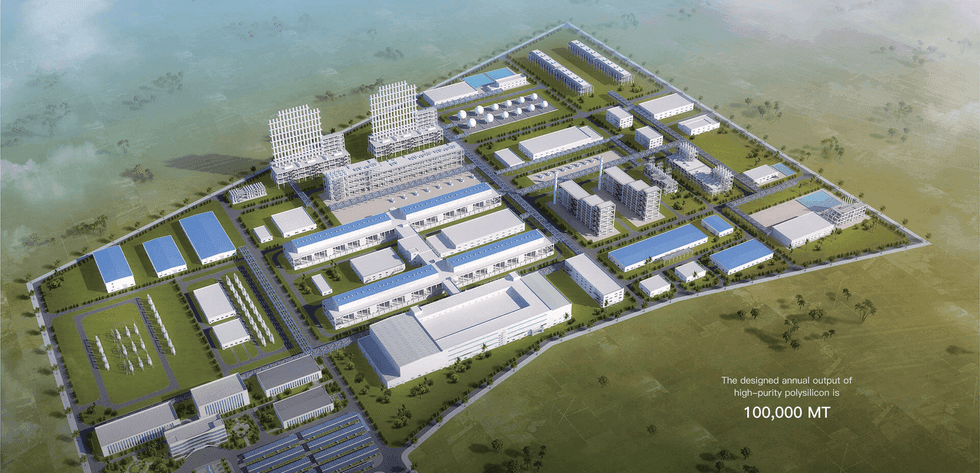
Back in February, Oman’s United Solar opened the Middle East’s largest polysilicon plant. At full capacity, the facility will churn out 100,000 metric tons of polysilicon per year, enough to produce 40 gigawatts of solar panels. That makes the plant the largest of its kind outside China. Initially backed by Oman’s sovereign wealth fund, United Solar has already received $30 million in backing from Waaree Solar Americas, the U.S. subsidiary of an Indian solar giant that Semafor reported was championed by Prime Minister Narendra Modi in recent trade talks in Muscat. On Monday, theOman Observer reported that United Solar had closed a $1.6 billion deal with the International Finance Corporation, the private sector arm of the World Bank Group. In a statement, the company described the investment as an endorsement of United Solar as a supplier of material that can comply with mounting American and European trade restrictions on Chinese solar panels.
Sign up to receive Heatmap AM in your inbox every morning:
* indicates required
Email Address *Our Privacy Policy & Terms Apply.
4. Cuba suffers another nationwide blackout
Cuba’s entire power grid went offline Monday as the Caribbean nation’s energy crisis devolves into catastrophe amid Washington’s blockade on fuel shipments. Energy Minister Vicente de la O Levy told CNN that officials were working to restore energy and that they’ve already activated emergency “microsystems” that supply electricity to critical services. In a plea to the United Nations in May, Francisco Pichón, the highest ranking officer in the Havana office of the U.N.’s Development System, said “time is running out, we need fuel now to save lives.” As in neighboring Puerto Rico, the ongoing grid disaster has spurred a boom in rooftop solar. But NBC News reported that Cubans are also turning to dirtier energy sources such as charcoal to cook indoors, subjecting themselves to dangerous smoke.
I find the comparison to Puerto Rico particularly poignant. Both islands were colonized around the same time, forming the beachhead of Spain’s early empire in the Americas, and rebelled against Madrid’s rule around the same time. Both fell under Washington’s suzerainty after the Spanish-American War of 1898, although the Americans granted Cubans self rule while seizing Puerto Rico as a colony. After the Cuban Revolution, the U.S. invested in Puerto Rico as a manufacturing hub and a symbol of the American system’s superiority. But as the memory of the Cold War faded into the 1990s, the U.S. cut key support for Puerto Rico, flipping over the first domino in a process that ultimately led to the island’s bankruptcy and the total collapse of its electrical system. The islands had opposite experiences of the so-called American Century. Neither one can keep the lights on.
5. Aalo Atomics becomes the fourth reactor startup to go critical under Trump program
In the early hours of July 4, the microreactor developer Aalo Atomics split atoms at its test reactor for the first time, becoming the fourth company in the Trump administration’s reactor pilot program to go critical. Criticality, on its own, is not a huge deal. But the program supported 10 companies to build test reactors that could generate data that the developers can use in their applications to the Nuclear Regulatory Commission. The Department of Energy, which administered the program, set a July 4 deadline for at least three companies to split atoms for the first time. First came Antares Nuclear, whose microreactor — designed for the military and space — went live at the Idaho National Laboratory early last month. Two weeks later, the gas-cooled microreactor maker Valar Atomics fired up its test reactor at the San Rafael Energy Lab in Utah. A week ago, as I told you, Deployable Energy went critical with its “nuclear battery,” also at the Idaho National Lab. In a statement, Aalo Atomics CEO Matt Loszak called reaching criticality “our most significant milestone to date, as it paves the way for the deployment of” the full-scale power units by smoothing the pathway to NRC approval.
I hope you were soothed by that chaser, because here’s the acrid shot: While we split atoms at test reactors, China just hooked up a whole new gigawatt-scale reactor to its grid. Last week, I told you that the second of six new Hualong One reactors — essentially China’s standardized version of the American AP1000 with an all-domestic supply chain — had hit a critical juncture. Well, now it’s hit the most critical juncture of all: It’s officially supplying power to the grid. Onto the next one.
THE KICKER
The offshore wind industry may be in retreat in the U.S., but it’s just picking up in Europe. On Monday offshoreWIND.biz reported that the Netherlands’ 760-megawatt Hollandse Kust West VI offshore wind farm has officially connected to the grid. The 52-turbine plant is expected to reach full capacity by the end of this year.