GLOBALVARS
0
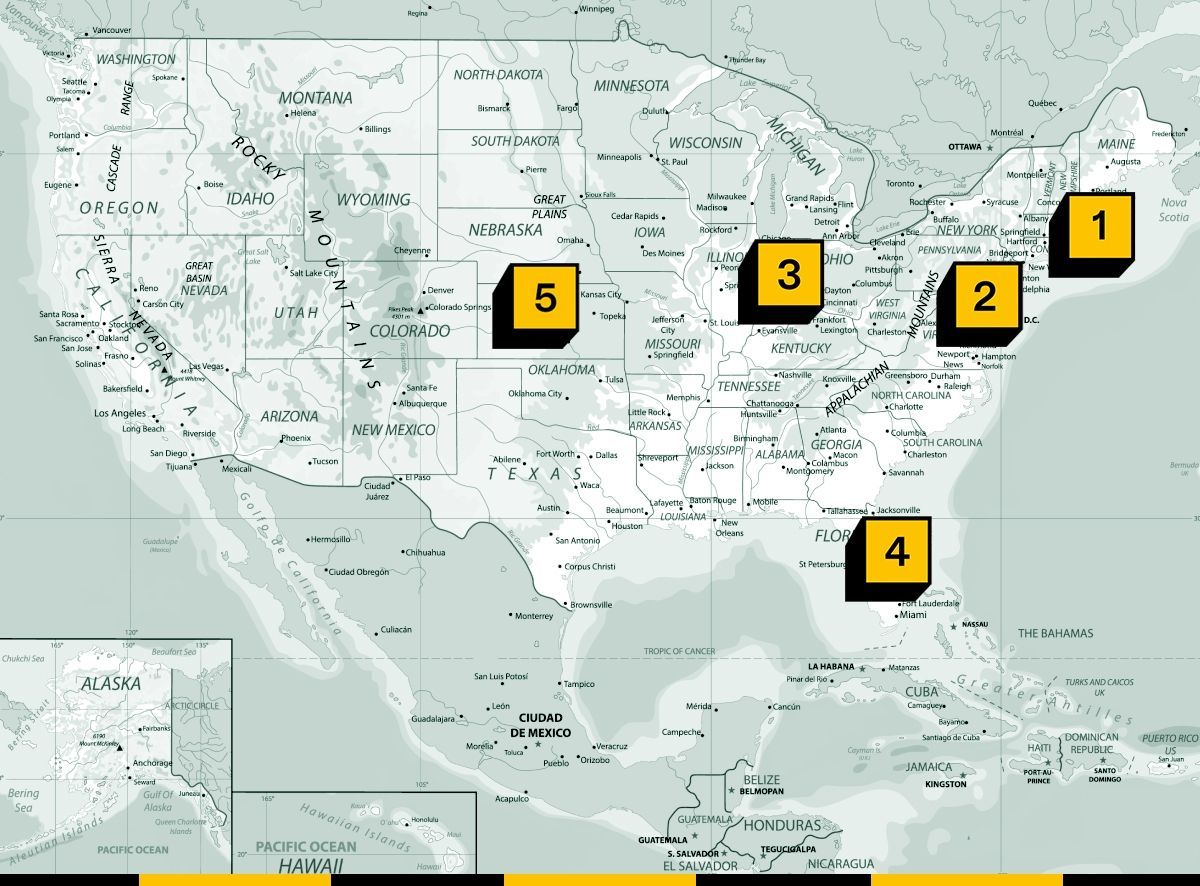
1. Barnstable County, Massachusetts – I have a whopper of an update on the Vineyard Wind project, which might be in operation but risks becoming fodder in the fight against offshore wind.
- Like all offshore wind projects, Vineyard Wind has to send power to the coastline via cable. One of the three sites where these giant power lines land is Barnstable, a small shore community, where longtime residents for years have voiced concerns about electromagnetic fields or EMF.
- Concerns about EMF are comparable to those about infrasound from data centers. We do not know whether these concerns are really rooted in legitimate health impacts, as I have written, but regardless this remains a common concern raised around large high-voltage power lines, including those for offshore wind projects.
- On June 30, the town’s board of health heard from a group of Barnstable residents who claim to have measured EMF from the town’s wind cable. The same group, Save Greater Downes Beach, had unsuccessfully sought to stop the cables through litigation and public pressure.
- This board of health meeting was controversial: Ahead of the meeting, the director of Sierra Club’s Massachusetts chapter wrote the board of health requesting their testimony be limited and no action be taken on the findings. “Concerns being raised about electromagnetic field exposure associated with Vineyard Wind 1’s underground export cables are not only invalid but outside of the Board of Health’s jurisdiction,” wrote chapter director Vick Mohanka, according to a copy of the letter posted to Facebook by anti-wind activist Susanne Conley.
- This Sierra Club chapter was right to be concerned about how this meeting would affect Vineyard Wind. I watched the lengthy testimony before the board of health. Activists presented a case that the town should implore regulators with authority to deeply study the wind farm cables. They asked the board of health to back a state study on EMF and put the question before the Massachusetts permitting regulator, the Energy Facility Siting Board.
- “We’re not asking the board to place any restrictions or limitations on the project at this time,” Gary Peters, a local medical professional and member of Save Greater Dowses Beach, told the board. “We’re asking you to put that ball in the court of EFSB.”
- The board was receptive to this request. Board chair F.P. Lee told the group he would “take this under advisement” and said he’d talk to their legal department about it. Daniel Luczkow, the board’s vice chair, said he agreed with activists’ feelings that Barnstable residents were “guinea pigs.”
- “It sounds like the contention is that these levels we’re measuring are much, much higher than the information given when the project was started,” Luczkow said. “We’re the only place on the planet, maybe, that actually runs these [cables] through a populated area and we have no idea what type of damage they’re causing?”
- Should Barnstable strenuously take this issue up, I would predict it only be a matter of time before it’s also raised by organs of the federal government. Health and Human Services Secretary Robert F. Kennedy Jr. last year asked the Centers for Disease Control to study negative health impacts from precisely this infrastructure. This kind of hyperlocal squabble is often what manifests as conversation in anti-wind opposition circles, and Vineyard Wind was already causing PR headaches for the energy transition.
- Avangrid did not respond to a request for comment.
2. Prince William County, Virginia – Northern Virginia is officially hostile territory for data center developers, and I learned about it through a call from my mom.
- “Jael!” exclaimed my dear mother who lives in Loudon County and called at 8 p.m. Tuesday after seeing a local TV broadcast. “The news is saying that that big data center is not happening!”
- What “big data center” was she talking about? Well, to tell you the truth, with my mom I’m not entirely sure. But I have a few guesses. QTS formally withdrew its request to Prince William County for construction of the Digital Gateway mega-hyperscale project which would’ve attracted purportedly around $30 billion in capital investments. Last night, the county commission unanimously rejected it, a likely lethal blow after legal setbacks.
- There’s also the Dulles South Innovation Center, which the Prince William County board of supervisors unanimously rejected Tuesday night. The Prince William Times described the vote as one “that likely sounded the death knell for huge data center complexes” in the county.
- Now I’m watching this once coveted data center destination county for potential moratoria or site restrictions. Of note: In March, the county let a zoning rule lapse that allowed by-right development, therefore now all projects are required to get a special use permit before construction. The times are a-changing in Virginia.
3. Marion County, Indiana – Indianapolis will have special data center zoning rules soon and they’re upsetting the opposition to new projects.
- The city’s metropolitan development commission just advanced a new zoning class for data centers setting first-of-their-kind standards for where data centers can be built and their noise levels. Facilities would also be forced to report energy and water use information to the city.
- Locals against the rules say more time is needed to consider the zoning proposal and support a temporary moratorium in the short term. The Indianapolis city-county council voted to adopt a non-binding resolution supporting the concept of a moratorium but no such policy is formally in place. That would have to be done by the metropolitan development commission.
- This zoning class comes as developers in the area are trying to do what they can to quell unrest without government action. On Wednesday DC Blox disclosed it is scaling back the design of a new data center project in east Indianapolis, removing a building from the design and nixing more than two dozen backup diesel generators.
4. Palm Beach County, Florida – This populous county home to Mar-a-Lago has frozen data center development.
- The county this week instituted a zoning freeze on any new data center projects. The only proposal allowed to proceed is Project Tango, a data center proposal that’s being forced to tapdance through innumerable legal and procedural hurdles because simply put, people in Florida really hate data centers. Opposition to Project Tango helped spark the push for a county-wide project pause. Tango however was initially approved in 2016.
- The county must still approve a project site expansion crucial to its design and that decision is disconnected procedurally from the freeze. The county commission will vote on whether to formally approve the expansion on July 15. Signs are grim Tango will get a green light after the zoning board unanimously rejected them.
5. Finney County, Kansas – If you want one ray of sunshine, at least it’s still possible to get permission for a large solar farm in flyover country.
- The nearly 4,000-acre Lone Bison solar project under development by TED Renewables got its special use permit from this county’s commission on Tuesday. Local media reports on the permit include comments from TED Renewables senior manager for project development Ian Edwards that make it appear the project continues forward because it’s not associated with potentially more controversial infrastructure like battery storage or data centers.
- “We are not proposing a battery storage component of this project. We are not affiliated with any data center as part of this project,” Edwards said at the permit hearing according to Greater Garden City, a local online news publication. “For the benefit of the public in terms of transparency, those two things are not on the table as it relates to this project specifically.”
- Finney County – a rural farming county where fewer than 40,000 people live – has a low opposition risk score for renewable energy projects in the Heatmap Pro database and no previous recorded instances of significant opposition to solar projects, wind farms, battery storage, or data centers.