GLOBALVARS
0
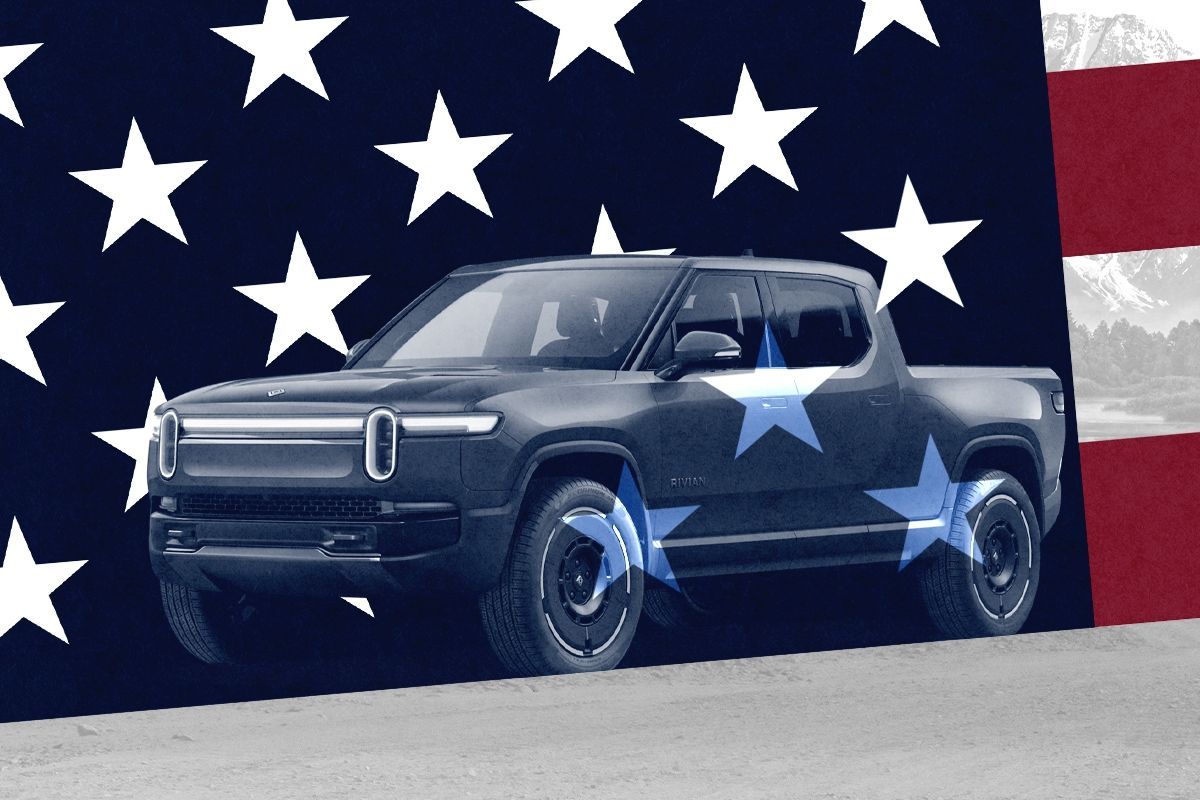
For years, policymakers have debated electric vehicles as if they were merely another consumer product. They are not.
Electric vehicles are the largest source of demand for advanced batteries, and batteries are rapidly becoming one of the foundational technologies of the 21st century. They power cars, drones, data centers, grid storage systems, autonomous weapons, military platforms. Over time, they will power most of the wider economy. In strategic terms, batteries are beginning to look less like mere automobile components and more like semiconductors — that is, chokepoint technologies critical to the functioning of modern society.
The future of the U.S. EV industry matters far beyond transportation. Given that electric vehicles remain the primary source of demand for batteries, a healthy U.S. battery sector requires an American auto industry that produces and sells EVs at scale. Without a strategic plan that marshals both public and private sector investment in support of EV uptake by American consumers, the U.S. will leave itself with critical security vulnerabilities — not in some far-distant future that may never come to pass, but in the present.
Right now, China rules the global battery ecosystem. Chinese firms lead not only in battery manufacturing, but also in the upstream processing of critical minerals, the production of midstream cathodes and anodes, and the commercialization of next-generation battery technologies. China also controls most of the global processing capacity for graphite, the key material used in battery anodes, and dominates production of the intermediate components that determine battery cost and performance.
The implications of this imbalance extend well beyond auto production, or even mere economics. As we know well from our time serving in the Pentagon, the Department of Defense’s future force will rely increasingly on electrification. Tactical drones and other autonomous systems, portable power units, communications equipment, unmanned logistics vehicles, and resilient military installations all require advanced batteries. In case any of this remained in doubt, the conflict in Ukraine has demonstrated beyond dispute the central importance of battery-powered platforms on the modern battlefield. The same will inevitably prove true in the Indo-Pacific, where the U.S. military is investing heavily in unmanned systems designed to operate across vast distances and obviate risks from lengthy supply lines.
Unfortunately for the Pentagon, defense demand alone is far too small to sustain a globally competitive battery industry. The Department of Defense cannot create the manufacturing scale necessary to compete with China, as military procurement represents only a tiny fraction of battery demand. Only the commercial market can provide the volume needed to drive innovation, lower costs, and sustain domestic production, and the commercial market is driven overwhelmingly by electric vehicles. Here, the loss of consumer tax incentives undermined American automakers’ turn towards EVs, causing them to write off tens of billions of dollars of investments.
This is the strategic reality often missing from America's energy debate. Even a country as large and powerful as the United States cannot maintain a world-class battery industry while undercutting the largest source of battery demand.
Some policymakers appear to believe that the United States can support battery manufacturing for military systems, artificial intelligence infrastructure, and grid storage while simultaneously slowing EV adoption. That is wishful thinking.
Without a robust domestic EV market, battery manufacturers lose the scale that makes investment attractive, and production will inevitably move elsewhere. That's fine for other manufacturing sectors like t-shirts and toys, but unacceptable for technologies with critical national security applications.
The United States has seen this movie before. American firms pioneered many of the technologies behind solar panels, lithium-ion batteries, and lithium iron phosphate batteries, but China ultimately captured much of the manufacturing base for these products. Through sustained investment, patient industrial policy, and relentless focus on scale, Chinese firms drove down costs and built ecosystems that are now extraordinarily difficult to replicate. The result is that companies such as CATL and BYD occupy increasingly dominant positions in the battery sector, akin to those once held by American technology champions.
As a result, China's EV industry is now becoming a global export powerhouse. Chinese automakers are no longer producing low-cost copies of Western vehicles. As we know firsthand from a recent tour of the Xiaomi factory outside Beijing, Chinese factories are now producing technologically sophisticated products that are winning on price, performance, and quality when compared with the best that the United States or Europe have on offer. As a result, companies like BYD are rapidly gaining a larger share of the huge Chinese market and rapidly expanding their footprint internationally.
This matters because automobiles remain one of the world's largest manufacturing industries. The global auto market generates trillions of dollars in economic activity and supports millions of jobs. For more than a century, American prosperity has been tied in part to leadership in transportation manufacturing, but that leadership can no longer be taken for granted.
In China, electric vehicles and hybrids already account for more than half of new vehicle sales. Across Europe, adoption continues to rise. In many developing countries, falling battery prices are making electric transportation increasingly affordable. The direction of travel is unmistakable: The global market is shifting toward electrification.
If American automakers fail to compete in that market, they will steadily lose market share abroad. That would not simply reduce profits. It would weaken one of the country's most important industrial sectors and diminish the manufacturing base that has historically supported national defense in times of crisis.
Recent geopolitical events underscore the stakes. The disruptions to Middle East energy infrastructure because of the Iran conflict and the related threats to shipping through the Strait of Hormuz served as a reminder that oil remains vulnerable to geopolitical shocks. Electrification is not a complete solution to energy insecurity, but economies (and militaries) with greater electrification, diversified power sources, and advanced battery industries are better positioned to withstand such disruptions.
China understands this. Beijing does not view batteries, EVs, renewable energy infrastructure, and industrial competitiveness as separate issues. It views them as components of a single strategic package. As energy storage, modularity, and transmission become the key enabling technologies of the global economy, the United States must adopt this same holistic approach.
This does not mean attempting to replicate China's economic model or wantonly abandoning domestic fossil fuel production. It simply requires recognizing that batteries are a strategic industry — and that electric vehicles are the primary mechanism through which that industry achieves scale.
During the 20th century, policymakers understood that leadership in steel, automobiles, aerospace, semiconductors, and telecommunications had national security implications, and thoughtful policymakers sought to build U.S. advantages in these key sectors. The same logic applies today.
The question is no longer whether the future of transportation is electric. Most of the world has already answered that question. The issue before us now is whether the United States intends to build the batteries that will power the next era of economic growth, military capability, and industrial strength or import them from China, with all the vulnerabilities that will entail.