0
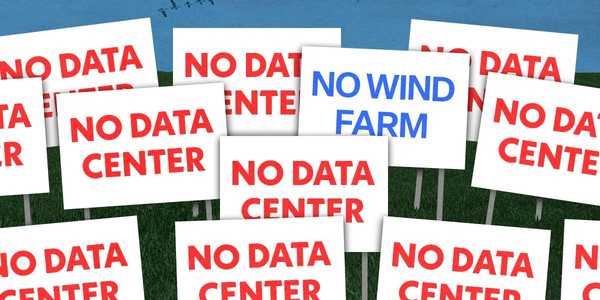
Renewable energy is getting roped into the data center sector’s publicity woes as a broader industrial techlash sweeps many corners of the nation.
Data center developers often want solar energy because you can stand up a project with it quite quickly. It’s also plainly better for the planet to have solar powering data hubs as opposed to gas or coal. But across the country, counties and towns enacting moratoria on data centers are blocking solar developments, not to mention wind and battery storage, while politicians struggling with resident concerns about data centers are responding by going after renewables and transmission that would add solar or wind to the grid.
Examples keep piling up of data center frustrations boiling over into renewables discussions and vice versa. You can find them in data center hubs like Indiana, as well as in less developed areas of the central and western United States. In Oklahoma, activists fighting data centers are protesting with leaders in the anti-renewables grassroots movement. In Alabama, lawmakers are considering a full-blown ban on solar because of a single project that would offset power demand from a big Meta data center. In Missouri, a similar proposal significantly limiting solar development is being pushed by a top GOP state senator under fire for previously defending data centers.
This phenomenon is spreading beyond solar farms to manufacturing. Take York County, South Carolina, where the upset over Silfab Solar’s module plant is energizing calls to pause a QTS data center proposal.
“Your land is being stripped of value by industrial complexes of all kinds,” Oklahoma State Representative Jim Shaw told attendees of a March 7 “Green New Scam” protest outside the state capitol building in Tulsa. The protest commingled anti-wind figures with communities fighting other tech infrastructure, and video from the event shows people had signs stating “Stop the NDAs” – a popular rallying cry against data center developers. “They do not care. Your voice is silenced. Your calls and emails go unheeded. Your cries for help are ignored and even belittled,” Shaw said to dozens of passionate assembled protesters.
Reagan Farr, CEO of solar developer Silicon Ranch, told me in an interview this week that he is increasingly concerned about the solar industry being swept up in the backlash to data centers. This trend, which Farr said he’s “thought about a lot,” reminds him of Occupy Wall Street, where “they’re against Big Tech, AI [and] big capital,” while maintaining “the same lack of faith in large institutions.”
“If you read the content in all of these ’Stop Solar’ Facebook groups, they really don’t distinguish between AI, data centers, Bitcoin, and renewables. It’s a general complaint against all of the above,” Farr told me. “It’s a fraught environment, and one I think is going to only continue to be more difficult as we move forward.”
Farr said this backlash to solar power in the data center boom reminded him of the Occupy Wall Street movement, in that people are expressing distrust at quickly growing industries and institutions. These conflicts wind up muting necessary discussions about the environmental impacts of fossil fuel development and fossil-powered data centers, he said. “Even when they’re talking to me, a founder and CEO, they’re like, You’re a big, faceless company. And no, we’re actually people who care about the environment and your community.” (Our extended conversation is included at the end of this newsletter).
Now, this isn’t to say fossil fuel infrastructure is any more popular than solar or wind when it’s how data centers get their power. One of the most common complaints about data center projects is about the pollution from diesel backup generators. And in the heart of West Virginia coal country, homeowners are suing the gas company behind a major data center. It would be a mistake to think renewables are singularly vulnerable to this problem.
In more conservative and rural communities of the U.S., however, the industrial techlash really matters. That’s because data centers are facing pushback over some of the same factors bedeviling renewables: fears over declining farmland, cultural misalignment, and a general lack of trust.
Kim Georgeton, a Republican politician in Ohio, told me she thinks farmland impacts make solar a tough sell when it’s attached to a data center in rural areas, where she said the physical footprint of a solar farm or a data center can be what triggers animus. “Once you convert agriculture – whether it be with data centers or solar or wind – you’re interrupting the agricultural land,” she told me.
Georgeton is a former software developer and current candidate for lieutenant governor on a GOP primary ticket this year alongside Casey Putsch, an anti-data center candidate for governor. While their bid is currently polling in longshot territory, the campaign has gained traction in factions of Facebook where anti-renewables and anti-data center opposition likes to organize, and Putsch is doing an event with environmentalists at the University of Cincinnati this weekend on data center opposition.
Heatmap’s polling also backs up Georgeton’s point of view. A Heatmap survey conducted last fall found that both Republican and independent voters said a convincing reason to oppose data centers is that they “might require wind or solar farms to be constructed nearby.” The data also found people were just as convinced to dislike data centers on the prospect it would possibly “require nuclear power plants to be constructed nearby.” Even more convincing, according to our polling? The risk of a data center causing new gas plants to pop up.
It’s now safe to say that the AI and energy sectors are in this fight together.