
Current conditions: Hurricane Gabrielle has strengthened into a Category 4 storm in the Atlantic, bringing hurricane conditions to the Azores before losing wind intensity over Europe • Heavy rains are whipping the eastern U.S. • Typhoon Ragasa downed more than 10,000 trees in Yangjiang, in southern China, before moving on toward Vietnam.
THE TOP FIVE
1. White House orders agencies to prepare for mass firings
The White House Office of Management and Budget directed federal agencies to prepare to reduce personnel during a potential government shutdown, targeting employees who work for programs that are not legally required to continue, Politico reported Wednesday, citing a memo from the agency.
As Heatmap’s Jeva Lange warned in May, the Trump administration’s cuts to the federal civil service mean “it may never be the same again,” which could have serious consequences for the government’s response to an unpredictable disaster such as a tsunami. Already the administration has hollowed out entire teams, such as the one in charge of carbon removal policy, as our colleague Katie Brigham wrote in February, shortly after the president took office. And Latitude Media reported on Wednesday, the Department of Energy has issued a $50 million request for proposals from outside counsel to help with the day-to-day work of the agency.
2. ‘New York remains the climate leader’
At the Heatmap House event at New York Climate Week on Wednesday, Senate Minority Leader Chuck Schumer kicked things off by calling out President Donald Trump’s efforts to “kill solar, wind, batteries, EVs and all climate friendly technologies while propping up fossil fuels, Big Oil, and polluting technologies that hurt our communities and our growth.” The born and raised Brooklynite praised his home state. “New York remains the climate leader,” he said, but warned that the current administration was pushing to roll back the progress the state had made.
Yet as Heatmap’s Charu Sinha wrote in her recap of the event, “many of the panelists remained cautiously optimistic about the future of decarbonization in the U.S.” Climate tech investors Tom Steyer and Dawn Lippert charted a path forward for decarbonization technology even in an antagonistic political environment, while PG&E’s Carla Peterman made a case for how data centers could eventually lower energy costs. You can read about all these talks and more here.
3. Exclusive: Nearly 100 scientists push for more geoengineering research
Nearly 100 scientists, including President Joe Biden’s chief climate science adviser, signed onto a letter Wednesday endorsing more federal research into geoengineering, the broad category of technologies to mitigate the effects of climate change that includes the controversial proposal to inject sulfur dioxide into the atmosphere to reflect the sun’s heat back into space. In an open letter, the researchers said “it is very unlikely that current” climate goals “will keep the global mean temperature below the Paris Agreement target” of 1.5 degrees Celsius above pre-industrial averages. The world has already warmed by more than 1 degree Celsius.
Earlier this month, a paper in the peer-reviewed journal Frontiers argued against even researching technologies that could temporarily cool the planet while humanity worked to cut planet-heating emissions. But Phil Duffy, Biden’s former climate adviser, said in a statement to Heatmap that the paper “opposes research … that might help protect or restore the polar regions.” He went on via email, “As the climate crisis accelerates, we all agree that we need to rapidly scale up mitigation efforts. But the stakes are too high not to also investigate other possible solutions.”
4. British prime minister plans to skip the UN climate summit
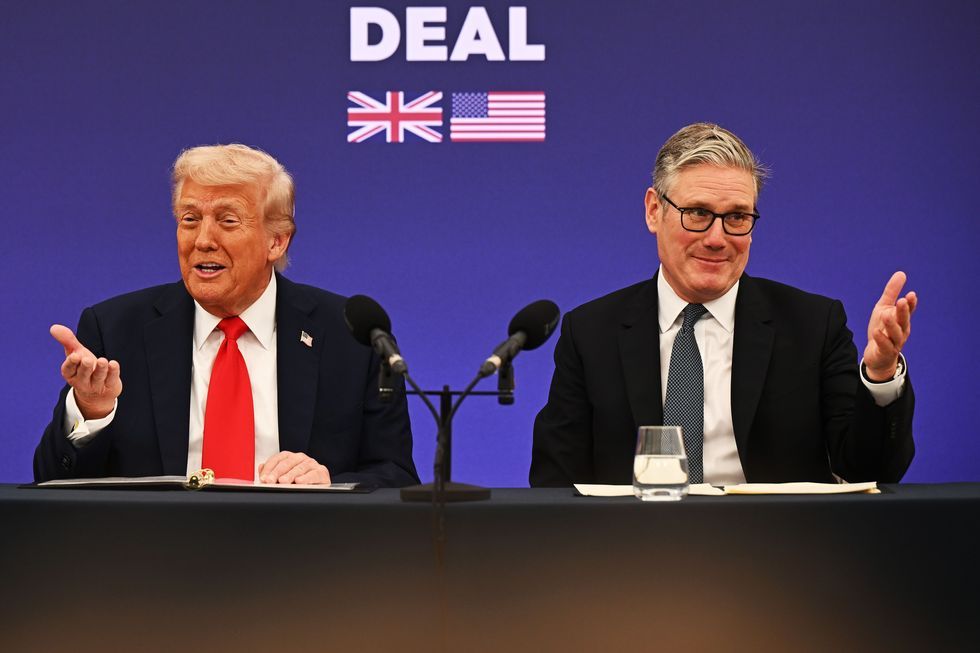
UK Prime Minister Keir Starmer plans to skip the United Nations annual climate summit in Brazil in November, the Financial Times reported on Wednesday. He will do so despite criticizing his predecessor Rishi Sunak a few years ago for a “failure of leadership” after the conservative leader declined to attend the annual confab. One leader in the ruling Labour party said there was a “big fight inside the government” between officials pushing Starmer to attend the event those “wanting him to focus on domestic issues.”
Polls show approval for Starmer among the lowest of any leaders in the West. But he has recently pushed for more clean energy, including signing onto a series of nuclear power deals with the U.S.
5. TVA makes a play for fusion
The Tennessee Valley Authority has assumed the role of the nation’s testbed for new nuclear fission technologies, agreeing to build what are likely to be the nation’s first small modular reactors, including the debut fourth-generation units that use a coolant other than water. Now the federally-owned utility is getting into fusion. On Wednesday, the TVA inked a deal with fusion startup Type One Energy to develop a 350-megawatt plant “using the company’s stellarator fusion technology.” The deal, first brokered last week but reported Tuesday in World Nuclear News, promises to deploy the technology “once it is commercially ready.” It also follows the announcement just a few days ago of a major offtake agreement for fusion leader Commonwealth Fusion Systems, which will sell $1 billion of electricity to oil giant Eni.
THE KICKER
Climate change is good news for foreign fish. A new study in Nature found that warming rivers have brought about the introduction of new invasive species. This, the researchers wrote, shows “an increase in biodiversity associated with improvement of water in many European rivers since the late twentieth century.”