
Current conditions: Texas declared a wildfire disaster in 179 counties as hot, dry, windy weather puts more than half the state at risk • Floods caused by torrential rain from Tropical Storm Raymond and the remnants of Hurricane Priscilla killed at least 41 people in Mexico over the weekend • A heat wave in Central Asia is spiking temperatures as high as 95 degrees Fahrenheit.
THE TOP FIVE
1. Republican grapple with Trump’s solar cuts
Republicans are growing frustrated with President Donald Trump’s rollbacks of policies to support solar energy, the cheapest and fastest-growing source of electricity at a moment when power prices are soaring nationwide. In Georgia, voters who backed the president say the repeal of programs that offered free panels to low-income Americans is making them second-guess their ballots. One of those voters, 39-year-old Jennifer McCoy told The New York Times, “I like a lot of Trump’s outlooks on things, but there are some things, like the solar panels, that I don’t like, now that I know.”
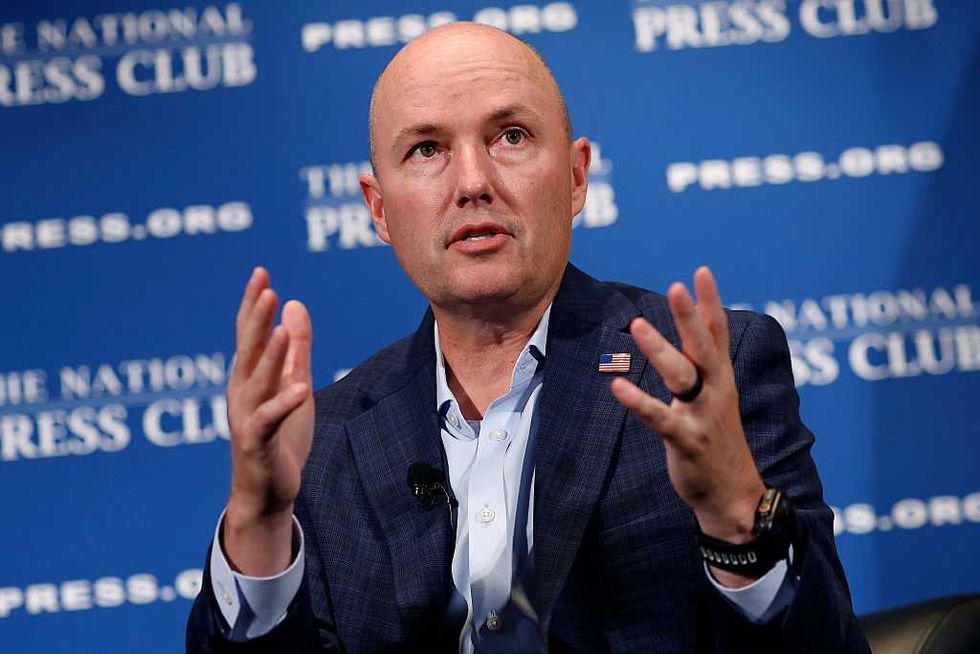
Utah Governor Spencer Cox, meanwhile, went on a tear on X over the Bureau of Land Management’s quashing of the nation’s largest solar project, the 6.2-gigawatt Esmeralda 7 in Nevada. In a post that linked to the scoop Heatmap’s Jael Holzman published last week on the cancellation, Cox said, “This is how we lose the AI/energy arms race with China.” While he noted that “intermittent sources have been overvalued in the past (and offshore wind is a disaster and should be discontinued), the incredible leaps in battery technology completely change the value proposition of solar in the right places.” He went on to re-post messages from three think tank researchers criticizing the move and warnings about the energy needs of data centers.
2. Corpus Christi, a Texas energy boom town, is running out of water
Corpus Christi is the main water provider for South Texas, a region that has drawn the likes of Tesla, Exxon Mobil, fuel refineries, plastic producers, and lithium processors with what The Wall Street Journal called “the promise of land, cheap energy and, perhaps most critically, abundant water.” But a crippling drought is depleting the region’s reservoirs, and the city may fail to meet the area’s water demand in as little as 18 months. “Cue the panic,” the newspaper wrote. Industrial plants are bracing for rate hikes. “The water situation in South Texas is about as dire as I’ve ever seen it,” said Mike Howard, chief executive of Howard Energy Partners, a private energy company that owns several facilities in Corpus Christi. “It has all the energy in the world, and it doesn’t have water.”
3. Chinese turbine giant invests $2 billion in a Scottish factory
China last week ratcheted up restrictions on exports of rare earths, including for electric vehicle batteries and semiconductors, kicking off another round of the trade war with the United States. But in Scotland, one of China’s biggest wind turbine manufacturers is investing more than $2 billion in building a new factory. Guangdong-based Ming Yang announced plans for its new plant to churn out parts for offshore turbines on Friday, though the company said the move was “subject to final approvals from the U.K. government,” the Financial Times reported.
In the U.S., meanwhile, the Trump administration’s crackdown on offshore wind is so severe the oil industry is stepping in to complain, warning that it’s setting a dangerous precedent for other energy sectors, as I reported in this newsletter last week. But private actors are, at least, responding to the Trump administration’s push to re-shore critical industries to the U.S. On Monday morning, JPMorgan Chase announced plans to invest $10 billion into mineral production and infrastructure for artificial intelligence.
4. New York’s offshore wind project can’t secure a ship
Equinor’s 810-megawatt Empire Wind project off the coast of New York’s Long Island has faced real challenges, with the Trump administration halting construction in April before allowing it to resume in May. The latest hurdle? The developers can’t get hold of the specially-made vessel for installing wind turbines it was counting on having by next year. As Canary Media’s Clare Fieseler wrote on Friday, two shipbuilding companies broke into a public skirmish, with one unexpectedly canceling a contract and the other threatening legal action over the construction of the specialized ship. The vessel, which is more than 98% complete, is anchored in Singapore, its fate now uncertain. “We have been informed by Maersk of an issue concerning its contract with Seatrium related to the wind turbine installation vessel originally contracted by Empire Offshore Wind LLC for use in 2026,” an Equinor spokesperson told Fieseler. “We are currently assessing the implications of this issue and evaluating available options.”
The episode shows how the Trump administration’s “total war on wind power,” as Jael once put it, makes companies more vulnerable to other setbacks. The White House tasked a half-dozen federal agencies, as I previously wrote, with trying to block construction of offshore turbines. But the general lack of ships capable of carrying giant turbines was a problem even before Trump returned to office.
5. California lawmakers pass first-in-the-nation temperature standards
California lawmakers last week passed Senate Bill 655, a first-in-the-nation framework to set maximum standards for safe indoor temperatures in residential housing. The bill requires state agencies to achieve the standard as heat deaths surge across the country. While the state has long required homes to maintain a minimum indoor air temperature of 68 degrees Fahrenheit, there was no equivalent standard for heat. “SB 655 responds to the public health emergency of California’s deadly heat waves,” Senator Henry Stern, the bill’s lead author, said in a statement. “This bill proactively requires the state to include safe residential indoor temperatures in its policies and programs so that Californians, especially renters and low-income households who are most at risk, have life-saving cooling.”
It’s part of a bigger wave of state legislation on climate and energy that California just passed, as Heatmap’s Emily Pontecorvo outlined recently. Among them: Families who lose everything in future wildfires will now be able to collect the bulk of their insurance payout without having to catalog every item burned in the blaze under new legislation Governor Gavin Newsom signed Friday. Starting in 2026, as The New York Times reported, insurers must pay at least 60% of a homeowner’s personal-property coverage — up to $350,000 — without requiring a detailed inventory of everything lost. That’s double the 30% of the dwelling’s value that insurers were required to pay out in advance, with a payout capped at $250,000.
THE KICKER
As the Trump administration is gutting funding for America's polar research, the British are stepping in. The British Antarctic Survey’s RRS Sir David Attenborough, a state-of-the-art ship named after the famed naturalist, will bolster research on everything from “hunting underwater tsunamis” to tracking glacier melt and whale populations. “The saying goes 'what happens in Antarctica doesn't stay in Antarctica,’” BAS oceanographer Peter Davis told reporters during a tour of the vessel as it prepared to depart Harwich, eastern England, last week.