GLOBALVARS
0
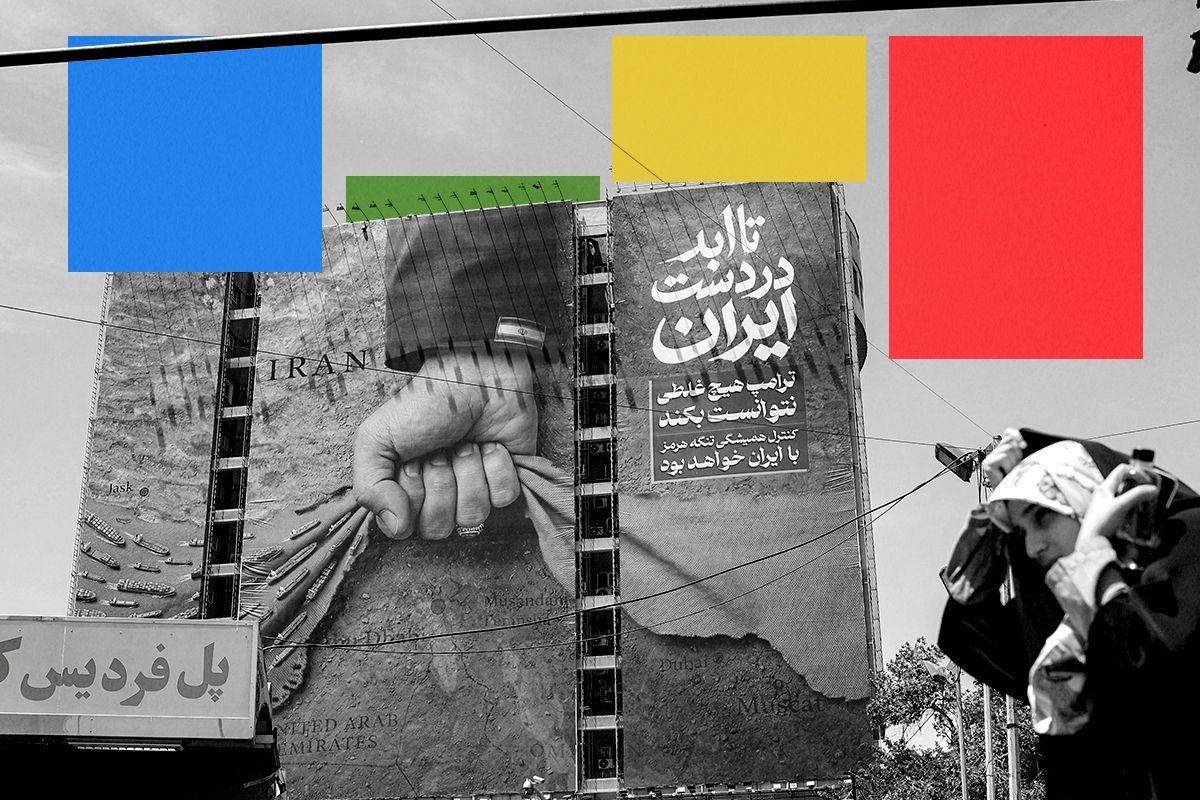
The Strait of Hormuz has been closed for months. Yet oil is trading — at least as of late Tuesday — at under $110 a barrel. Why haven’t the markets responded more to the biggest supply disruption of all time? Is it a credit to President Trump, and does it give us any clues to how future presidents should handle other energy crises?
On the latest episode of Shift Key, Rob talks with Jason Bordoff, the founding director of the Center for Global Energy Policy at Columbia University’s School of International and Public Affairs. He’s also a co-founding dean of the Columbia Climate School. He was previously a special assistant to President Obama and the senior director for energy and climate change at the White House National Security Council. Rob and Jason discuss whether this crisis will permanently alter the global energy system, what a new climate and energy consensus might look like, and whether Democrats should talk about climate politics.
Shift Key is hosted by Robinson Meyer, the founding executive editor of Heatmap News.
Subscribe to “Shift Key” and find this episode on Apple Podcasts, Spotify, Amazon, or wherever you get your podcasts.
You can also add the show’s RSS feed to your podcast app to follow us directly.
Here is an excerpt from their conversation:
Robinson Meyer: What’s the risk that you’re most worried about in the current crisis that you feel like maybe isn’t getting enough play? In some ways, the lack of any progress since the ceasefire was put into place has meant that we kind of have talked about everything. But I don’t know, is there something that in your mind, whenever you encounter it, you’re like, Oh, that’s a big deal, and people don’t realize how big a deal that is?
Jason Bordoff: I mean, whether it’s tariffs, or Greenland, or Venezuela, or this — and I could list other examples, too — I think global cooperation and America’s role as a trusted partner for countries around the world is a very important one. And that’s true for energy security, too. If you’re really worried about 80%, 90% of lots of the parts of particularly clean energy supply chains, say, being dominated by China or critical mineral supplies, the only way to change that reality is to work in partnership with more countries: Europe and Latin America and Africa. And I’m worried that China has a strong desire to position itself as a reliable commercial partner in the world, contrary to the U.S. And I worry that conflicts like this one don’t help us counter that argument. So that’s a broader point.
When it comes to energy, I wrote a piece with my friend and frequent collaborator Meghan O’Sullivan at Harvard in the latest issue of Foreign Affairs where we talked about that thing I said a moment ago: If you’re more worried about energy security, and particularly you’re an oil- and gas-import dependent economy, say in Europe, a response to this could be, energy security comes from isolating yourself, becoming self-sufficient. And it certainly makes sense to produce more energy at home where you can.
But we talked about the 1970s a moment ago — and one of the responses to that crisis, from my standpoint, is a sense that energy security was strengthened by more cooperation and more integration into a global market, an oil market that was interconnected. So if there’s a hurricane somewhere, or a tsunami somewhere, or a civil war somewhere, supplies could shift around in response to higher prices, to be sure. All of that helped increase security. And it was like a collective insurance policy. I think today, countries, increasingly in the world of geopolitical fragmentation and our collapsing world order, look around and feel like interconnection is a risk, not a source of security. And the more countries try to disconnect and kind of take a go it alone approach, I think that actually is more expensive. It’s cost-inflationary. It weakens economic growth. And frankly, it makes it harder to have a clean energy transition.
You can find a full transcript of the episode here.
Mentioned:
The Iran Shock — And the Dangerous Allure of Energy Autarky, by Jason Bordoff and Meghan O’Sullivan
Jason’s initial response to the Iran War: How the Iran War Could Consolidate China’s Energy Dominance
From Heatmap: The Future of Climate Tech Can Be Found in China’s Five-Year Plan
Jason’s argument that energy independence may be making the U.S. more aggressive
Matthew Huber’s New York Times op-ed: Democrats Don’t Have to Campaign on Climate Change Anymore
This episode of Shift Key is sponsored by ...
Heatmap Pro brings all of our research, reporting, and insights down to the local level. The software platform tracks all local opposition to clean energy and data centers, forecasts community sentiment, and guides data-driven engagement campaigns. Book a demo today to see the premier intelligence platform for project permitting and community engagement.
Music for Shift Key is by Adam Kromelow.