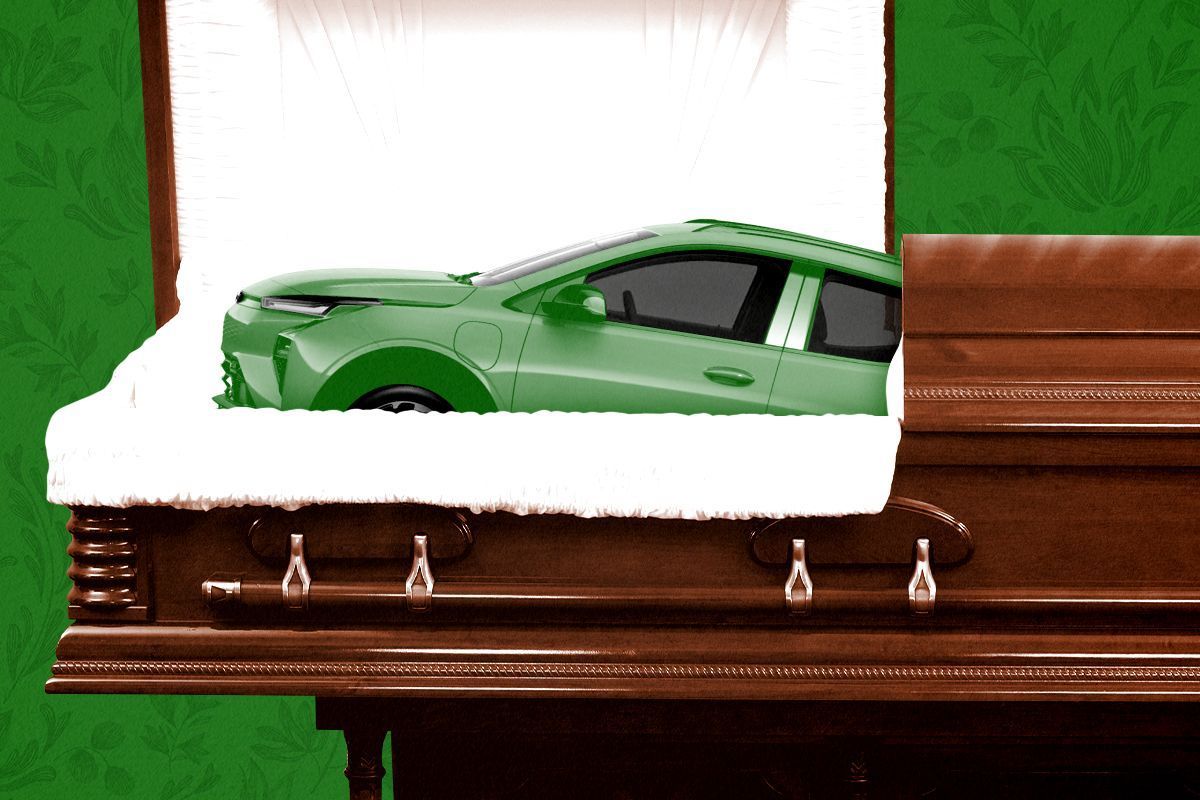
We knew the revived Chevrolet Bolt might have a limited run. Nobody knew it would be this limited.
General Motors began manufacturing the updated version of its small electric car late last year to begin deliveries this month. Already the news of its potential demise is here. GM says the Kansas factory that’s churning out Bolts will be repurposed to make combustion cars, including a Buick, of all things. Now, just as the arrival of the sub-$30,000 Bolt heralded a new age of more affordable electric cars, Chevy is dropping out of the race and putting its beloved little electric car on the backburner. Again.
The culprits in this case are clear. With the federal tax credit for buying EVs dead and gone, and with weakened emissions rules removing the incentive for car companies to pursue an aggressive electrification strategy, automakers are running back to the familiar embrace of fossil fuels. GM has already said it expects to lose billions as it adjusts its business strategy, curbing its EV push to meet the new reality under President Trump, where gas-burning cars remain much more profitable to build and sell.
The Bolt’s fate is the immediate fallout from that move. The Buick Envision, part of America’s army of indistinguishable gas-powered crossovers, had been built at a GM plant in China. Trump’s tariffs, however, incentivized the company to move production back to the U.S. The fact that GM repatriated the Envision at the expense of the Bolt tells you what you need to know about this moment in the U.S. auto market.
GM never promised that the Bolt would be back for good, and its return to limbo is par for the course when it comes to this plucky little car. The original Bolt EV had its problems, including a battery recall and glacial charging speeds by today’s standards. But the Bolt established GM’s place in the new EV age and found a flock of fans. At the time it was discontinued in 2023, it was the top-selling non-Tesla EV in America, selling more than 60,000 cars that year.
Fans clamored to get the car back. GM listened, and built a new version on the Ultium platform that forms the basis of its current generation of EVs. When I attended Chevy’s big reveal party for the new Bolt last year, it handed out merch reading “back by popular demand.” Yet GM always referred to the vehicle’s revival as a special run, as if not to get anyone’s hopes up that the Bolt would become a mainstay in the Chevy lineup.
Things could have been different, of course. GM has hinted at the possibility of expanding upon the Bolt with more models if the car succeeded in helping the company win the affordable EV race. Instead, the Kansas factory will turn back to combustion next year as Chevy builds some gas-powered Equinox SUVs there, moving production from Mexico after getting hammered by new tariffs. The Buick Envision, which GM has been making in China for nearly a decade, will begin Kansas production in 2028.
The Bolt’s second sudden death is a big blow to American EV lovers. Without a $7,500 tax break for buying an electric vehicle, Americans badly need more affordable options. Bolt, which starts around $29,000 in its most basic form, was set to lead a pack that would include other 2026 arrivals such as the customizable, Jeff Bezos-backed Slate truck and the reimagined third-generation Nissan Leaf. Now, you’d better act fast if you want to get behind the wheel of a Bolt.