The cars that sit atop the list of best-selling electric vehicles in the world wouldn’t surprise Americans. Through the first three quarters of 2025, Tesla’s Model Y and Model 3 were the number one and two EVs in the world, just as they are in the United States. But after that, the names begin to get a little less familiar.
In America, the top EVs not made by Tesla include battery-powered efforts by legacy car companies like Chevy, Ford, and Hyundai. Global sales figures, however, demonstrate the remarkable reach of upstart Chinese companies selling electric cars not only in China, but also in up and coming car markets around the world. The worldwide top 10 is dominated by EVs by Chinese manufacturers Wuling, Xiaomi, and BYD, with nary a Western carmaker in sight.
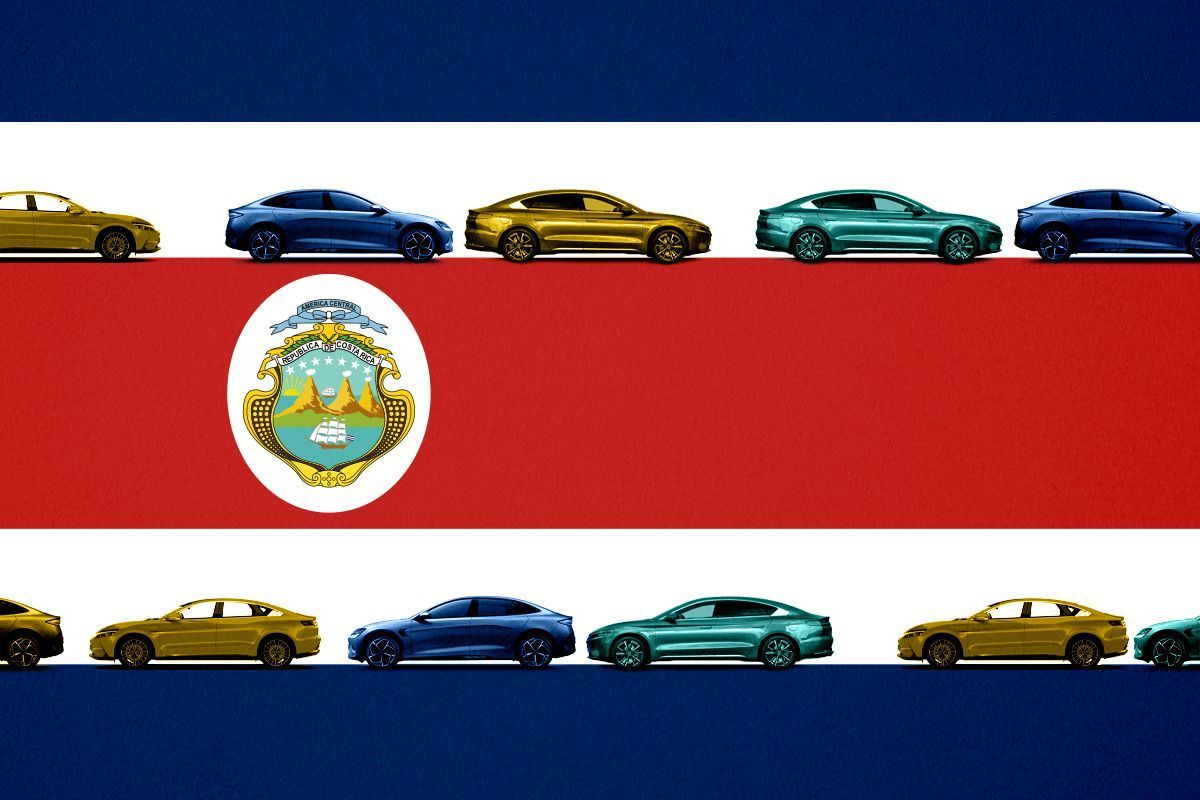
With those vehicles still absent from the U.S., the only way to sample how the rest of the world drives is to head abroad and hop in, which I had the chance to do on a recent trip to Costa Rica. To visit here is to see the car market that may be coming soon to many parts of the world. Fully electric vehicles made up around 15% of new sales in Costa Rica in 2024, compared to 8% in the U.S., making it the Americas’ EV adoption leader. Tesla does not operate here, so Chinese brands populate the country’s top 10, as they do in burgeoning EV markets throughout Latin America.
Chinese juggernaut BYD sells plenty of cars in Costa Rica, but doesn’t dominate the market entirely like it does in some parts of the world. Chinese EV-makers Chery, Dongfeng, and Geely sell lots of very affordable cars here. It doesn’t take long in one of these vehicles to see what has Western auto companies so worried. If Americans could buy one of these Chinese-made EVs at the price they sell elsewhere, they absolutely would.
During a November trip, my family stayed with friends who had temporarily relocated to the outskirts of the Costa Rican capital city — and who had traded the two Teslas they drove in the San Francisco Bay Area for a BYD Song Plus, an all-electric crossover with more than 310 miles of range.
On the inside, the Song feels close to the minimalist, touchscreen-driven approach. There are a handful of physical buttons on the steering wheel, but nowhere near the overwhelming array inside one of the electric offerings from the legacy carmakers. The interface in the big center touchscreen isn’t quite as polished as that of a Rivian or Tesla, and you might find yourself preferring to use Waze through Apple CarPlay to find your way around as opposed to the native software. But the setup is functional, clean, and honestly pretty great for a car that could be had for as little as $20,000.
The BYD has plenty of zip when you hit the accelerator, but is sufficiently judicious in its power consumption to get 300-plus miles of range on a relatively small 71.8 kilowatt-hour battery. The ride is cushy enough to endure the endless potholes caused by Costa Rica’s rainy climate. The interior feels plenty luxurious for that price, with cushy materials and a full array of tech features including wireless phone charging and using your phone as the key. In sum, the Song Plus feels modern and fresh like you’d expect from an EV startup, but at a cost that halves what you’d pay for a Tesla in the U.S.
Song Plus charges at just 140 kilowatts, slower than the state of the art in EVs like those from Hyundai or Tesla, which means it takes nearly half an hour to charge from 30% to 80% — but then again, if you’re not relying on public fast chargers to get from here to there, that’s a pretty minor inconvenience.
Costa Rica is known for being among the world’s most nature-friendly nations, having built a thriving eco-tourism industry for travelers who want to see its populations of tropical birds, white-faced capuchin monkeys, and goofy sloths. The whole nation is smaller than the state of West Virginia, meaning that drivers are generally not going on American-style road trips that span hundreds of miles and requiring visits to public fast charging. Instead, most charging is done at home and many trips can be accomplished on a single charge. The tropical warmth means that the performance ding batteries suffer in the cold isn’t an issue.
These favorable factors, plus incentives such as free parking and an exemption from import taxes, led Costa Rica to surge past the U.S. and Canada in recent years to claim the title of top EV country in the Americas.
To putter around in pursuit of crocs and quetzals, then, is to drive amongst an alternate universe of electric cars compared to the one in Los Angeles — small, cheap EV crossovers and even pickup trucks that would upend the American car market if they were allowed to come stateside and undercut our car companies. The simplest way to see them? Book a ticket to San Jose.