GLOBALVARS
TEST TEST TEST
0
Products
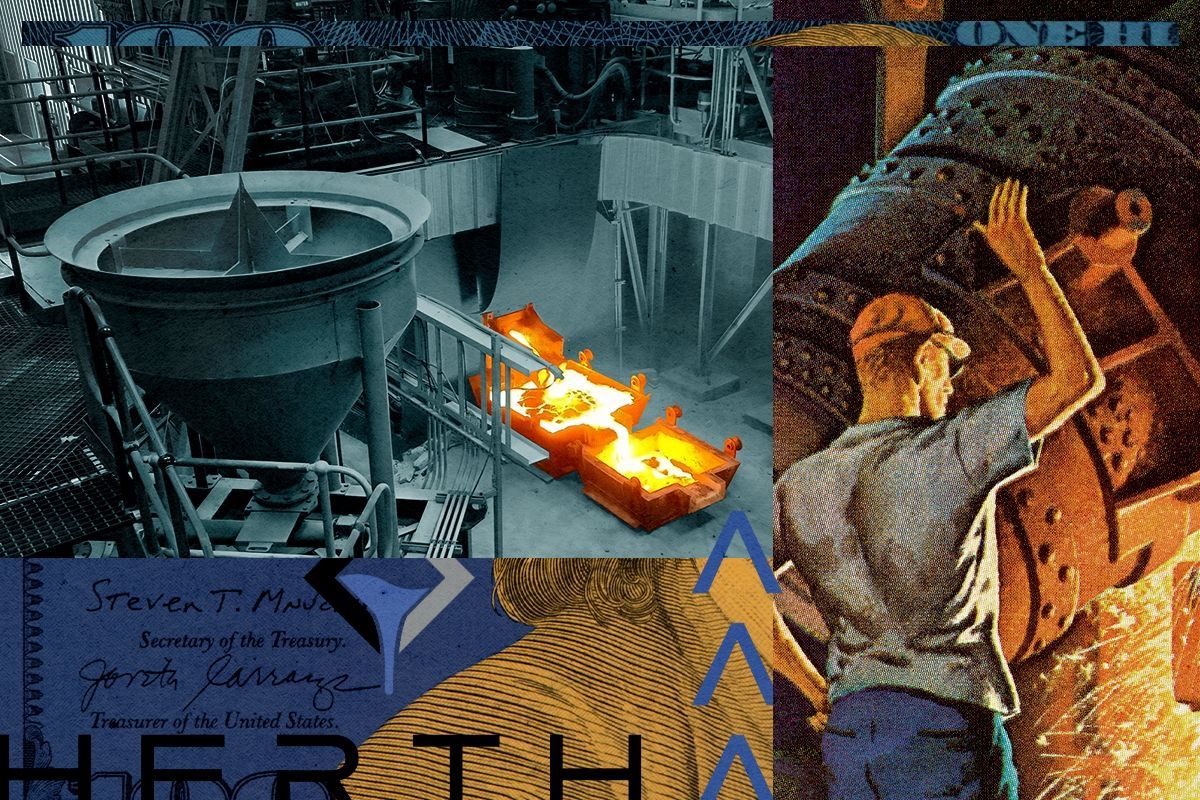
The U.S. wants to make more of its own rare-earth magnets, which are critical to everything from guided missiles to aerospace systems and electric vehicle motors. But doing so will require a domestic source of high-purity iron, the main material in these magnets and one the U.S. imports almost entirely from China. Hertha Metals is betting it can fill that gap while helping decarbonize the ironmaking process, too. After raising a more than $133 million Series A, which the company announced last week, the Texas-based startup is promising to supply domestic magnet and steel manufacturers with 10,000 metric tons per year of lower-carbon, high-purity iron. That will come from its first commercial facility near Houston, where the company broke ground on Thursday.
Steel customers, including automakers and other equipment manufacturers, have already expressed interest in Hertha’s tech. But the startup’s most important customer might be the federal government. Defense manufacturers depend on rare-earth magnets — which require 99.95% high-purity iron — for things like aerospace platforms and radar systems. That explains why the Department of Defense invested $65 million in Hertha’s Series A through its Industrial Base Analysis and Sustainment program. The investment comes in partnership with the Economic Defense Unit, a new Pentagon division established under Trump that makes grants, loans, equity investments and purchase commitments into defense and dual-use sectors like critical minerals.
Hertha’s CEO and founder Laureen Meroueh called the new facility — sited next to its operational demonstration plant — the nation’s “first domestic iron and steel innovation complex” when I spoke with her in April to learn more about the company’s technology. She expects the plant to be operational by the end of next year.
That’s thanks to a new proprietary process that Meroueh, a mechanical engineer and materials scientist by training, pioneered. “We find ourselves in the year of 2026 making steel out of the same furnace that was developed in 1850. That’s insanity,” Meroueh told me. Today, most iron is produced by stripping oxygen from ore in a furnace that operates at over 3,000 degrees Fahrenheit. Called a blast furnace, this towering steel-and-brick shaft is fueled by coke made from metallurgical coal. The resulting molten iron then enters a basic oxygen furnace, where it’s refined into steel.Producing the higher-purity iron needed for rare earth magnets requires additional refining steps to remove impurities.
While lower-emissions alternatives do exist, they come with their own limitations. Direct iron reduction, for example, uses hot gas to strip oxygen from ore, then melts the resulting solid iron in an electric arc furnace. But the process typically requires higher-grade ores to begin with, and thus remains a small share of global production. Electric arc furnaces can also recycle steel scrap — indeed most domestic steel is produced this way — but supply is finite. Meanwhile, ore quality is decreasing over time, limiting the grades of steel it can ultimately produce.
Enter Hertha, which says it can turn low-grade iron ores into high-purity iron in a single furnace. Meroueh explained that Hertha uses either natural gas or hydrogen to strip oxygen from molten ore in an electric arc furnace, with no separate reduction step beforehand. Because the furnace melts down the ore and its impurities from the outset, it can accept low-grade ore in many forms, including fines, the powdery particles left over from mining and processing. When everything is molten, the lighter impurities separate from the denser iron and form a layer of slag that operators can then drain from the furnace. The resulting iron needs only minimal additional refining to go into rare earth magnets.
“This is a continuous reactor, so you continuously feed it and semi-continuously tap out your slag and product,” Meroueh explained. Melting iron made from ore produces far more slag than standard electric arc furnaces are designed to handle, and would thus require frequent interruptions in operations. But Hertha’s proprietary process doesn’t need to do that. “This continuity in operations is what makes it economically viable for us to generate large amounts of slag while maintaining production and throughput.”
The startup also says it can make steel using the same process by adding a controlled amount of carbon to its single furnace. While Hertha hasn’t provided an estimate of avoided emissions for this plant specifically, it says a third-party modeler has projected that its subsequent 500,000-metric-ton facility will emit up to 50% less than conventional blast furnace steel production when running on natural gas, and 98% less when running on green hydrogen.
Hertha also expects its process will cut costs by 25% compared with blast furnaces, and says its system can make full-cycle steel plants as small as 500,000 metric tons per year economically viable. Most steel mills that use a blast furnace to convert raw materials into finished steel produce 3 million metric tons or more annually, making this future plant the size of a so-called “mini mill,” which recycles scrap metal in an electric arc furnace rather than starting with the iron ore.
The 10,000-metric-ton facility the company is currently building will start by running on natural gas, which is still far cheaper than green hydrogen. But Meroueh told me that once green hydrogen falls below $5 a kilogram — and ideally below $3 — she expects it will make economic sense for Hertha to start blending hydrogen with natural gas, potentially in the early 2030s.
Outside the U.S., Hertha could reach ultra-low carbon production even sooner. “So with the really attractive renewable power prices in the Middle East, it makes it a lot more digestible to produce green hydrogen,” Meroueh told me in April. “And the best use case of that green hydrogen is to make steel. Moving hydrogen around in pipelines, not attractive. Converting it to ammonia and then back to hydrogen is not very attractive. Just make the steel right there.”