GLOBALVARS
0

Current conditions: Multiple wildfires are raging on Oklahoma’s panhandle border with Texas • New York City and its suburbs are under a weather advisory over dense fog this morning • Ahmedabad, the largest city in the northwest Indian state of Gujarat, is facing temperatures as much as 4 degrees Celsius higher than historical averages this week.
THE TOP FIVE
1. New bipartisan bill aims to clear nuclear’s biggest remaining bottleneck
The United States could still withdraw from the International Energy Agency if the Paris-based watchdog, considered one of the leading sources of global data and forecasts on energy demand, continues to promote and plan for “ridiculous” net-zero scenarios by 2050. That’s what Secretary of Energy Chris Wright said on stage Tuesday at a conference in the French capital. Noting that the IEA was founded in the wake of the oil embargoes that accompanied the 1973 Yom Kippur War, the Trump administration wants the organization to refocus on issues of energy security and poverty, Wright said. He cited a recent effort to promote clean cooking fuels for the 2 billion people who still lack regular access to energy — more than 2 million of whom are estimated to die each year from exposure to fumes from igniting wood, crop residue, or dung indoors — as evidence that the IEA was shifting in Washington’s direction. But, Wright said, “We’re definitely not satisfied. We’re not there yet.” Wright described decarbonization policies as “politicians’ dreams about greater control” through driving “up the price of energy so high that the demand for energy” plummets. “To me, that’s inhuman,” Wright said. “It’s immoral. It’s totally unrealistic. It’s not going to happen. And if so much of the data reporting agencies are on these sort of left-wing big government fantasies, that just distorts” the IEA’s mission.
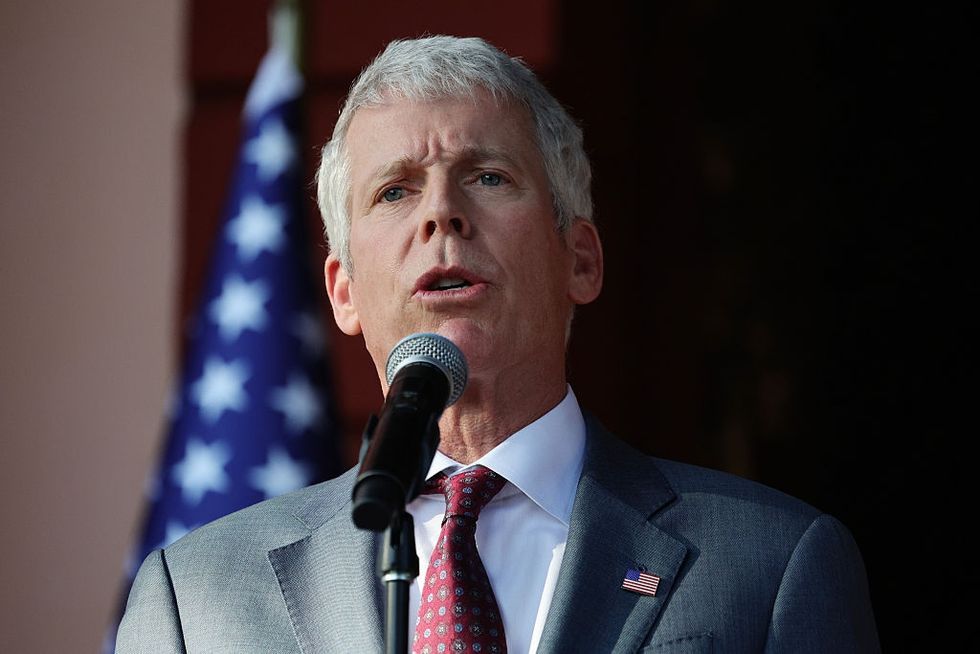
Wright didn’t, however, just come to Paris to chastise the Europeans. Prompted by a remark from Jean-Luc Palayer, the top U.S. executive of French uranium giant Orano, Wright called the company “fantastic” and praised plans to build new enrichment facilities and bring waste reprocessing to America. While the French, Russians, and Japanese have long recycled spent nuclear waste into fresh fuel, the U.S. briefly but “foolishly” banned commercial reprocessing in the 1970s, Wright said, and never got an industry going again. As a result, all the spent fuel from the past seven decades of nuclear energy production is sitting on site in swimming pools or dry cask storage. “We want to have a nuclear renaissance. We have got to get serious about this stuff. So we will start reprocessing, likely in partnership with Orano,” Wright said. Designating Yucca Mountain as the first U.S. permanent repository for nuclear waste set the project in Nevada up for failure in the early 2000s, Wright added. “In the United States, we’ve tried to find a permanent repository for waste and we’ve had, I think, the wrong approach,” he noted. The Trump administration, he said, was “doing it differently” by inviting states to submit proposals for federally backed campuses to host nuclear enrichment and waste reprocessing facilities. Still, reprocessing leaves behind a small amount of waste that needs to be buried, so, Wright said, “we’re going to develop multiple long-term repositories.”
2. Trump could ease tariffs on metals, U.S. trade rep says
The Trump administration could tweak tariffs on metals and other materials, U.S. Trade Representative Jamieson Greer said Tuesday. During an appearance on CNBC’s “Squawk Box,” Greer said he’d heard from companies who claimed they needed to hire more workers to navigate the tariffs. “You may want to sometimes adjust the way some of the tariffs are for compliance purposes,” he said. “We’re not trying to have people deal with so much beancounting that they’re not running their company correctly.” Still, he said, the U.S. is “shipping more steel than ever,” and has, as I reported in a newsletter last month, the first new aluminum smelter in the works in half a century. “So clearly those [tariffs] are going in the right direction and they’re going to stay in place.”
Sign up to receive Heatmap AM in your inbox every morning:
* indicates required
Email Address *Our Privacy Policy & Terms Apply.
3. Gavin Newsom signs a clean energy pact with the UK
California Governor Gavin Newsom, widely seen as a frontrunner for the Democratic presidential nod in two years, is already staking out an alternative energy approach to Trump. During a stop in London on his tour of Europe, Newsom this week signed onto a new pact with British Energy Secretary Ed Miliband, pledging to work together with the United Kingdom on deploying more clean energy technologies such as offshore wind in the nation’s most populous state. One of the biggest winners of the deal, according to Politico, is Octopus Energy, the biggest British energy supplier, which is looking to enter the California market. But the agreement also sets the stage for more joint atmospheric research between California and the U.K. “California is the best place in America to invest in a clean economy because we set clear goals and we deliver,” Newsom said. “Today, we deepened our partnership with the United Kingdom on climate action and welcomed nearly a billion dollars in clean tech investment from Octopus Energy.”
France, meanwhile, is realigning its energy plan for the next nine years in a way the Trump administration will like. The draft version of the plan released last year called for 90 gigawatts of installed solar capacity by 2035. But the latest plan published last week reduced the target to a range of 55 to 80 gigawatts. Onshore wind falls to 35 to 40 gigawatts from 40 to 45 gigawatts. Offshore wind drops to 15 gigawatts from 18 gigawatts. Instead, Renewables Now reported, the country is betting on a nuclear revival.
4. Georgia’s utility regulator could lose its Republican majority
When Democrats unseated two Republicans on Georgia’s five-member Public Service Commission, the upsets signaled a change to the state’s utility regulator so big one expert described it to Heatmap’s Emily Pontecorvo at the time as “seismic.” Now one of the three remaining Republicans on the body is stepping aside in this year’s election. In a lengthy post on X, Tricia Pridemore said she would end her eight-year tenure on the commission by opting out of reelection. “I have consistently championed common-sense, America First policies that prioritize energy independence, grid reliability, and practical solutions over partisan rhetoric,” wrote Pridemore, who both championed the nuclear expansion at Georgia Power’s Plant Vogtle and pushed for more natural gas generation. “These efforts have laid the foundation for job creation, national security, and opportunity across our state. By emphasizing results over rhetoric, we have positioned Georgia as a leader in affordability, reliability, and forward-thinking energy planning.”
5. World’s biggest miner books a profit from pivoting to copper
BHP, the world’s most valuable mining company, reported a nearly 30% spike in net profits for the first half of this year thanks to soaring demand for copper. The Australian giant’s chief executive, Mike Henry, said the earnings marked a “milestone” as copper contributed the largest share of its profit for the first time, accounting for 51% of income before interest, tax, depreciation, and amortization. The company also signed a $4.3 billion deal with Canada’s Wheaton Precious Metals to supply silver from its Antamina mine in Peru in a deal the Financial Times called “the largest of its kind for so-called precious metals streaming, where miners make deals to sell gold or silver that is a byproduct of their main business.”
The mining companies the Trump administration is investing in, on the other hand, may have less rosy news for the market. Back in October, I told you that the U.S. was taking a stake in Trilogy Metals after approving its request to build a mining road in a remote corner of Alaska that’s largely untouched by industry. On Tuesday, the company reported a net loss of $42 million. The loss largely stemmed from what Mining.comcalled “the treatment of the proposed U.S. government’s investment as a derivative financial instrument” under standard American accounting rules. The accounting impact, however, had no effect on the cash the company had on hand and “is expected to resolve once applicable conditions are met.”
THE KICKER
“It’s an environmental catastrophe.” That’s how Brett Davis, the head of a nonprofit that advocates for less pollution at Mardi Gras, referred to the waste the carnival generates each year in New Orleans. Data the city’s sanitation department gave The New York Times showed that the weekslong party produced an average of 1,123 tons of waste per year for the last decade. Reusing the plastic beads that became popular in the 1970s when manufacturing moved overseas and made cheap goods widely accessible just amounts to “recirculating toxic plastic junk no one wants,” Davis told the newspaper. Instead, he’s sold more than $1 million in more sustainable alternative items to throw during the parade, including jambalaya mix, native flower start kits, and plant-based glitter.