GLOBALVARS
TEST TEST TEST
0
Products
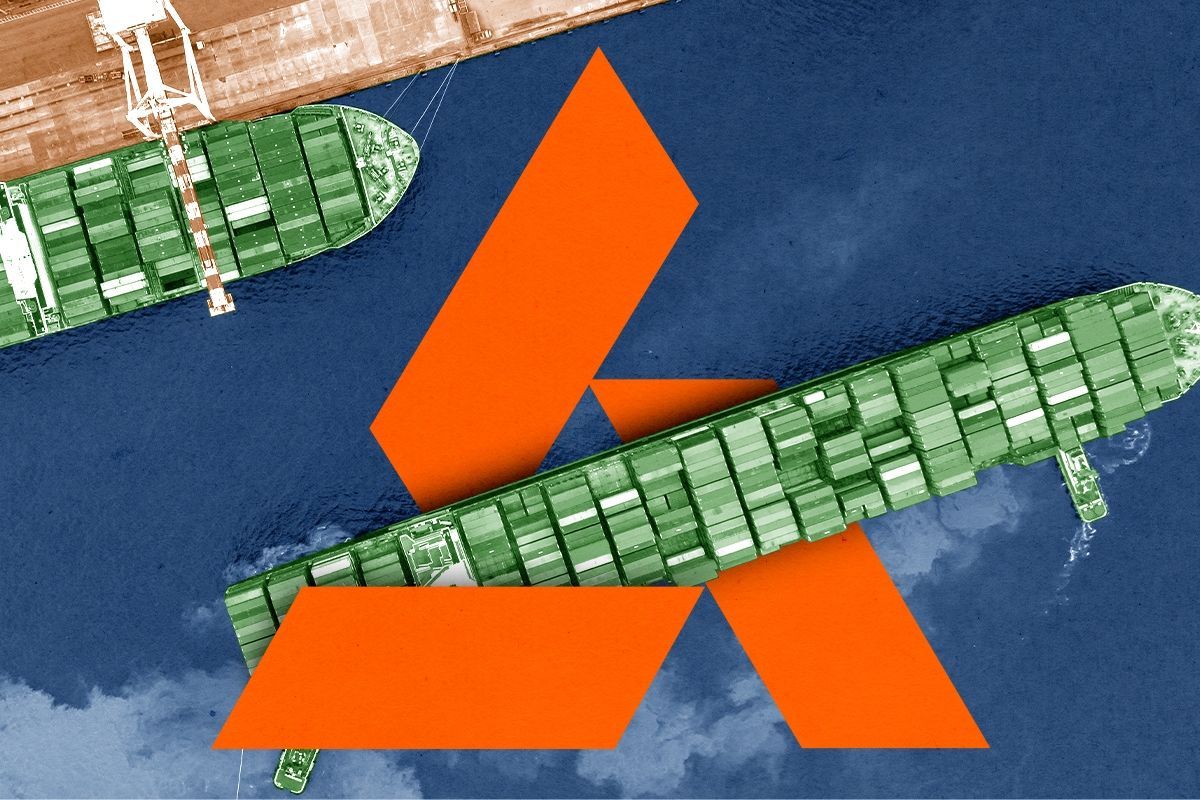
The shipping industry has a dilemma. The European Union and other jurisdictions are increasingly requiring vessels to cut their carbon emissions, pushing shipowners toward lower-carbon fuels and away from traditional bunker fuel or diesel. But it’s still anybody’s guess which cleaner fuel — ammonia, methanol, or liquified natural gas — will prove most economical and efficient at scale. That leaves shipowners facing an uncomfortable choice: They must decide on a technology around which to build new engines and retrofit existing ones without knowing whether the fuel they bet on today will still be the best option a few years from now.
Blaze Energy says that its product will eliminate that choice. The startup, which announced a $6.5 million seed round on Tuesday — is making a compact fuel “reformer,” a device that uses a heated catalyst to split various alternative fuels into a hydrogen-rich gas. That gas can then be combined with the original fuel and conventional shipping fuel to power existing engines. With Blaze’s bolt-on retrofit, which the startup aims to make less than a tenth the size of the engine itself, shipping companies “can adjust their assets based on how the global energy landscape, regulation, as well as their company direction is changing,” the company’s CEO and co-founder, Rok Sitar, told me. For example, maybe LNG looks cheapest in the short term given its established supply chain, but ammonia could win out down the road.
So far, Blaze has conducted small scale demonstrations showing that its proprietary catalyst can reform ammonia, methanol, and LNG. The resulting hydrogen-rich mixture is extremely fast-burning, which helps the other fuels to burn more completely and efficiently than they otherwise would.
Blaze’s first product, however, focuses solely on ammonia reformation. The system works by diverting a portion of the liquid ammonia to flow over the startup’s electrically-heated catalyst, which breaks it down into hydrogen and nitrogen. The resulting gas goes directly into the engine, where the nitrogen passes through and exits via the exhaust, while the hydrogen helps the remaining ammonia burn more efficiently alongside conventional shipping fuel. No burners or complex gas separation systems required.
As Sitar explained, “a certain composition of ammonia and hydrogen burns just like diesel,” allowing Blaze to essentially “trick the engine” into operating like it’s burning just diesel or standard bunker fuel rather than a blend that includes hydrogen and ammonia. That means the startup can add its retrofit system onto an existing ship engine without modifying the engine itself. And if the reformer fails for any reason, the ship can simply revert to running on conventional fuel alone. Sitar said this fail-safe feature lowers the risk for shipowners considering Blaze’s tech.
The company’s strategic partners include vessel owner and operator Lomar Shipping, which expects to pilot the system at sea beginning sometime next year, and ship management consultancy Link Marine, which plans to offer it to tanker operators. Blaze is aiming for commercial rollout in 2028.
Retrofitting the existing global fleet represents “an enormous opportunity” for Blaze, Sitar told me. As he explained, there are roughly 100,000 vessels in the global commercial fleet, but the industry only builds about 1,500 new ships each year. And because shipping companies are unlikely to choose alternative-fuel engines for every new vessel they order, a company in Blaze’s position pretty much has to drum up demand among the ships already in the water. The startup aims to install its system when vessels enter “dry dock” for routine inspection and maintenance, which typically happens at least once every five years.
Blaze is also developing a version of its product for new-builds, however, working with engine manufacturers to integrate its fuel reformer hardware into both conventional ship engines as well as those already designed to run on ammonia. Even in ammonia-burning engines, Sitar said Blaze’s system will improve fuel efficiency thanks to the fast-burning hydrogen in its blend.
The startup has ambitious goals for its seed round, which Sitar says should carry it through the next 18 months. Those include proving out its ammonia reformer on land with unnamed “leading” engine manufacturers, validating its performance at sea with Lomar, securing the maritime certifications needed to launch its first commercial product, and expanding its operations and headcount in the U.S. and Norway.
Blaze will likely look to raise again around 2028, at which point the International Maritime Organization expects to have its Net-Zero Framework in place. This would establish legally binding requirements for the entire shipping industry to reduce its emissions intensity, with the goal of reaching net-zero by 2050. The agency expected to adopt the framework last October, but delayed a final vote to approve the measure after the Trump administration strong-armed nations into withdrawing their support. The framework will come up for a vote again this December.
While the ongoing ambiguity has become a headache for the industry as a whole, Sitar sees it as something of an advantage for Blaze, which, he said, “thrive[s] in uncertainty.” Around 2028, the startup aims to begin piloting its broader multi-fuel technology, which can reform not just ammonia, but also methanol and LNG, for use in diesel engines. Blaze also expects to begin delivering its first commercial ammonia retrofit systems at this time.
From there on, the company sees a path to adapting the technology across numerous other industries reliant on combustion engines, such as heavy equipment, mining, industrial heat, and diesel power generation for data centers. “By proving our system in maritime engines, we can very easily translate this into other hardware sectors,” he said. Shipping, in his view, is perhaps the most challenging but strategically useful beachhead market of all, from both a technical and regulatory perspective.
As he put it to me, “if you prove it on maritime shipping, you basically have a product that can be deployed anywhere else, because everything else is simpler and has less regulation.”