GLOBALVARS
0

Current conditions: The unusual humidity thickening the Los Angeles air this week is the result of a warmer Pacific Ocean, a sign of climate change • Temperatures are topping triple digits Fahrenheit in the Spanish capital of Madrid • Severe storms are pummeling the central United States from the Plains to Appalachia.
THE TOP FIVE
1. Europe braces for energy cuts as rivers heat and dry up
The latest heat wave roasting Europe is warming up rivers and drying the watercourses on which the continent’s energy systems rely. In Eastern Europe, the mighty Danube has hit record lows, beaching boats in Croatia, squeezing out a quarter of Serbia’s fuel shipments, and forcing Hungary’s only nuclear power station to shut down as cooling water disappeared. The cost of navigating the barges that ship petroleum products, chemicals, coal, and steel down the Rhine river skyrocketed 400% in the last two months as water levels plummeted, as Bloomberg columnist Javier Blas pointed out. Economists warned the German broadcaster DW this week that the Rhine’s low levels could slash as much as 0.2% off Germany’s entire economic output in the third quarter of this year. It’s a stark reminder of what Heatmap contributor Hazel Southwell wrote back in 2023: Economies aren’t ready for rivers to dry up.
The wildfires blazing across the continent aren’t isolated to the mainland. A fire raging in eastern England forced dozens of evacuations and put the Sizewell B nuclear plant, which just won approval to extend its license this month, on emergency alert.
2. More than 530 local laws now seek to ban or restrict data centers
As quickly as public opinion over data centers is plummeting, local ordinances barring or limiting construction of new facilities are proliferating. More than 530 such statutes are now in place all over the country, and the vast majority were enacted this year, according to an extensive review of public records conducted by Heatmap Pro that my colleague Robinson Meyer wrote up. These restrictions are driving a wave of project cancellations.
Meanwhile, Anthropic is in what The Wall Street Journal described as “advanced talks” with banks to borrow $15 billion to build a sweeping new data center and power-generating complex. The deal would be backed by a consortium of banks led by Morgan Stanley and would back the project in Hubbard, Texas, which would include a 1.6-gigawatt natural gas power plant. To raise the debt, Google has provided guarantees for billions of dollars of the Claude maker’s lease and obligations to pay for electricity.
Get Heatmap AM directly in your inbox every morning:
* indicates required
Email Address *Our Privacy Policy & Terms Apply.
3. Trump’s ban on new imported inverters won’t hurt solar, analysts say
The Federal Communications Commission’s ban on imported inverters, the devices that help patch solar panels into data centers and onto the grid, will have little effect on the buildout of panels in the U.S., according to the latest assessment from the consultancy BloombergNEF. “Previously approved inverter models can still be imported and sold, so most planned projects are expected to proceed without supply shortages,” the consultancy told me in an emailed memo. U.S. factories cannot meet demand on their own, matching only 18% of the American market in 2025. “The biggest risk is delayed access to newer technology,” the memo read. “New inverter models will require conditional approval from the government, but approval processes remain unclear.”
Sign up to receive Heatmap AM in your inbox every morning:
* indicates required
Email Address *Our Privacy Policy & Terms Apply.
4. America is getting back into antimony
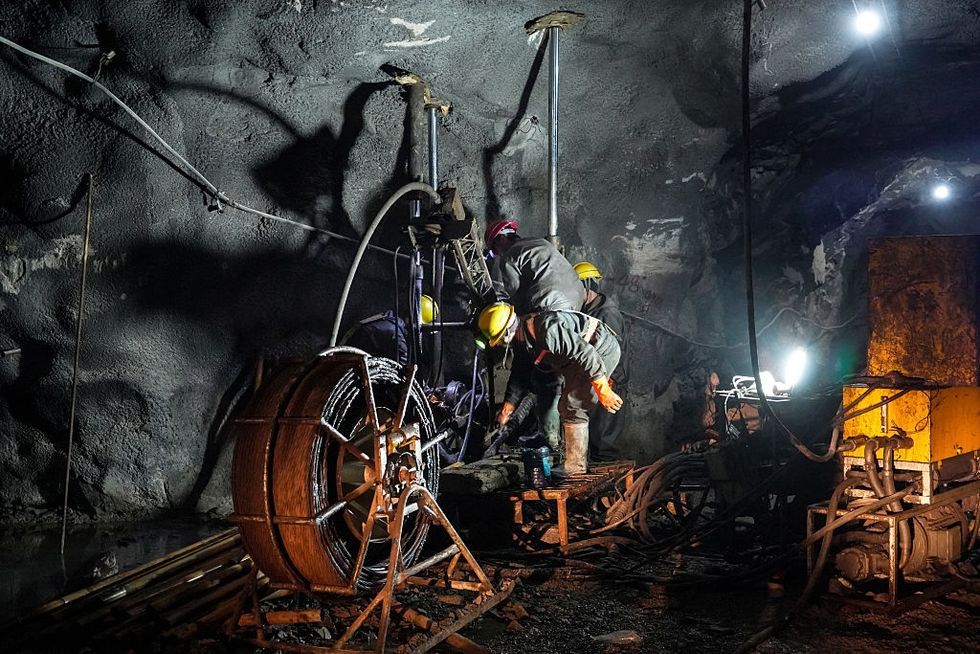
The U.S. needs antimony to make ammunition, semiconductors, and batteries. But the country stopped mining the lustrous gray metalloid back in 1983. Since then, China has dominated the global market, with Russia trailing in second place and Tajikistan in a steady third, according to the latest U.S. Geological Survey data. Now America is getting back into the antimony game. On Thursday, the U.S. unveiled a new modular mineral processing plant designed to establish a new end-to-end domestic supply chain for antimony, Mining.com reported. The project is supported by the mining company Perpetua Resources, the U.S. Army, and the Idaho National Laboratory. Backed by billionaire hedge fund manager John Paulson, Perpetua was designated last year by the Trump administration for a fast-track permitting program. In May, the federal Export-Import Bank gave the project a $2.9 billion loan.
5. Thermal battery startup Antora Energy raises $550 million to ramp up production
It’s a good time for energy startups. Fresh off Commonwealth Fusion Systems’ $1 billion round yesterday, Antora Energy, the thermal battery startup that converts electricity into heat with large carbon blocks, just netted $550 million in a Series C. Meant to help the company ramp up production, the funding round comes after the company launched one of the largest battery storage projects in the world, a 5-gigawatt-hour system in South Dakota that was built in less than a year. “From factories to data centers, energy is the bottleneck to industrial growth,” Andrew Ponec, Antora’s co-founder and chief executive, said in a statement. “Antora has shown we can help break that bottleneck — delivering energy fast, at massive scale, with American innovation. With this funding round, we’re continuing to strengthen our investment in U.S. manufacturing, delivering affordable energy across the country and around the world.”
THE KICKER
Mexico is getting ready to do something about the algae. This week, Mexican President Claudia Sheinbaum said her government will create a comprehensive plan to free the country from a vast bloom of sargassum. While not dangerous to humans, the seaweed can rot on shore and emit foul odors.