GLOBALVARS
0
It’s 2022 all over again. A war has broken out involving (at least) one large oil-producing country, raising both prices and oil company profits.
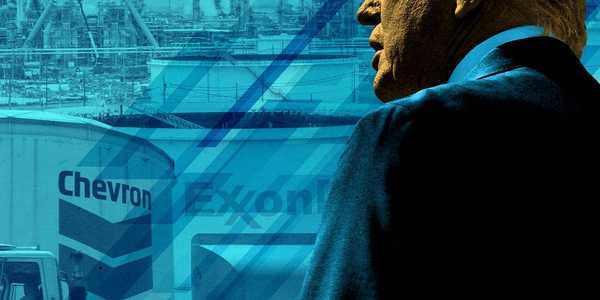
Chevron reported Friday a quarterly profit of $12.1 billion, its highest quarterly profit ever. ExxonMobil also announced a blowout quarter on Friday. Its $14.5 billion profit was its highest since the Russian invasion of Ukraine in 2022 (when it posted an almost $20 billion profit in the third quarter). These announcements followed Shell’s Thursday earnings report, which revealed a profit of almost $10 billion, close to double its previous quarter earnings and in range of its 2022-vintage quarters.
What does this mean for decarbonization?
1. It’s refining, stupid.
The story across the oil majors was largely one of getting more profit out of its existing assets, particularly in their refining business.
Shell, for example, said that they were running their refineries at over 100% capacity and that it had shifted production to jet fuel, which had been in especially short supply following the American and Israeli attack on Iran and subsequent closure of the Strait of Hormuz.
The company said it had “significantly higher” trading profits, likely from the volatility of commodity prices due to the start and stop nature of the war. Exxon said that it had “a second-quarter record for diesel production,” and that its chemicals business saw its margins jump by around 180% as its North American facilities were able to count on a steady stream of hydrocarbon feedstocks, unlike rivals in Asia.
“The unprecedented reduction in refining capacity – with nearly 9% of global capacity offline across Russia, China, and the Middle East – limited the supply of gasoline, diesel, and other products,” Exxon said. “As a result, refining margins reached record levels in the quarter.”
Meanwhile Chevron said it was refining over one million barrels of oil per day with “more than 97 percent” utilization.
While this constrained global refining capacity is largely due to military conflict in the Middle East and Russia, refinery capacity has been basically flat in many developed economy markets for decades. In the United States, the newest large refinery was built in 1977, an indication that while the U.S. transportation and energy system is still dominated by fossil fuels, there isn’t much appetite for the billions of capital investment needed to expand capacity for refining gasoline. So, while profits can surge in the short term, it doesn’t necessarily mean blue skies for oil companies.
2. Oil demand is actually falling — for now
Chevron noted that sales of refined products had actually fallen by 4% in the United States and 13% internationally. While in the short run this is likely due to higher prices, it is consistent with falling forecasts for oil demand.
While the International Energy Agency’s “current policies scenario,” which forecasts demand based on a snapshot of existing policies, sees a slow and steady rise through 2050, its “stated policies scenario” based on the trajectory of policy and commitments around energy and climate, sees oil demand peaking at levels slightly about the status quo by around 2030. In the medium run, the IEA said that “Forecast growth of [two million barrels per day] in 2027 results in a two-year pace of expansion well below historical trends.”
BP even announced layoffs of hundreds of employees, according to an internal message seen by Reuters.
This can help explain why, despite the strong profits, investors do not seem particularly jazzed about the oil giants — ExxonMobil and Chevron shares are only up slightly since the beginning of the war in Iran.
3. The high profits are already stoking public outrage
Everyone knew oil prices had risen since the war in Iran began — they could see it at the pump. But the confirmation that the war has spurred record or near-record profits has been fresh meat for environmental groups that want a faster energy transition.
“The mugging at Mar-a-Lago just keeps getting worse. The president said he would sell out Americans to oil and gas CEOs for a billion dollars in campaign donations. Now we know he owns millions of dollars worth of their stock. Those same companies are profiting from Trump’s war of choice, which has killed and injured U.S. service members, and left consumers struggling to stay afloat,” former Washington Governor Jay Inslee said in a statement blasted out by the communications group Climate Power.
The profits also spurred advocates to redouble calls for windfall profit taxes. “It’s fair to put a windfall profits tax on inordinate windfall profits rather than cut off children’s food programs,” Rhode Island Senator Sheldon Whitehouse told the Associated Press. Whitehouse introduced a bill in March that would impose taxes on oil companies in the event of price surges.
And even President Trump, whose presidential campaign was buoyed by donations from the oil and gas industry, called for an investigation into retail gasoline prices last month.
Since 2022, fossil fuels have moved back to the center of the world economy as concerns about shortages, price spikes, and availability have helped push concerns about climate change to the margins of policymaking. However, when oil companies are making more money than ever, it means an uptick in public concern or scrutiny. In the long run, oil companies have to worry about decarbonization; in the short run, they’ll have to worry about their customers.