Current conditions: Warmer air from down south is pushing the cold front in Northeast back up to Canada • Tropical Cyclone Gezani has killed at least 31 in Madagascar • The U.S. Virgin Islands are poised for two days of intense thunderstorms that threaten its grid after a major outage just days ago.
THE TOP FIVE
1. Alabama weighs scrapping utility commission elections after Democratic win in Georgia
Back in November, Democrats swept to victory in Georgia’s Public Service Commission races, ousting two Republican regulators in what one expert called a sign of a “seismic shift” in the body. Now Alabama is considering legislation that would end all future elections for that state’s utility regulator. A GOP-backed bill introduced in the Alabama House Transportation, Utilities, and Infrastructure Committee would end popular voting for the commissioners and instead authorize the governor, the Alabama House speaker, and the Alabama Senate president pro tempore to appoint members of the panel. The bill, according to AL.com, states that the current regulatory approach “was established over 100 years ago and is not the best model for ensuring that Alabamians are best-served and well-positioned for future challenges,” noting that “there are dozens of regulatory bodies and agencies in Alabama and none of them are elected.”
The Tennessee Valley Authority, meanwhile, announced plans to keep two coal-fired plants operating beyond their planned retirement dates. In a move that seems laser-targeted at the White House, the federally-owned utility’s board of directors — or at least those that are left after President Donald Trump fired most of them last year — voted Wednesday — voted Wednesday to keep the Kingston and Cumberland coal stations open for longer. “TVA is building America’s energy future while keeping the lights on today,” TVA CEO Don Moul said in a statement. “Taking steps to continue operations at Cumberland and Kingston and completing new generation under construction are essential to meet surging demand and power our region’s growing economy.”
2. Interior chief says administration will ‘absolutely’ appeal offshore wind rulings
Secretary of the Interior Doug Burgum said the Trump administration plans to appeal a series of court rulings that blocked federal efforts to halt construction on offshore wind farms. “Absolutely we are,” the agency chief said Wednesday on Bloomberg TV. “There will be further discussion on this.” The statement comes a week after Burgum suggested on Fox Business News that the Supreme Court would break offshore wind developers’ perfect winning streak and overturn federal judges’ decisions invalidating the Trump administration’s orders to stop work on turbines off the East Coast on hotly-contested national security, environmental, and public health grounds. It’s worth reviewing my colleague Jael Holzman’s explanation of how the administration lost its highest profile case against the Danish wind giant Orsted.
3. A sign green hydrogen is stalling out
Thyssenkrupp Nucera’s sales of electrolyzers for green hydrogen projects halved in the first quarter of 2026 compared to the same period last year. It’s part of what Hydrogen Insight referred to as a “continued slowdown.” Several major projects to generate the zero-carbon fuel with renewable electricity went under last year in Europe, Australia, and the United States. The Trump administration emphasized the U.S. turn away from green hydrogen by canceling the two regional hubs on the West Coast that were supposed to establish nascent supply chains for producing and using green hydrogen — more on that from Heatmap’s Emily Pontecorvo. Another potential drag on the German manufacturer’s sales: China’s rise as the world’s preeminent manufacturer of electrolyzers.
Sign up to receive Heatmap AM in your inbox every morning:
4. Anthropic vows to pay for the electricity price hikes from its data centers
The artificial intelligence giant Anthropic said Wednesday it would work with utilities to figure out how much its data centers were driving up electricity prices and pay a rate high enough to avoid passing the costs onto ratepayers. The announcement came as part of a multi-pronged energy strategy to ease public concerns over its data centers at a moment when the server farms’ effect on power prices and local water supplies is driving a political backlash. As part of the plan, Anthropic would cover 100% of the costs of upgrading the grid to bring data centers online, and said it would “work to bring net-new power generation online to match our data centers’ electricity needs.” Where that isn’t possible, the company said it would “work with utilities and external experts to estimate and cover demand-driven price effects from our data centers.” The maker of ChatGPT rival Claude also said it would establish demand response programs to power down its data centers when demand on the grid is high, and deploy other “grid optimization” tools.
“Of course, company-level action isn’t enough. Keeping electricity affordable also requires systemic change,” the company said in a blog post. “We support federal policies — including permitting reform and efforts to speed up transmission development and grid interconnection — that make it faster and cheaper to bring new energy online for everyone.”
5. U.S. oil majors are in line for a cut of Syria’s untapped reserves
Syria’s oil reserves are opening to business, and Western oil giants are in line for exploration contracts. In an interview with the Financial Times, the head of the state-owned Syrian Petroleum Company listed France’s TotalEnergies, Italy’s Eni, and the American Chevron and ConocoPhillips as oil majors poised to receive exploration licenses. “Maybe more than a quarter, or less than a third, has been explored,” said Youssef Qablawi, chief executive of the Syrian Petroleum Company. “There is a lot of land in the country that has not been touched yet. There are trillions of cubic meters of gas.” Chevron and Qatar’s Power International Holding inked a deal just last week to explore an offshore block in the Mediterranean. Work is expected to begin “within two months.”
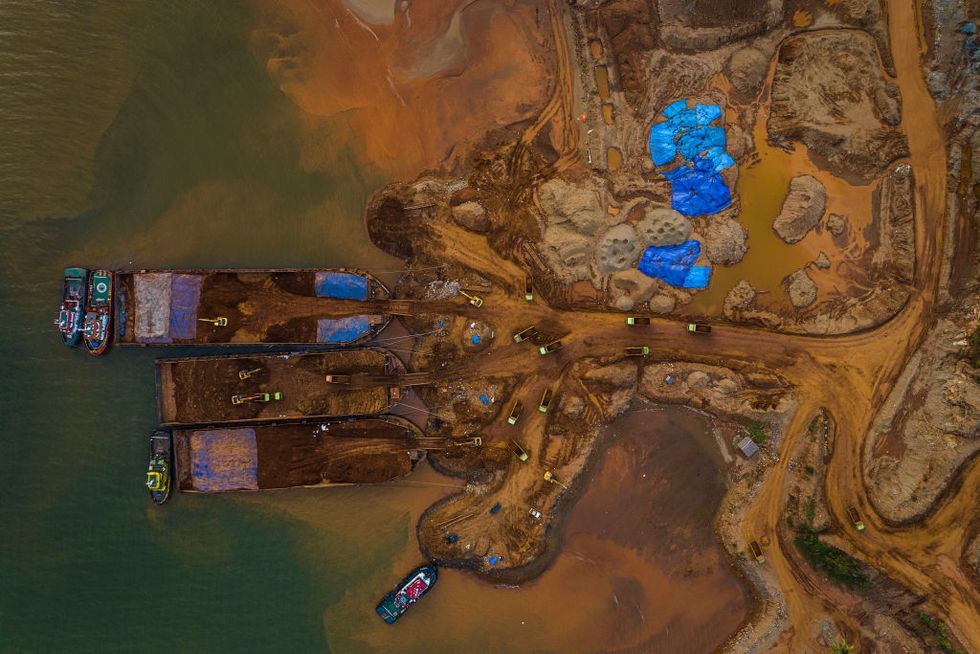
At the same time, Indonesia is showing the world just how important it’s become for a key metal. Nickel prices surged to $17,900 per ton this week after Indonesia ordered steep cuts to protection at the world’s biggest mine, highlighting the fast-growing Southeast Asian nation’s grip over the global supply of a metal needed for making batteries, chemicals, and stainless steel. The spike followed Jakarta’s order to cut production in the world’s biggest nickel mine, Weda Bay, to 12 million metric tons this year from 42 million metric tons in 2025. The government slashed the nationwide quota by 100 million metric tons to between 260 million and 270 million metric tons this year from 376 million metric tons in 2025. The effect on the global price average showed how dominant Indonesia has become in the nickel trade over the past decade. According to another Financial Times story, the country now accounts for two-thirds of global output.
THE KICKER
The small-scale solar industry is singing a Peter Tosh tune: Legalize it. Twenty-four states — funny enough, the same number that now allow the legal purchase of marijuana — are currently considering legislation that would allow people to hook up small solar systems on balconies, porches, and backyards. Stringent permitting rules already drive up the cost of rooftop solar in the U.S. But systems small enough for an apartment to generate some power from a balcony have largely been barred in key markets. Utah became the first state to vote unanimously last year to pass a law allowing residents to plug small solar systems straight into wall sockets, providing enough electricity to power a laptop or small refrigerator, according to The New York Times.