0
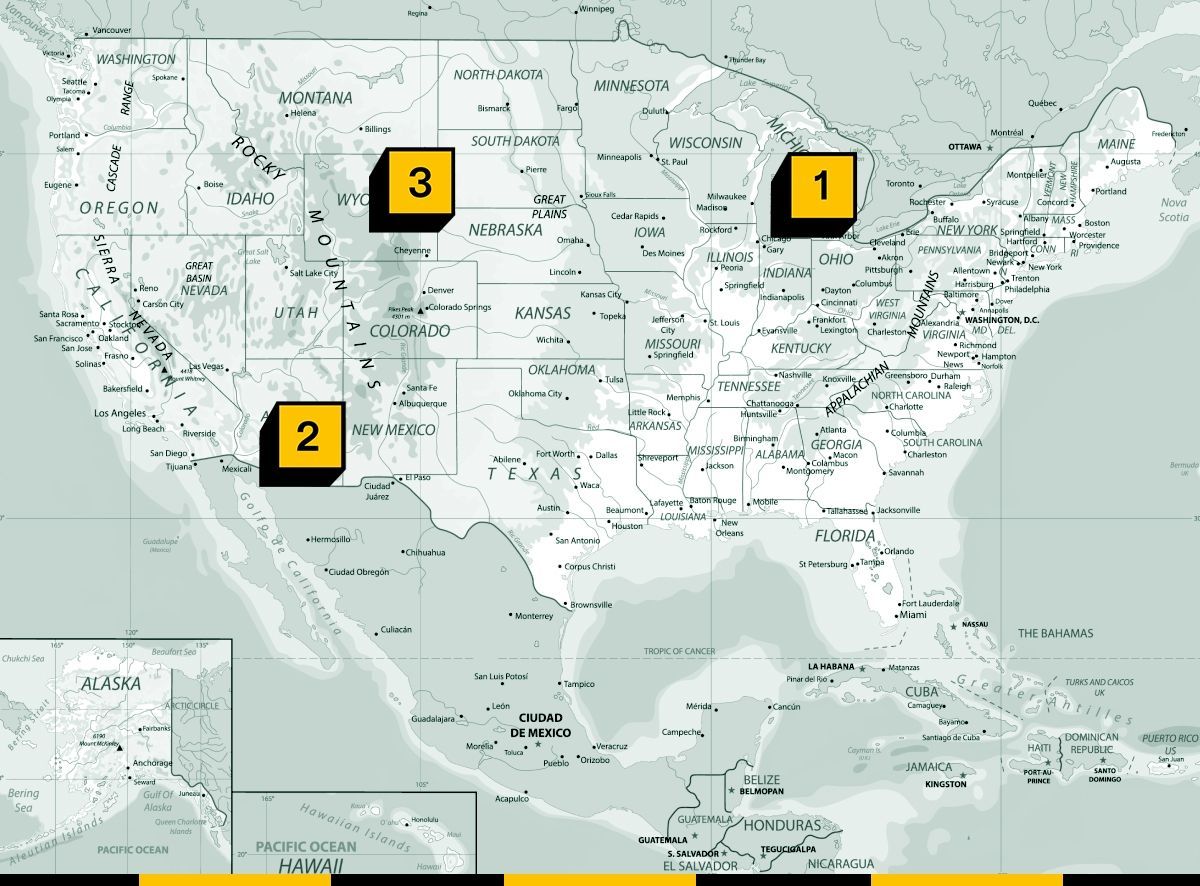
1. Kent County, Michigan — Yet another Michigan municipality has banned data centers — for the second time in just a few months.
- Solon Township, a rural community north of Grand Rapids, passed a six-month moratorium on Monday after residents learned that a consulting agency that works with data center developers was scouting sites in the area. The decision extended a previous 90-day ban.
- Solon is at least the tenth township in Michigan to enact a moratorium on data center development in the past three months. The state has seen a surge in development since Governor Gretchen Whitmer signed a law exempting data centers from sales and use taxes last April, and a number of projects — such as the 1,400-megawatt, $7 billion behemoth planned by Oracle and OpenAI in Washtenaw County — have become local political flashpoints.
- Some communities have passed moratoria on data center development even without receiving any interest from developers. In Romeo, for instance, residents urged the village’s board of trustees to pass a moratorium after a project was proposed for neighboring Washington Township. The board assented and passed a one-year moratorium in late January.
2. Pima County, Arizona — Opposition groups submitted twice the required number of signatures in a petition to put a rezoning proposal for a $3.6 billion data center project on the ballot in November.
- No Desert Data Center Coalition and Arizonans for Responsible Development, two advocacy groups that have been fighting the proposed Marana, Arizona project, said this week that they had collected 2,800 signatures on a petition to allow voters to decide on the project’s rezoning. The Marana Town Council had voted unanimously in January to approve the rezoning of the project site.
- The Marana project is often conflated with Project Blue, a nearby data center proposed by the same developer. Both have faced concerns over energy and water consumption.
3. Columbus, Ohio — A bill proposed in the Ohio Senate could severely restrict renewables throughout the state.
- Senate Bill 294 would require new electricity generation plants to “employ affordable, reliable, and clean energy sources” — restrictions that, on the face of it, could appear friendly to renewables. But the bill’s definition of “reliable” includes a minimum capacity factor of 50% and the requirement that generation is “readily available,” restrictions that effectively exclude low-capacity, weather- and sunlight-dependent wind and solar. What’s more, the bill names natural gas and nuclear as “clean” sources of energy but does not explicitly refer to wind or solar as clean.
- The bill follows a template provided by the American Legislative Exchange Council, which along with the Heartland Institute has advocated for its passage in Ohio. The template has already been applied in Louisiana, and a proposed bill in New Hampshire would establish similar reliability requirements.
4. Converse and Niobrara Counties, Wyoming — The Wyoming State Board of Land Commissioners last week rescinded the leases for two wind projects in Wyoming after a district court judge ruled against their approval in December.
- It’s the latest in a saga for the pair, the Pronghorn and Sidewinder Wind Projects, which this newsletter began covering last June after Wyoming’s governor and secretary of state staked opposing positions on the projects. Ranchers near the project sites expressed vociferous opposition, and a lawsuit filed by a rancher in July alleged that the Wyoming Board of Land Commissioners had violated its own rules when it approved the projects. The December court ruling in favor of that lawsuit opened the way for the rescission.
- The Pronghorn project was initially planned to include a hydrogen extraction plant, but developers this month announced that the plan would be reduced to 30% of its original size and the hydrogen component would be canceled.
- Although the state appealed the court ruling later in December, the board requested the state withdraw that appeal following its vote last week to rescind the leases. It’s unclear what comes next for the projects, but more litigation seems likely to follow.