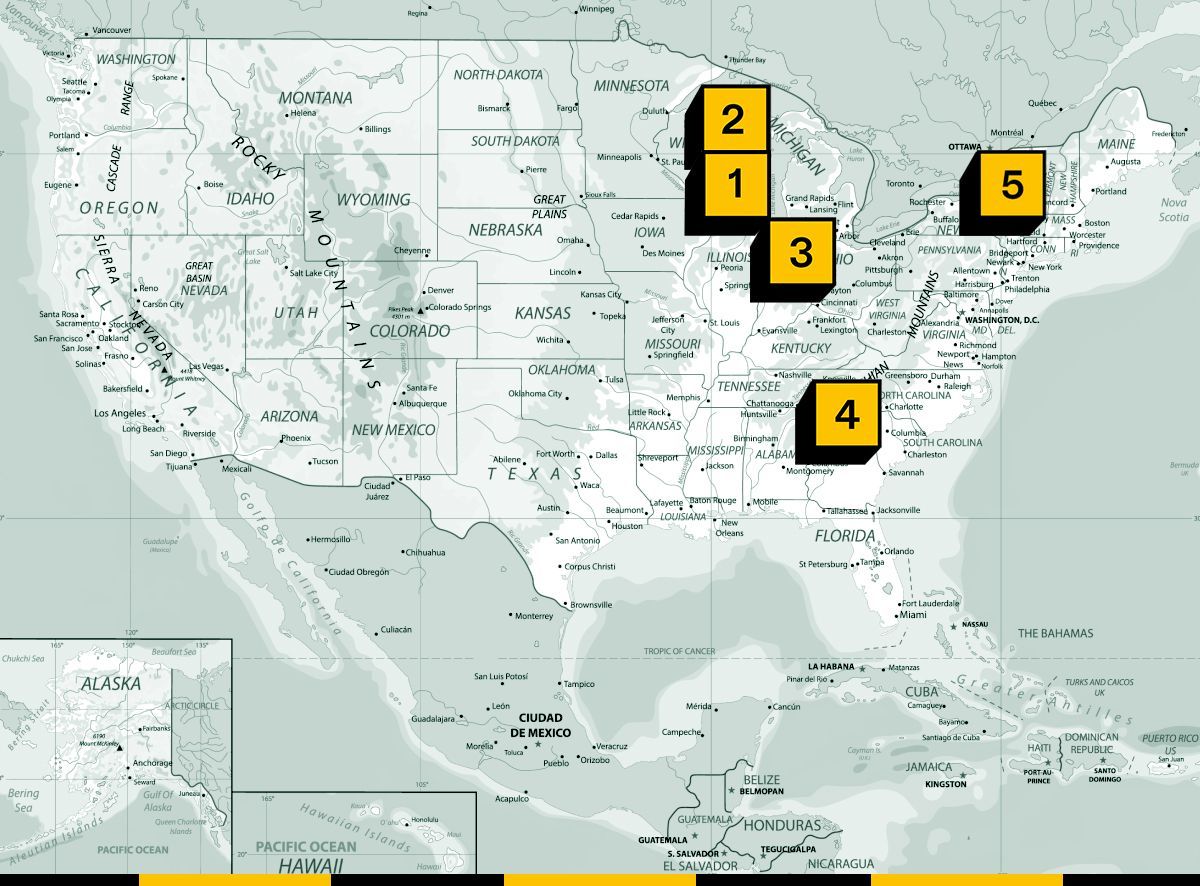
Dane County, Wisconsin – The QTS data center project we’ve been tracking closely is now dead, after town staff in the host community of DeForest declared its plans “unfeasible.”
- As I previously explained to Fight readers, this QTS project was a quintessential data center conflict. Not only was it situated in a blue county inside of a purple state, but a recent imbroglio over emails between the village mayor and QTS have made it a key example of how private conversations between tech companies and local governments can tarnish the odds of getting a data center permitted.
- Late Tuesday, DeForest town staff issued a public statement disclosing they would recommend rejecting QTS’ petition to annex land for construction, without which the developer can’t build. A vote on whether to formally deny the petition was scheduled for February 3.
- If the town rejects the project, the statement reads, DeForest staff expect QTS to “formally withdraw” its request for changes to land zoning plans and the annexation application. The town also cited vociferous opposition to the project, declaring: “The Village of DeForest appreciates the dedicated engagement of our community. Engagement is at the core of democracy. Reviewing public information, participating in public meetings, and discussing potential opportunities and impacts are all important civic activities.”
- I was prepared to wait and see what happened at the public meeting before declaring this project dead in the water, but QTS itself has gone and done it : “Through our engagement, it has become clear that now is not the right time for our proposed project to move forward in DeForest.”
Marathon County, Wisconsin – Elsewhere in Wisconsin, this county just voted to lobby the state’s association of counties to fight for more local control over renewable energy development.
- The county board of commissioners voted this week to approve a resolution that directly repudiates existing state permitting laws governing renewable energy. Wisconsin requires companies with a project larger than 100 megawatts to get certificates from the state Public Service Commission. But state law binds localities from instituting broad restrictions on renewables unless for public health and safety reasons.
- Marathon County is a ruby-red area of the state with a 99 opposition score in the Heatmap Pro database, so not exactly somewhere I’d recommend a company try to build a utility-scale solar or wind farm.
- It seems what tipped the county into lobbying for state-wide local control policy was the fight over Marathon Wind, an EDP Renewables wind farm that got into a legal battle with two towns in the county over rejecting the project.
Huntington County, Indiana – Meanwhile in Indiana, we have yet another loud-and-proud county banning data centers.
- I can be the first to report that this county issued a one-year moratorium on new data centers, battery storage projects, and CO2-capture pipeline systems. I was first tipped off by a strange “press release” from a dubious-looking Facebook page, which unfortunately is par for the course when it comes to tracking these sorts of local siting fights.
- Per the video records, the county will develop an ordinance after an undefined period of study. Commissioners pointed at neighboring counties in the state wrestling with data center projects as their justification. The commission adopted the moratorium unanimously.
- As with Marathon County, Wisconsin, we shouldn’t necessarily be surprised that this rural county is acting proactively to halt new projects given its own 99 opposition risk score for renewables development. Even though its data center risk score is lower, the area is clearly quite sensitive to individual landowner complaints.
DeKalb County, Georgia – This populous Atlanta-adjacent county is also on the precipice of a data center moratorium, but is waiting for pending state legislation before making a move.
- Per local reports, the county is hearing from a lot of opposition to two specific data centers abutting residential homes and public schools. This has the county commission leaning towards action. However this week, the county regulatory body voted to delay a decision because as one commissioner put it, there are “too many bills” in the state legislature to put new rules on these projects.
- Indeed, there is a mammoth pile of legislation in the Georgia state legislature addressing data centers after last year’s Democratic victories in two statewide races for the Public Service Commission. It’s challenging to understate the political shockwave that election had in the state, which is why this week’s Q&A is with the legislative director for Georgia Conservation Voters. Read on to hear her take on why the state’s politics have become so wrapped up in tech and land use.
New York – Multiple localities in the Empire State are yet again clamping down on battery storage. Let’s go over the damage for the battery bros.
- Clifton Park, a town just north of Albany, just banned new battery storage construction. The mayor of Troy is planning to enact a moratorium for at least six months, and Syracuse will also soon hold its own public meeting on doing the same. And the tiny upstate town of Saugerties is on the precipice of its own heated fight over a large battery storage project.
- This probably helps explain why state legislation to enact some form of new guardrails on siting battery storage is beginning to get bipartisan support with help from long-time adversaries on Staten Island.